Now offering AI-powered website development services in Dubai — Explore AI automation services in Dubai
الرئيسية  /  المدوّنة  /  B2B SEO Strategy: From Keywords to Pipeline
ملاحظات من الميدان

B2B SEO Strategy: From Keywords to Pipeline

A complete B2B SEO playbook — buyer-journey mapping, high-intent keyword research, topic clusters, technical SEO, distribution, CRO and pipeline attribution.

If you ask most marketing leaders what the ultimate goal of their search engine optimization efforts is, you will likely hear a variety of answers: more traffic, better rankings, or increased brand awareness. While these are all excellent milestones, they miss the fundamental point of why we invest in search marketing in the first place. The true objective of a modern b2b seo strategy is not just to generate traffic; it is to generate qualified pipeline and, ultimately, revenue.

In the business-to-business sector, attracting a million visitors to your website means absolutely nothing if those visitors do not convert into Marketing Qualified Leads (MQLs), Sales Qualified Leads (SQLs), and closed-won deals. B2B companies are not selling twenty-dollar t-shirts on impulse; they are selling complex software, expensive consulting services, or heavy machinery that require multiple sign-offs and months of deliberation.

To succeed today, you must shift your focus from vanity metrics to business impact. This comprehensive guide will walk you through how to build a highly effective b2b seo strategy, covering everything from technical foundations and advanced keyword research to content distribution and pipeline measurement.

Part 1: The Core Differences in B2B Search Marketing

Before diving into the tactics, it is crucial to understand the landscape. A common mistake many marketers make is applying consumer tactics to enterprise audiences. The difference between B2B and B2C SEO is profound, impacting everything from the keywords you choose to how you structure your website.

1. The Complex Buying Committee

In B2C, you are usually optimizing for a single decision-maker. If someone wants to buy a pair of running shoes, they search, click, and buy. In B2B, the purchasing decision is rarely made by one person. Gartner reports that a typical B2B buying committee involves six to ten decision-makers. You have the end-user (who cares about features and usability), the manager (who cares about efficiency and implementation), the procurement officer (who cares about cost and compliance), and the C-suite (who cares about ROI and strategic alignment). Your SEO strategy must account for all these distinct search behaviors.

2. Long and Non-Linear Sales Cycles

A B2B purchase can take anywhere from three months to over a year. During this time, buyers will conduct dozens of searches across various stages of their journey. They will look for educational content to understand their problem, comparison guides to evaluate vendors, and case studies to justify their purchase. SEO in this context is a marathon, not a sprint.

3. Low Search Volume, High Business Value

B2C SEO thrives on massive search volumes. Ranking for "best laptop" can bring in hundreds of thousands of visits. In B2B, search volumes are often incredibly low. A keyword like "enterprise ERP for chemical manufacturing" might only get 50 searches a month. However, if closing just one of those searchers results in a $500,000 contract, that low-volume keyword is highly lucrative. B2B SEO prioritizes relevance and intent over sheer volume.

4. Niche Terminology and Acronyms

B2B buyers use highly specific, industry-jargon-heavy search queries. They do not search for "software to help with marketing"; they search for "omnichannel marketing automation platform integrations." Understanding this nuanced vocabulary is the foundation of your success.

Part 2: Decoding and Dominating the Buyer Journey

To turn searchers into buyers, you must be present at every stage of their research process. Optimizing for the B2B buyer journey means creating an ecosystem of content that anticipates the user's next question before they even ask it.

The B2B Search Funnel

Mapping search intent to B2B sales funnel stages is how you ensure that your content actually moves the needle. Let's break down the funnel:

Top of the Funnel (TOFU): Problem Awareness

At this stage, the prospect knows they have a problem, but they don't know the solution. They are looking for educational content, definitions, and industry trends.

  • Search Intent: Informational.
  • Query Examples: "Why is employee turnover so high?", "how to improve supply chain visibility," "what is a zero-trust network."
  • Content Types: Comprehensive blog posts, ultimate guides, industry reports, glossary pages.
  • SEO Goal: Build brand awareness and capture early-stage leads through email subscriptions or downloadable resources.

Middle of the Funnel (MOFU): Solution Exploration

The prospect now understands their problem and is actively researching categories of solutions. They are comparing methods and looking for frameworks.

  • Search Intent: Commercial Investigation.
  • Query Examples: "HR software vs outsourcing," "best supply chain management tools," "cloud security best practices."
  • Content Types: Comparison pages, buyer's guides, webinars, templates, checklists.
  • SEO Goal: Position your product/service as a leading option and capture MQLs.

Bottom of the Funnel (BOFU): Vendor Selection

The prospect has decided on a type of solution and is now comparing specific vendors to make a final purchase decision. This is where pipeline is won or lost.

  • Search Intent: Transactional / High-Intent.
  • Query Examples: "[Your Brand] vs [Competitor Brand]," "[Your Brand] pricing," "enterprise HR software implementation time."
  • Content Types: Product pages, pricing pages, detailed case studies, ROI calculators, "Vs" competitor comparison pages.
  • SEO Goal: Drive demo requests, free trials, and direct sales conversations.

Actionable Tip: The "Vs" Page Strategy

One of the most powerful BOFU SEO tactics is creating competitor comparison pages. Buyers will search for "[Your Competitor] alternatives." If you do not own the narrative for that search query, a third-party review site (like G2 or Capterra) or, worse, your competitor will. Build honest, transparent pages that compare your solution to competitors, highlighting where you excel and being honest about who you are best suited for.

Part 3: Advanced Keyword Research for Pipeline Growth

Basic keyword research involves typing a seed term into a tool and exporting a list sorted by search volume. Advanced B2B keyword research is about uncovering the exact phrases that signal a readiness to buy.

Prioritizing High-Intent Keywords

If you want to drive revenue, you need to master high-intent keyword research techniques. High-intent keywords usually contain modifiers that signal the searcher is deep in the buying process.

Look for these B2B modifiers:

  • Software/Platform/Tool: e.g., "inventory management software"
  • Enterprise/B2B/Corporate: e.g., "enterprise inventory management"
  • For [Industry/Role]: e.g., "inventory management for manufacturing"
  • Pricing/Cost: e.g., "inventory management software pricing"
  • Provider/Agency/Consultant: e.g., "inventory management consultants"

To find these, do not rely solely on traditional SEO tools. Talk to your sales and customer success teams. Ask them: What exact words do prospects use when they get on a demo call? What are the most common questions they ask before signing a contract? The answers to these questions are your highest-converting keywords.

Reaching the Executive Suite

A major challenge in B2B marketing is figuring out how to target C-suite decision makers. CEOs, CFOs, and CTOs do not generally search for "how-to" articles. Their searches are strategic, risk-focused, and financially driven.

To capture C-suite organic traffic, optimize for topics related to:

  • Strategic Frameworks: e.g., "digital transformation roadmap for healthcare"
  • Risk Management: e.g., "compliance risks in cloud migration"
  • Financial Impact and ROI: e.g., "calculating ROI of automated billing software"
  • Industry Trends: e.g., "future of generative AI in legal practice"

When optimizing for the C-suite, the content must be devoid of fluff. It must be data-backed, concise, and ideally authored by a peer (a Subject Matter Expert or your own C-suite executives).

Part 4: Building a Scalable Content Architecture

Once you have identified your target keywords and mapped the buyer journey, you must structure your content in a way that search engines can easily crawl and users can easily navigate. In the B2B space, where topics are inherently complex, haphazard blogging will not work.

The Topic Cluster Model

To build topical authority, you must leverage content clustering for complex B2B topics. A content cluster consists of three main components:

  1. The Pillar Page: A comprehensive, broad overview of a core topic (e.g., "The Ultimate Guide to Supply Chain Management"). This page targets a high-volume, broad keyword and covers all aspects of the topic at a high level.
  2. Cluster Content: A series of in-depth articles that dive into specific subtopics mentioned on the pillar page (e.g., "How to Reduce Supply Chain Bottlenecks," "Supply Chain Management Software Integration," "Supply Chain Metrics to Track").
  3. Internal Linking: A strategic linking structure where all cluster pages link back to the pillar page, and the pillar page links out to the cluster pages, using optimized anchor text.

This architecture signals to Google that you are a comprehensive authority on the subject, boosting the rankings of all pages within the cluster.

Showcasing Expertise

With Google's emphasis on E-E-A-T (Experience, Expertise, Authoritativeness, Trustworthiness), B2B thought leadership content optimization has become a non-negotiable SEO strategy. Generic content written by freelance generalists will no longer rank for complex B2B queries.

To optimize thought leadership for search:

  • Interview Internal SMEs: Have your content team interview your internal engineers, product managers, or executives. Capture their unique insights and wrap SEO frameworks around their ideas.
  • Use Original Data: B2B buyers love statistics. Conduct surveys of your customer base and publish original research reports. These naturally attract high-quality backlinks.
  • Highlight Authorship: Ensure every article has a detailed author bio showcasing the writer's credentials, LinkedIn profile, and industry experience.

Beyond the First Click

SEO should not operate in a vacuum. A holistic strategy uses SEO for lead nurturing and demand generation. When an organic visitor lands on a TOFU blog post and downloads a lead magnet, they enter your marketing automation flow. The SEO content you created for the MOFU and BOFU stages should now be repurposed as email nurture campaigns.

For example, if someone downloads a "Cloud Security Checklist" (TOFU), your automated email sequence should naturally deliver your SEO-optimized "Cloud Security Software Buyer's Guide" (MOFU) a week later. By aligning your organic content with your demand generation engine, you maximize the ROI of every asset you produce.

Part 5: Amplification and Distribution

Creating world-class, SEO-optimized content is only half the battle. If you hit "publish" and simply wait for Google to index and rank your pages, you are leaving money on the table. You need proactive B2B content distribution strategies to generate early traction, earn backlinks, and get your content in front of the right eyes.

Multi-Channel Content Distribution

B2B distribution requires getting your content into the digital watering holes where your specific buyers hang out.

  • LinkedIn Organic & Paid: Repurpose long-form SEO content into bite-sized LinkedIn carousels, text posts, and short videos. You can also run LinkedIn ads driving targeted decision-makers to your high-intent MOFU/BOFU pages.
  • Industry Communities: Distribute content in niche communities like specialized Slack groups, Discord servers, Reddit (e.g., r/sysadmin, r/marketing), and specialized forums. Remember to provide value first rather than just dropping links.
  • Email Newsletters: Share your newly published SEO content with your existing subscriber base. The initial surge of traffic and engagement can send positive behavioral signals to search engines.
  • Content Syndication: Partner with industry publications to syndicate your content (using rel="canonical" tags pointing back to your original post to prevent duplicate content issues).

Bridging SEO and ABM

One of the most powerful, yet underutilized, modern marketing tactics is account-based marketing and SEO integration. Account-Based Marketing (ABM) traditionally relies on outbound tactics to target specific high-value accounts. SEO can supercharge this.

Here is how to integrate them:

  1. Reverse IP Lookup: Use tools like Clearbit, 6sense, or Leadfeeder to identify which companies are visiting your high-intent SEO pages.
  2. Intent Data Activation: If you notice that multiple people from a target account (e.g., Microsoft) are reading your BOFU comparison pages, you know that account is in an active buying cycle.
  3. Targeted Outreach: Alert your sales team to reach out to the decision-makers at that specific account, referencing the topics they were just reading about.
  4. Customized Content: Create bespoke landing pages tailored to specific target accounts (e.g., "Why [Your Product] is the Perfect Fit for [Target Company]"), and optimize them for the long-tail keywords that account's employees are searching for.

Part 6: Establishing Digital Authority

In highly competitive B2B spaces (like SaaS, finance, or healthcare), on-page optimization and great content are not enough to rank on page one. Search engines rely on external validation to determine trustworthiness. You must focus on building authority through industry-specific backlinks.

Quality Over Quantity

In B2B SEO, a single backlink from an authoritative industry publication (like Forbes, TechCrunch, or a niche trade magazine) is worth infinitely more than hundreds of links from low-quality, generic directories. You are looking for topical relevance. If you sell cybersecurity software, a backlink from a well-known cybersecurity blog is gold.

Strategic Link Building Tactics for B2B

  1. Digital PR and Data-Driven Studies: As mentioned earlier, journalists and bloggers constantly need data to back up their articles. If you publish a "State of B2B Sales 2024" report with original statistics, outreach to industry journalists can yield high-authority links naturally.
  2. Strategic Partnerships: B2B companies often have dozens of partners, integrations, and vendors. Reach out to these partners and suggest guest posts, co-marketing webinars, or directory inclusions. Because the relationship already exists, the link acquisition process is much smoother.
  3. Unlinked Brand Mentions: Use media monitoring tools to find instances where industry blogs or news outlets have mentioned your brand, product, or executives but failed to link to your website. A polite email asking for the link to be added has a remarkably high conversion rate.
  4. Podcasts and Webinars: Pitch your internal SMEs as guests on industry podcasts. Podcast show notes almost always include a high-quality backlink to the guest's website. Furthermore, this positions your brand as a thought leader.

Part 7: The Technical Foundation of B2B Websites

A brilliant content and backlink strategy will fail if search engine crawlers cannot efficiently access, render, and index your website. Technical SEO for enterprise websites is complex because these sites are often massive, built on legacy CMS platforms, and heavily integrated with various marketing technologies.

Key Technical SEO Pillars for Enterprise

If you are managing a large-scale B2B website, your technical audits must be rigorous and ongoing. Focus on these critical areas:

1. Crawl Budget Optimization. Enterprise sites often have thousands (or tens of thousands) of pages. Google allocates a specific "crawl budget" to your site—the number of pages it will crawl in a given timeframe. If your site is filled with thin content, duplicate pages, or infinite dynamic URLs (common in faceted navigation), Googlebot will waste its crawl budget on useless pages and miss your high-value SEO content.

  • Action: Use robots.txt to block unnecessary parameters, implement proper canonical tags to consolidate duplicate pages, and prune obsolete content regularly.

2. Site Architecture and Internal Linking. A flat, logical site architecture is vital. No page on your website should be more than three or four clicks away from the homepage. Use breadcrumbs to help both users and search engines navigate hierarchical structures. Furthermore, ensure your internal linking strategy is intentional, passing link equity from high-authority pages (like your homepage or highly-linked blog posts) to your critical BOFU money pages.

3. International SEO (Hreflang). Many B2B enterprises serve a global audience. If you have different versions of your site for the US, UK, Germany, and Australia, you must implement hreflang tags flawlessly. This tells Google which language and regional version of a page to serve to a specific user, preventing your own regional sites from cannibalizing each other in the search results.

4. Core Web Vitals and Page Speed. B2B buyers are busy professionals. If your site takes five seconds to load, they will bounce to a competitor. Google uses Core Web Vitals (Largest Contentful Paint, Interaction to Next Paint, and Cumulative Layout Shift) as ranking factors.

  • Action: Optimize image sizes, defer non-critical JavaScript (a common issue on B2B sites heavily laden with tracking scripts and marketing automation tags), and leverage Content Delivery Networks (CDNs).

Part 8: Conversion and Lead Generation

As stated at the beginning, traffic without pipeline is a vanity metric. To achieve true lead generation through organic search, your website must act as a 24/7 digital salesperson. This requires meticulous attention to the user experience and conversion paths.

Optimizing the Conversion Path

Conversion rate optimization for B2B landing pages is a science. You must reduce friction while collecting enough information to qualify the lead.

Here are the best practices for B2B CRO:

  • Micro vs. Macro Conversions: Not everyone is ready to "Book a Demo" (a macro conversion). Offer micro-conversions for users earlier in the journey. This could be subscribing to a newsletter, downloading a gated whitepaper, or accessing an interactive tool.
  • Strategic Gating: A major debate in B2B SEO is what content to gate (require a form fill) versus ungate. As a rule of thumb, never gate content you want to rank in organic search. Search engines cannot fill out forms. Ungate your educational blogs and pillar pages. Gate your highly valuable, downloadable assets (templates, deep-dive industry reports) that users access via your organic pages.
  • Frictionless Forms: B2B forms are notoriously long. Do you really need to ask for a prospect's fax number and home address? Stick to the essentials: Name, Work Email, Company Name, and perhaps Job Title. To optimize further, use data enrichment tools (like Clearbit or ZoomInfo) that automatically populate company data in your CRM based on just the work email provided, keeping the form short for the user.
  • Compelling Calls to Action (CTAs): "Submit" is not a compelling CTA. Use action-oriented, value-driven language. For example, "Get My Free Audit," "Start My 14-Day Trial," or "See the Platform in Action."

Implementing Conversational Marketing

Don't rely solely on static forms. Integrating chatbots and conversational marketing tools (like Drift or Intercom) on your high-intent SEO pages can significantly boost conversions. If an organic visitor lands on your pricing page, a chatbot can instantly engage them: "Hi there! I see you're looking at our enterprise plans. Would you like me to connect you with an expert to discuss custom pricing?" This creates an immediate, frictionless path to the sales team.

Part 9: Measurement, Analytics, and Proving ROI

The final, and perhaps most critical, component of a successful strategy is measurement. If you cannot prove that your SEO efforts are driving revenue, securing budget for future initiatives will be nearly impossible. Measuring organic search ROI for B2B requires moving past Google Analytics and integrating your data with your Customer Relationship Management (CRM) system (like Salesforce or HubSpot).

Moving Beyond Vanity Metrics

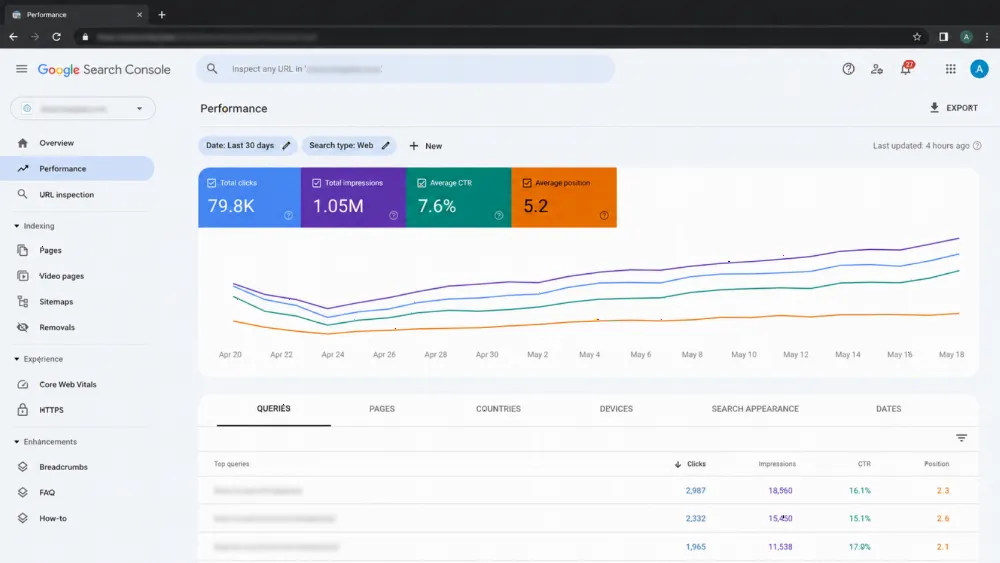
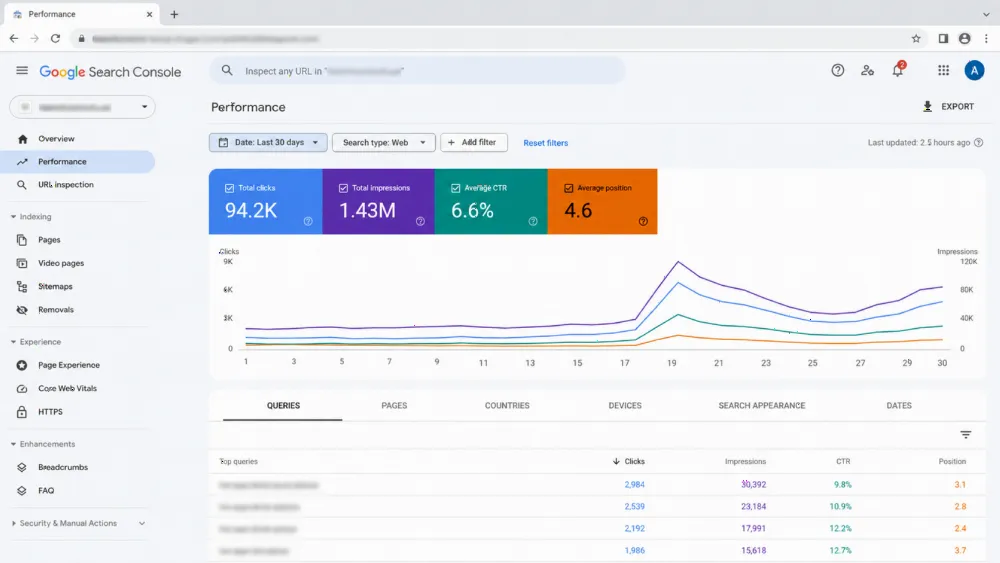
While tracking keyword rankings, organic sessions, and click-through rates (CTR) in Google Search Console is important for diagnostic purposes, these are leading indicators, not business outcomes. You need to track:

  1. Organic MQLs: How many users who originated from organic search filled out a high-intent form or requested a demo?
  2. Organic SQLs: How many of those MQLs were accepted by the sales team as qualified opportunities?
  3. Pipeline Value: What is the total potential dollar value of the opportunities generated by organic search?
  4. Closed-Won Revenue: How much actual revenue can be attributed to SEO?
  5. Pipeline Velocity: Does organic search traffic close faster than outbound sales traffic? (Often, it does, because inbound leads have higher intent).

The Challenge of Attribution

Attribution is notoriously difficult in B2B because of the long sales cycle and the multiple touchpoints involved. A buyer might find your blog via organic search in January, click a retargeting ad in March, attend a webinar in May, and finally book a demo via a direct search in July.

If you rely on "Last-Click Attribution," organic search (the January touchpoint) gets zero credit, and the direct search gets 100% of the credit. This leads to massive underreporting of SEO's value.

To accurately measure ROI, implement:

  • Multi-Touch Attribution (MTA): Use your CRM or marketing automation platform to utilize W-shaped or linear attribution models. This distributes revenue credit across all the touchpoints that influenced the deal, ensuring SEO gets credit for both TOFU awareness and BOFU conversions.
  • First-Touch Pipeline Tracking: Specifically isolate how much pipeline was generated where the absolute first interaction the account had with your brand was an organic search visit. This proves SEO's value as an engine for net-new business.

Part 10: Structuring Your SEO Team and Resources

Executing a strategy of this magnitude requires the right personnel and alignment across the organization. A robust B2B SEO program cannot be run by a single junior marketer operating in a silo. It requires cross-functional collaboration.

The Ideal B2B SEO Pod

To operate at peak efficiency, consider assembling an "SEO Pod" consisting of the following roles (these can be in-house employees, agency partners, or freelancers):

  1. The SEO Strategist: The quarterback of the operation. They are responsible for keyword research, technical audits, competitive analysis, and overall strategy formulation.
  2. The Content Marketer/Writer: A skilled writer who understands B2B nuances. They must be able to translate complex technical jargon into engaging, readable content that aligns with search intent.
  3. The Subject Matter Experts (SMEs): As discussed, these are your internal executives, product managers, or sales leaders. They do not need to write the content, but they must be available for interviews to inject unique expertise into the articles.
  4. The Web Developer: Essential for implementing technical SEO fixes, improving page speed, and building high-converting landing pages.
  5. The Data Analyst: Responsible for connecting Google Analytics, Google Search Console, and the CRM to ensure accurate attribution and reporting.

Aligning SEO with Sales and Product

The most successful SEO teams view themselves as an extension of the sales and product departments.

  • Sales Alignment: SEO should meet with sales leadership monthly. Share the content calendar with them so they can use new articles in their outreach. In return, ask sales for the latest objections they are hearing on calls so you can create BOFU content to address them.
  • Product Alignment: When the product team releases a new feature, SEO should be involved early to research how the market is searching for that specific functionality. This ensures product launch pages are optimized from day one, rather than as an afterthought.

Part 11: Common B2B SEO Pitfalls to Avoid

Even with a solid plan, many B2B organizations stumble. Keep an eye out for these common pitfalls that can derail your progress:

1. The "Me, Me, Me" Syndrome

Many corporate blogs read like a narcissist's diary. They only publish content about company awards, new hires, and product updates. While this is fine for a PR section, it is useless for SEO. Your buyers do not care about your company retreat; they care about solving their own business problems. Shift your content focus from internal news to customer-centric problem-solving.

2. Over-Optimizing and Keyword Stuffing

In a desperate attempt to rank, some marketers force their target keywords into every heading and paragraph. This creates a robotic, unreadable experience. B2B buyers are highly educated professionals; if your content reads like it was written for a search engine rather than a human, they will bounce immediately. Write naturally, and use variations and synonyms of your keywords.

3. Neglecting Existing Content (Content Decay)

Many teams operate on a "publish and forget" mentality, constantly churning out new articles. However, content naturally decays over time as competitors publish newer, more updated resources. A massive opportunity in B2B SEO is historical optimization. Regularly audit your existing content. Find pages that are slipping from page one to page two, update them with new data, better examples, and fresh formatting, and republish them. This often yields faster results than creating net-new content.

4. Ignoring Video and Rich Media

B2B buyers consume content in various formats. While text-based articles are the foundation of SEO, integrating video, infographics, and audio into your pages significantly improves engagement metrics (like time on page), which signals quality to Google. Furthermore, optimizing videos for YouTube (the world's second-largest search engine) provides an entirely separate channel for organic acquisition.

Part 12: The Future of B2B Search

The SEO landscape is constantly evolving, and B2B marketers must stay ahead of the curve to maintain their competitive edge. Here are the major trends shaping the future of organic search in the enterprise space:

The Rise of Generative AI Search (SGE)

Search engines are rapidly integrating Generative AI directly into the search results. Google's Search Generative Experience (SGE) provides AI-generated summaries at the top of the page for complex queries. For B2B SEOs, this means that providing generic, scraped information is no longer viable, as the AI will answer those questions instantly. To survive in an AI-driven search world, your content must rely heavily on proprietary data, unique viewpoints, and deep, first-hand experience that AI cannot replicate.

Zero-Click Searches

Increasingly, users are finding the answers they need without ever clicking through to a website. This is particularly true for TOFU definitional queries. While zero-click searches may lower your overall traffic metrics, they do not necessarily harm your pipeline, provided you dominate the SERP features (like Featured Snippets). By claiming the Featured Snippet, you build brand authority and trust, even if the user doesn't click immediately.

The Blurring of Search and Social

B2B buyers are increasingly using platforms like LinkedIn, Reddit, and TikTok as search engines. They are looking for peer recommendations and authentic reviews rather than corporate landing pages. A modern SEO strategy must encompass "Search Everywhere." Ensure your brand is visible and optimized not just on Google, but across the native search functions of the social platforms where your buyers reside.

Conclusion

Transforming your digital presence from a digital brochure into a predictable pipeline generation engine requires a paradigm shift. A winning b2b seo strategy is not about chasing algorithms or manipulating search volumes. It is about deeply understanding your buyers, anticipating their needs, and providing the absolute best answers to their most pressing business problems.

By acknowledging the difference between B2B and B2C SEO, meticulously optimizing for the B2B buyer journey, and mapping search intent to B2B sales funnel stages, you lay a foundation for success. When you combine robust technical SEO for enterprise websites with high-intent keyword research techniques and content clustering for complex B2B topics, you build an unstoppable digital ecosystem.

Remember to leverage B2B thought leadership content optimization to stand out in a sea of generic content, and use B2B content distribution strategies and account-based marketing and SEO integration to ensure your hard work reaches the right executive eyes. Solidify your position by building authority through industry-specific backlinks, and turn that hard-earned traffic into revenue through rigorous conversion rate optimization for B2B landing pages and using SEO for lead nurturing and demand generation.

Finally, never lose sight of the ultimate goal: lead generation through organic search. By accurately measuring organic search ROI for B2B and focusing on how to target C-suite decision makers with high-value insights, you transition SEO from an opaque marketing expense into a measurable, scalable driver of business growth.

The companies that commit to this holistic, pipeline-focused approach to organic search will not only dominate the search engine results pages—they will dominate their markets.


Want a B2B SEO programme built around pipeline, not vanity metrics? WebStackRank runs data-driven SEO and no-retainer SEO on top of SEO-friendly web development and a rigorous technical SEO audit. Keep reading our companion piece, B2B SEO Strategy — the WebStackRank approach, or talk to our team.