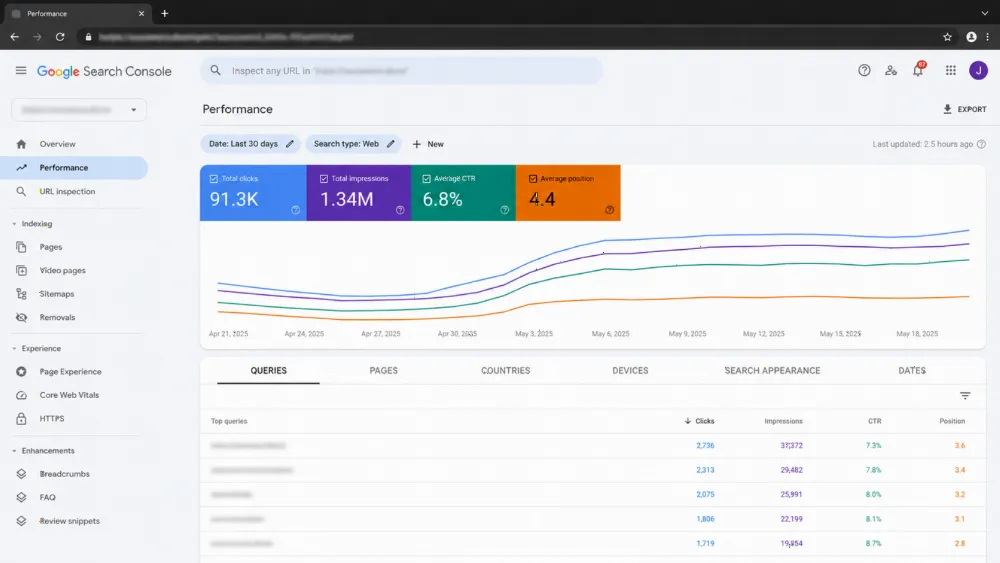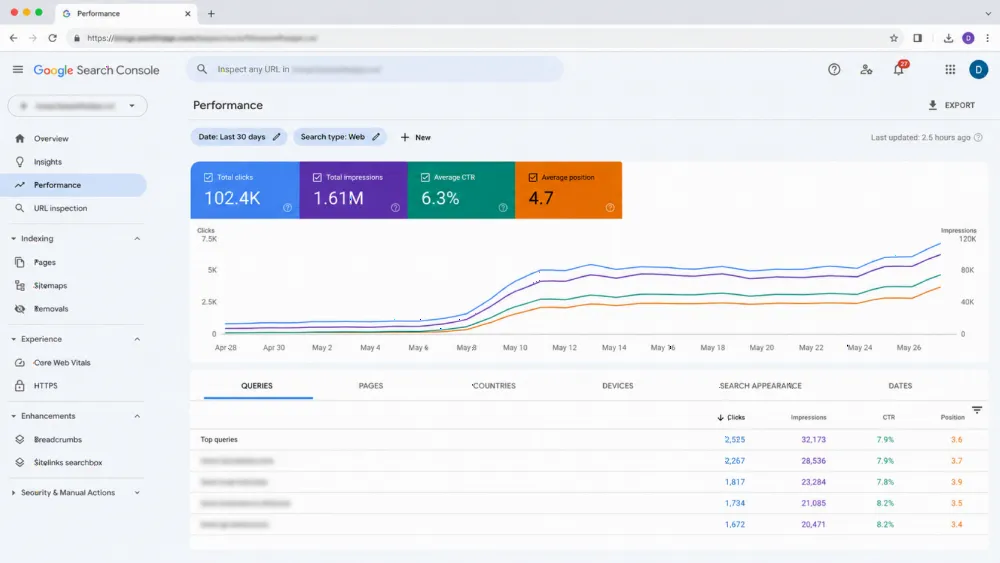
In the United States, writing code is far more than just a technical skill—it is a $100 billion economic engine that powers everything from Silicon Valley tech giants to your neighborhood bakery's online ordering system. According to recent industry reports, the scope of web development in usa represents a massive, invisible infrastructure driving the modern economy. Every time you check your bank balance or stream a movie, you are interacting directly with the product of this booming industry. Yet, despite relying on these tools daily, most Americans naturally view the internet as a mysterious black box.
Peeling back the curtain on this digital world starts with understanding the difference between casually browsing a website and the actual mechanics that make it function. Think of your favorite shopping app like a busy restaurant. The dining room where you sit, read the menu, and interact with the staff is known as the User Interface (UI)—the visual parts of a digital product that you can actually see and touch on your screen. Industry data reveals that a smooth, intuitive dining room experience is what keeps customers coming back, but it completely relies on a hidden, bustling kitchen working furiously behind the scenes.
Translating real-world businesses into these seamless digital experiences is a process known as Digital Transformation, which simply means moving traditional, paper-based or in-person operations onto the internet. As physical storefronts increasingly become digital ones, tracking the current trends in the american digital transformation market shows a massive shift toward making these online spaces faster and easier to find. Just like constructing a physical building, creating these modern digital storefronts requires careful planning, a solid foundation, and an understanding of how visitors will walk through the front door.
Companies like WebStackRank approach this construction process through three distinct phases: laying the blueprint, framing the walls, and painting the interior. First, developers map out the overall structure to ensure the site will be strong enough to handle thousands of daily visitors. Next, they build the "walls" by writing the core code that securely connects the website to data storage. Finally, designers step in to create a welcoming exterior, ensuring that the finished product is not only structurally sound but also highly attractive to search engines and everyday users.
American developers consistently lead the global charge in this field because they understand how to blend complex engineering with user-friendly design. By mastering this architectural approach to coding, US-based teams are building the fast, resilient websites that keep the digital economy humming. This process takes the mystery out of the technology, revealing exactly what it takes to build a successful digital product from the ground up.
Silicon Valley to Austin: Navigating Top Technology Hubs for Startups
Even in an age where work can happen from a kitchen counter, physical geography still shapes the American internet industry. When business owners set out to build an app, they often face the hurdle of finding reliable tech talent in competitive markets. Think of tech hubs—cities with high concentrations of developers, investors, and companies—like giant digital construction yards. Just as physical builders go where the best tradespeople gather, software creators cluster in specific regions to share ideas, secure funding, and find skilled workers.
While California's Silicon Valley remains the historical heavyweight, a massive shift is underway toward emerging centers like Austin, Texas. Affectionately dubbed "Silicon Hills," Austin has become a powerful magnet for new tech companies. Startups flock here to take advantage of a lower cost of living and business-friendly taxes, while still accessing the dense networking opportunities that make traditional hubs so valuable. Being physically near these thriving communities puts both developers and entrepreneurs closer to the pulse of the industry.
Not all of these digital construction yards build the exact same structures, leading to a phenomenon called regional specialization. When exploring top technology hubs for startups in North America, it helps to know which city matches your specific industry niche:
- San Francisco, CA (Silicon Valley): The undeniable center for artificial intelligence and massive consumer software platforms.
- New York City, NY (Silicon Alley): The premier destination for "Fintech" (financial technology), marrying Wall Street banking with web development.
- Austin, TX (Silicon Hills): A booming center for hardware development, cybersecurity, and fast-growing startup companies.
- Boston, MA: The nation's leader in "EdTech" (educational technology) and healthcare software, fueled by nearby research universities.
- Seattle, WA: The heavy-lifting hub for cloud computing—the digital real estate where websites are hosted—anchored by giants like Amazon and Microsoft.
Understanding these geographic differences is crucial because where a developer lives often dictates their specialty and their price. A financial software expert in Manhattan naturally commands a different rate than a startup generalist in Texas. Whether you are hiring a development team or planning your own tech career, navigating these hubs brings up a pressing question about compensation and exactly what drives those salary expectations.
The $60,000 to $150,000 Journey: Decoding Software Engineer Salaries in the USA
Budgeting for software talent often feels like aiming at a moving target. When analyzing web development in usa, the cost to build digital projects fluctuates based on where the builder lives. While a New York developer needs a higher paycheck than someone in Ohio, location is only the first piece of the puzzle. The true drivers behind this massive salary range come down to experience and how companies structure their pay.
Stepping into the industry, the baseline cost for beginner talent might surprise you. An average entry level software engineer salary in united states usually falls between $60,000 and $85,000. Think of junior developers as apprentices on a construction site; they can follow a blueprint, but they still need guidance from experienced foremen to avoid mistakes. Hiring at this level saves money upfront, but it requires a time investment to mentor them into independent problem solvers.
Moving up the ladder, the leap toward $150,000 is driven by a shift in responsibility. Senior developers act as master architects, capable of designing the entire house and predicting where the plumbing might fail before a pipe bursts. To secure these experts, companies offer "Total Compensation"—a package combining a base cash salary with bonuses and company stock. This means a senior engineer's actual pay can spike well beyond their base rate, changing how businesses must budget.
Grasping these financial realities helps owners decide whether to hire a full-time internal employee or an external agency. If you need simple website maintenance, a junior hire is cost-effective; if you are building complex software, paying the premium for a senior architect is essential. For those looking to enter this lucrative market themselves, gaining these initial skills requires choosing the right educational path.
Degrees vs. Bootcamps: Finding Your Path to Becoming a Web Developer
For decades, entering the tech industry seemed to require an expensive, four-year university diploma. However, the modern US job market has fundamentally shifted its focus from pedigree to proof. Today, discovering how to become a web developer without a degree is incredibly common. Employers now prioritize "portfolio-based hiring"—meaning they care more about the functional websites you have actually built and can demonstrate than the piece of paper hanging on your wall.
To reach that hiring stage, aspiring builders generally choose from three distinct educational blueprints:
- University Degrees (4 Years, $40k+): Provides deep theoretical foundations, much like an architect studying structural physics before designing a bridge.
- Coding Bootcamps (3–6 Months, $10k–$20k): These intensive training programs strip away general education to focus solely on practical coding skills, acting as highly efficient trade schools for the digital age.
- Self-Taught (Variable Time, Low Cost): Using free internet resources requires immense personal discipline but offers ultimate flexibility for those learning after hours.
Major tech giants and local businesses alike have fully embraced these faster alternative paths. The best coding bootcamps for career changers in the us offer programs designed specifically to help former teachers, mechanics, and retail workers pivot into tech. Employers highly value these non-traditional graduates because they bring diverse life experiences and a proven ability to construct digital products under tight deadlines. Instead of handing a hiring manager a transcript of coursework, these developers share a link to a working internet application—proving instantly that they can perform the job.
Regardless of how these skills are acquired, matching the right talent to the right project depends heavily on geography and communication. Once a developer builds their portfolio, the next major decision is where they will physically work. This geographic dynamic creates an ongoing, critical debate for US businesses looking to hire: weighing the benefits of local onshore talent against offshore alternatives.
Why Local Talent Wins: Onshore vs. Offshore Development Pros and Cons
Every business owner eventually faces a tempting financial decision when it is time to build a digital product: do you hire locally, or do you look overseas for cheaper labor? In the tech industry, this is known as evaluating the onshore vs offshore web development pros and cons. "Onshore" means hiring developers within your own country, like a local agency in Chicago, while "offshore" refers to contracting talent in distant regions, such as Eastern Europe or South Asia. On paper, offshore hourly rates look incredibly attractive, often sitting at a fraction of what American developers charge.
However, looking only at the price tag hides the true cost of "time-zone friction," which occurs when your working hours do not overlap with your development team. Imagine managing a physical construction site where your builders only work while you are asleep. If a contractor has a quick question about a blueprint, they have to stop working, send you a message, and wait twelve hours for your answer. In software creation, these daily communication delays can stretch a simple one-month assignment into a three-month ordeal, ultimately costing you more money through lost time than you saved on the initial hourly rate.
This is why understanding how to hire a dedicated development team in the us often provides a massive advantage in "project velocity," or the speed at which an idea becomes a finished product. Local developers offer immediate cultural alignment and an "English-first" workflow, meaning nuanced instructions are rarely lost in translation. When you can jump on a quick five-minute phone call to clarify a feature—like how a customer should seamlessly check out on your digital storefront—the entire building process remains perfectly synchronized.
Mitigating the risks of crossing borders is absolutely possible with strict project management and overlapping schedule windows, but you must always weigh the trade-off between a cheap hourly rate and a fast, frictionless completion. Ultimately, the choice between domestic and international talent dramatically impacts your final financial calculations. Accurately forecasting your specific project requires a clear grasp of true website development costs, preventing hidden delays and budget overruns.
The Real Cost of Growth: Budgeting for Small Business Website Development
Determining your exact financial investment is the next critical hurdle when planning a digital project. In the US market, the average cost of website development for small businesses ranges from $2,000 for a basic five-page site to over $20,000 for complex applications. If you need custom ecommerce solutions for american retail businesses—where customers can securely browse inventory and check out—expect to be at the higher end of that spectrum. You are not just buying a digital brochure; you are constructing a 24/7 digital storefront that requires specific materials. (For real benchmarks, see our how much does a website cost breakdown.)
To avoid sticker shock, you must understand exactly what a developer's quote includes, which breaks down into five foundational categories:
- Domain: Your web address. Trusted addresses eventually build "Domain Authority," a search engine score that helps your site rank higher on Google.
- Hosting: The "digital real estate" or server space you rent so the public can actually visit your site.
- Design: The architectural blueprint and visual layout of your digital home.
- Development: The actual construction process where code makes those designs functional.
- Maintenance: Ongoing upkeep, including renewing "SSL Certificates"—the security technology that creates a safe, encrypted link between your website and your visitors.
Many entrepreneurs are unfortunately blindsided by hidden fees because they only budgeted for the initial launch. To secure a transparent quote, always ask your developer to separate one-time construction costs from recurring annual expenses. Identifying the three most common surprise costs—monthly hosting, annual SSL renewals, and hourly maintenance retainers—prevents your new digital asset from becoming a financial liability a year later. (Our fixed-price web design packages make this transparent up front.)
Once your budget is firmly established and those ongoing technical expenses are accounted for, your attention must shift toward protecting your new investment. Building a functional website is only the first step; ensuring it meets strict US regulatory standards is what keeps your virtual doors open safely. Mastering ADA compliance and data privacy laws is an essential safeguard against costly penalties.
Legal Shields: Mastering ADA Compliance and Data Privacy Laws
Just as a brick-and-mortar store needs proper permits and wheelchair ramps before opening its doors, your digital storefront must adhere to strict legal standards. Ignoring these regulations doesn't just alienate potential customers; it exposes your business to devastating lawsuits. Navigating the legal landscape of the internet can feel overwhelming, but understanding a few key concepts acts as an essential insurance policy for your newly built investment.
The concept of "Access for All" means your site must be usable by everyone, regardless of physical or cognitive abilities. To achieve this, developers follow American with Disabilities Act website compliance guidelines, which function as the digital equivalent of installing automatic doors and braille signs. For example, a compliant site is built to work seamlessly with "Screen Readers"—assistive software programs that read web page text aloud for visually impaired users. If your website relies entirely on uncaptioned images or poorly contrasted text, you are effectively locking these customers out of your business and inviting legal penalties.
Beyond physical accessibility, you must also safeguard the invisible footprints your visitors leave behind when they browse or buy. Because modern sites inherently collect user data, strict data privacy laws affecting US-based web applications dictate exactly how you can gather, store, and share that information. The most notable example is the CCPA (California Consumer Privacy Act), a regulation that gives consumers the legal right to know what personal data is being collected and demand its deletion. Complying with these privacy standards proves to your audience that you respect their personal boundaries, which builds lasting brand trust.
Meeting these legal baselines ensures your business stays out of the courtroom, freeing you to grow your audience exponentially. When thousands of users start hitting your compliant, trustworthy site simultaneously, enterprise-level scalable solutions and modern frameworks keep the system running smoothly.
Enterprise Speed: Building Scalable Solutions with Modern Frameworks
Imagine a major retailer launching a highly anticipated Black Friday sale, only to have a sudden flood of eager shoppers crash their website in minutes. This digital catastrophe costs businesses millions in lost revenue, which is why companies prioritize "scalability"—the ability of a website to smoothly handle growing traffic without slowing down or breaking. Within the booming landscape of web development in usa, ensuring digital storefronts can survive these massive crowds is a top priority for every ambitious startup.
Solving this traffic problem requires the right combination of tools, known as a "tech stack," which acts like the specialized materials and architectural blueprints used to build a skyscraper. Instead of writing every line of code from scratch, programmers rely on full stack development frameworks for enterprise applications, which are pre-built collections of code providing a reliable, sturdy foundation. By utilizing these established frameworks, household names like Netflix and Airbnb ensure their digital architecture easily supports millions of simultaneous users without collapsing under the pressure. (This is the heart of our core web development services.)
Orchestrating all of these complex systems requires a unique professional known as a Full-Stack Developer. Think of these experts as the "general contractors" of the internet, because they intimately understand both the visible dining room (the front-end interface) and the hidden kitchen operations (the back-end data). Because they possess a big-picture view of how everything connects, they can seamlessly link a beautiful user experience with the heavy-duty server power required to keep the business online during peak hours.
Investing in scalable technology ultimately ensures your digital doors stay open exactly when customers are most eager to buy. However, knowing which construction tools to use is only half the battle when launching a major digital product. Turning those technical blueprints into a fully functioning, high-traffic website requires a highly organized group of professionals working in perfect sync. Coordinating these massive building projects without falling behind schedule requires flexible workflows and agile project management.
Agile Reality: How US Teams Hit Deadlines Using Flexible Workflows
Imagine hiring a contractor to build a house, only to realize halfway through that the kitchen is too small. In traditional construction, moving walls is a costly nightmare, but modern software creation completely embraces changing directions mid-project. Companies achieve this using Agile—a highly adaptable framework where developers build products in small, manageable pieces rather than attempting to deliver everything at once. This flexibility is the cornerstone of the agile project management methodology for remote teams, allowing businesses to quickly test new ideas without wasting money.
Rather than waiting months for a highly polished final product, teams first build a Minimum Viable Product (MVP)—a basic, functional version of a website launched early to gather real customer feedback. To construct this rapidly, work is divided into two-week intervals called "Sprints." The four core stages of a typical Agile Sprint cycle include:
- Planning: The team decides which specific website features to build over the next two weeks.
- Building: Programmers write the code and construct the requested digital elements.
- Testing: Quality checkers review the code to ensure the new additions work flawlessly.
- Reviewing: Developers present the finished work to business stakeholders and adjust the master plan.
Operating in these short bursts completely transforms how distributed tech professionals communicate. Because progress is evaluated daily, colleagues across different time zones stay perfectly synchronized and avoid repeating mistakes. If early user feedback reveals that a planned feature is unpopular, the business can seamlessly "pivot"—meaning they change their strategy and pursue a better idea during the very next cycle. This rapid adaptability is exactly what keeps web development in usa so globally competitive and consistently innovative.
Consistent collaboration saves precious capital while ensuring your digital storefront actually serves your customers' real-world needs. Once your flexible workflow is securely established, the next logical step is optimizing the budget for your software project. Fortunately, the government offers significant financial rewards for domestic tech creation, providing R&D tax incentives that can help fund your build.
Tax Breaks for Innovation: Using R&D Incentives to Fund Your Build
Building a custom digital platform requires significant capital, but many business owners are unaware that the government actively subsidizes this creation. Through the R&D Tax Credit—a federal benefit rewarding companies for improving existing products or internal processes—you can recover a substantial portion of your engineering costs. The resources spent hiring programmers, designing databases, or testing new features directly reduce your year-end tax bill, turning a heavy expense into a strategic advantage.
While you might assume these benefits are strictly for scientists in laboratories, the IRS applies a much broader definition to software creation. To qualify for tax incentives for research and development in tech, your project simply must face "Technical Uncertainty." This industry term means that when you start building, you aren't completely sure how to achieve your desired solution. For instance, if your team uses trial-and-error to connect a modern mobile app to an outdated legacy inventory database, that problem-solving effort qualifies as legitimate research.
To successfully claim these funds, you must treat your daily workflow as an ongoing, documented experiment. Whenever your team logs a software bug, tracks developer hours, or pivots after a failed test, they generate the exact paperwork required to prove your innovation. By keeping organized records of these technical challenges, companies effectively lower the overall cost of high-end software builds. Consequently, keeping production domestic and utilizing web development in usa becomes a highly competitive, affordable business strategy.
Financial recovery ultimately gives you the freedom to reinvest in the quality of your digital real estate. However, a beautifully funded project only succeeds if it operates flawlessly under real-world traffic. Once you secure these government incentives and finalize your core application features, prioritizing speed and SEO mastery is essential to future-proof the investment.
Future-Proofing with webstackrank.com: Speed and SEO Mastery
Every time a potential customer clicks your link, a silent countdown begins. If your digital storefront takes longer than a couple of seconds to open, visitors will simply leave, treating a slow website exactly like a long, frustrating line at a checkout counter. This critical metric, known as Page Load Speed, dictates how quickly your content becomes visible and usable. Investing in premium web development in usa is only half the battle; ensuring those users actually stick around to see your product requires a foundation built for immediate performance.
Behind the scenes, search engines are evaluating that same structural foundation to decide who gets the top spot. You already know that Google ranks websites, but to do this, it relies on SEO (Search Engine Optimization)—the practice of building a site so that search engines can easily understand its purpose. A major part of SEO is "Crawlability," which simply means how easily Google's automated inspectors can read the hidden blueprint of your website. If your code is messy or broken, the inspector gets lost, and your site is penalized, directly costing you valuable search traffic.
Solving both human impatience and the robotic inspector's requirements requires a specialized approach like the "Speed-First" design utilized by WebStackRank. By stripping away heavy, unnecessary code and prioritizing only what the user needs immediately, modern architecture can reliably deliver load times under two seconds. This lean structural strategy not only keeps visitors engaged but also signals to search engines that your site is a high-quality destination. Consequently, working with experts in web development in usa who prioritize this modern architecture ensures your digital real estate earns its keep.
Ultimately, a beautifully designed application is effectively invisible if nobody can find it or if it takes too long to appear on their screen. By mastering both lightning-fast load times and clear, searchable code, you future-proof your business against constantly changing internet standards. Once your foundation is optimized to capture and retain every possible visitor, managing these moving parts efficiently paves the way for a successful digital transformation.
Your Roadmap to Navigating the American Digital Transformation
Building a digital presence is exactly like constructing a physical storefront. You now have the blueprint, an understanding of the best US tech hubs to find your digital land, and the exact budget required to transform from a local business into a national digital leader.
Navigating web development in usa no longer needs to feel like an intimidating black box. By synthesizing your costs, legalities, and tech choices into one cohesive plan, you can now execute a project with confidence in the US market.
Use this final 3-step checklist for starting your US-based web project to identify the first three people you need to hire:
- Hire a strategic project manager: Think of them as your general contractor who oversees the timeline.
- Secure a UI/UX designer: This is your architect who draws up the visual blueprints.
- Bring on a full-stack developer: They serve as your lead builder, handling both the visible structure and the hidden plumbing.
This core team secures a strong final ROI assessment, perfectly positioning your brand to capitalize on current trends in the american digital transformation market.
With a solid understanding of the landscape, you are fully prepared to break ground and take the first concrete step toward a successful launch.
Ready to build a fast, SEO-ready site? WebStackRank delivers website development, core web development and SEO-friendly builds with fixed-price design options. Estimate cost with our quote calculator or talk to our team. Keep reading: the future of web development in the USA and building a lead-generation website.