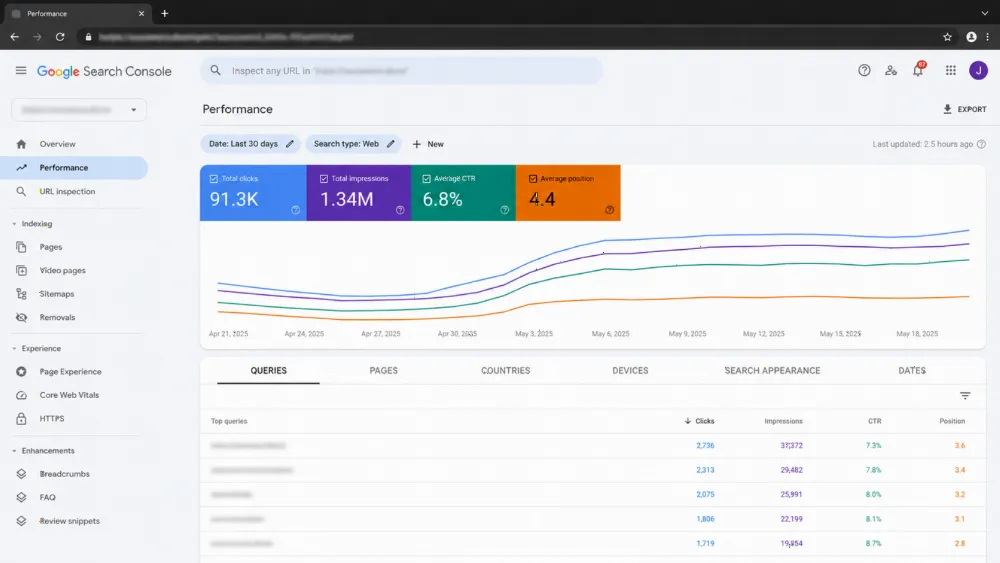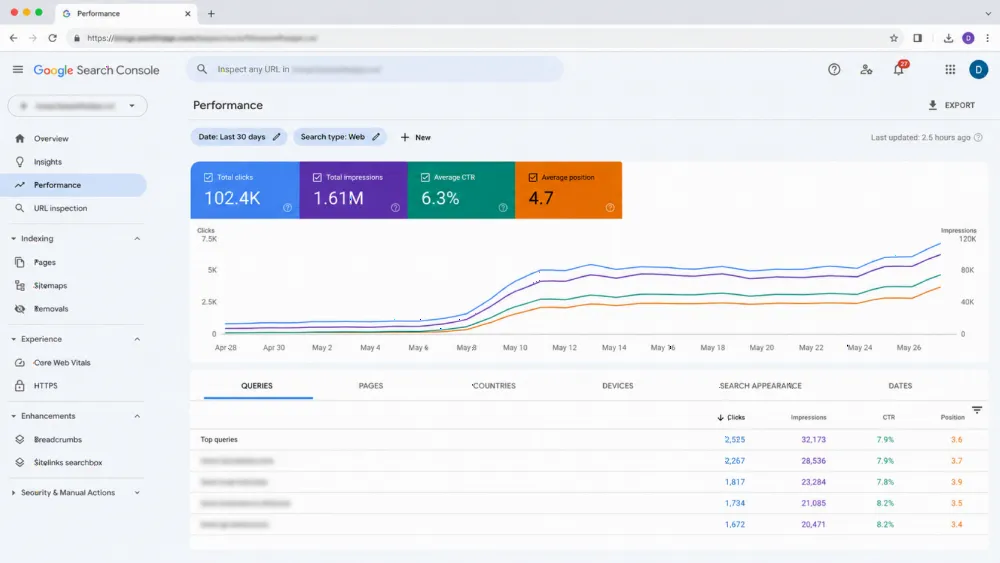
A pipeline-first B2B SEO strategy ranks for the queries your ideal customers search right before buying — not just high-volume terms — and ties every page to revenue through intent mapping, buying-committee content, technical SEO and multi-touch attribution. Traffic is a leading indicator; qualified pipeline and closed-won revenue are the score.
Want SEO that reports on revenue? WebStackRank runs data-driven SEO on SEO-friendly web development, measured against pipeline, not pageviews — talk to our team.
Why must B2B search visibility equal revenue?
Enterprise deals close over months, involve six-plus stakeholders and demand enormous trust. Meanwhile buyers do the heavy lifting alone: Gartner found that 67% of B2B buyers prefer a rep-free experience, and buyers report spending only about 17% of the total purchase journey meeting with potential suppliers (BusinessWire/Gartner, Gartner via ScalePartners). If your brand isn't present and persuasive at every research step, competitors quietly collect your pipeline.
That is the paradigm shift: the question is no longer "how do we rank?" but "how do we rank for the queries our ideal customers search right before they buy?" Answering it demands marketing, sales and product teams working from one shared picture of the buyer's journey. For the keyword-to-pipeline foundation, our companion guide B2B SEO: from keywords to pipeline goes deeper, and Google Ads for B2B lead generation covers the paid side of the same funnel.
How is B2B SEO different from B2C SEO?
Four differences reshape everything:
- The buying committee. You sell to the end user who wants usability, the manager who wants efficiency, the CFO who wants ROI and the IT director who wants security — often in one deal. Content must speak to all of them.
- Low volume, high value. An enterprise keyword with 50 monthly searches looks worthless on a B2C dashboard — but those 50 searches can represent millions in pipeline. Judge keywords by revenue potential, not search volume.
- Technical, jargon-heavy language. Business buyers search with precise terminology; generic keyword tools miss the phrasing your buyers actually use.
- Risk aversion. A bad software purchase can cost a buyer their job. Authority, proof and trust signals outweigh clever copy.
Because cycles run nine months or more, you also need a multi-touch mindset from day one: a prospect who finds you in January and signs in August must stay engaged the whole way. The SEO audit checklist is a good starting point for diagnosing where such journeys currently break.
How do you find the keywords that actually create pipeline?
Skip the vanity approach of sorting by search volume. The best B2B keyword research pulls from three sources most teams ignore:
- Closed-won CRM notes — the exact phrasing buyers used right before signing.
- Sales call recordings — prospect questions and objections are ready-made long-tail keywords.
- Support tickets — today's customer problems are tomorrow's search queries.
Ahrefs and Semrush still handle technical validation and competitor gaps, but your own customer language is the differentiator. Then map every keyword to the buyer's journey:
- TOFU (problem awareness): "what is…", "how to reduce…" → comprehensive guides and industry reports.
- MOFU (solution evaluation): "software", "vs", "alternatives", "best tools" → comparisons, case studies, webinars.
- BOFU (vendor selection): "pricing", "implementation", "enterprise provider" → pricing pages, ROI calculators, demo pages.
Right keyword, wrong intent is still a bounce. Match the page to the stage. This mapping is also the backbone of our programmatic SEO system and the technical SEO playbook that keeps those pages indexable.
How do you build content for an entire buying committee?
Think hub-and-spoke, organised by persona. A pillar page on "Enterprise Cloud Migration" (the hub) branches into persona-specific spokes: a technical deep-dive for the CTO, an ROI and cost-benefit analysis for the CFO, and a workflow-improvement piece for the end user. Interlink them so every committee member lands on content written in their language.
Two upgrades separate this from generic content marketing. First, every asset needs a next step matched to its funnel stage — a TOFU guide should offer a MOFU whitepaper, not a "Buy Now" button. Second, publish original data and strong positions: a survey of 500 enterprise CMOs earns links and rankings that "10 tips" listicles never will, because journalists and analysts cite proprietary research. Search engines increasingly reward demonstrated expertise on a narrow set of themes — pick five core topics tied to your product and cover them exhaustively to build topical authority. For B2B audiences specifically, see GEO for SaaS on winning AI-generated answers in your category.
What technical SEO do enterprise B2B sites need?
Brilliant content fails if crawlers can't reach it. Enterprise sites accumulate bloat — thousands of pages, subdomains, gated assets, legacy code — so technical discipline is the hidden growth lever:
- Flat architecture and crawl budget. Keep revenue pages within three clicks of the homepage; use robots.txt and canonical tags so bots spend crawl budget on pages that create pipeline, not faceted-navigation duplicates.
- Core Web Vitals. Heavy tracking pixels and marketing scripts slow enterprise sites to a crawl; impatient buyers bounce to competitors. Optimise loading, interactivity and layout stability relentlessly.
- Advanced schema. SoftwareApplication for SaaS products, FAQPage for People-Also-Ask visibility, Organisation and Article types for entity trust.
- Hreflang for global teams. Serve German buyers the German page and UK buyers the British-localised English page — currency, spelling and all.
Most enterprise SEO failures we audit are technical, not editorial. Our technical SEO audit service exists precisely for this diagnostic, and the Core Web Vitals launch checklist keeps performance from regressing after redesigns.
How do you earn backlinks in niche B2B industries?
Forget guest-post spam. In specialised verticals, relevance beats volume — one link from an industry association outweighs hundreds from irrelevant blogs. Four tactics work consistently:
- Digital PR with proprietary data. An annual "State of the Industry" report becomes the citation every trade journal links to.
- Integration and partner pages. If your platform connects to Salesforce, HubSpot or AWS, get listed in their partner directories.
- Unlinked brand mentions. Enterprise brands get press mentions without links; media monitoring plus a polite request converts them.
- Podcast guesting. Leadership appearances on industry shows reliably earn show-notes backlinks.
Quality compounds: every authoritative link raises the ranking ceiling for your entire content ecosystem. Pair link-building with our digital-marketing-agency website design thinking on how agencies present proof, or see how to get ChatGPT to recommend your business for the AI-visibility side of authority.
How do you convert B2B traffic into qualified pipeline?
Traffic is the input; pipeline is the output; CRO is the bridge. You can double organic revenue without new visitors by converting better. Three shifts matter:
- Capture by intent, not by reflex. A BOFU visitor comparing you to a competitor shouldn't get a newsletter popup — offer a custom ROI assessment or a tailored demo instead. Low-intent TOFU visitors get the whitepaper; high-intent buyers get the call.
- De-risk the form. B2B buyers are risk-averse. Put customer logos, video testimonials and G2/Gartner badges on landing pages; cut forms to a business email and enrich the rest (company size, revenue, title) with data-enrichment tools on the backend; write buttons as "Get My Free Audit", never "Submit".
- Offer self-serve engagement. Many buyers don't want a sales call yet — an interactive product tour or self-serve ROI calculator can lift engagement dramatically on landing pages.
Message match is the non-negotiable: the landing page headline must mirror the keyword intent that brought the visitor. Our lead-generation conversion system and SEO-friendly web development service turn these principles into shipped pages.
How do SEO, PPC and ABM work together in B2B?
Sophisticated teams run search, paid and outbound as one ecosystem:
- Shared query data. PPC reveals which keywords convert to revenue this month; SEO uses that data to prioritise long-term content bets on proven terms.
- SERP domination. For your most valuable keywords, rank organically, hold the featured snippet and run the top ad. Owning the full screen lifts trust and click-through far beyond any single placement.
- Budget rotation. Once SEO holds a stable top-3 spot for an expensive keyword, PPC dials back spend there and reallocates to experimental terms.
- ABM integration. IP-reveal technology can personalise CTAs for target accounts — a visitor from a named account sees a case study from their competitor. Pair this with pillar pages written for each target vertical, which sales reps can drop into outreach as proof of industry authority.
Gartner's research notes that organisations blending rep-led and self-service interactions are 3.9x more likely to exceed profit growth expectations (BusinessWire/Gartner) — the hybrid journey is the model, not the exception.
How do you prove B2B SEO actually drives revenue?
Stop reporting leading indicators to the C-suite. Rankings, sessions and bounce rate diagnose problems; they don't prove value. Track lagging metrics: organic-sourced MQLs, SQLs, pipeline velocity and closed-won revenue.
Because sales cycles are long, last-click attribution will rob SEO of credit — the prospect who found you via organic search in January, clicked a retargeting ad in March and bought in August gets attributed entirely to the last touch. Implement multi-touch attribution (W-shaped or linear) inside your CRM so organic gets credit for originating and influencing pipeline. Then close the loop: analyse which organic pages produce the highest-lifetime-value customers, and reverse-engineer your content budget from that data.
As the saying goes, what gets measured gets managed. Measure pipeline, and the budget conversations get much easier.
Frequently asked questions
What is a pipeline-first B2B SEO strategy?
It's an approach that judges every SEO activity by revenue impact: targeting keywords buyers search before purchasing, mapping content to the buyer's journey and buying committee, and attributing closed-won revenue back to organic search. Traffic and rankings become diagnostic metrics, not goals.
How is B2B SEO different from B2C SEO?
B2B deals involve buying committees, long sales cycles and low-volume, high-value keywords where 50 monthly searches can mean millions in pipeline. Buyers are risk-averse and research heavily before contacting sales — 67% prefer a rep-free experience (Gartner). Content must address multiple personas and build authority over months.
What are the best B2B keyword research sources?
Your own customer language: closed-won CRM notes, sales call recordings and support tickets reveal the exact phrasing buyers use. Validate with Ahrefs or Semrush for volume and competition data, then map every keyword to a funnel stage (TOFU, MOFU, BOFU) before creating content.
How long does B2B SEO take to generate pipeline?
Expect 6–12 months for compounding pipeline impact, though technical fixes and BOFU page optimisations can convert within weeks. Long sales cycles mean early measurement should track leading indicators (rankings on buying-intent terms, demo requests) while revenue attribution matures.
How do you attribute revenue to SEO in long B2B sales cycles?
Use multi-touch attribution (W-shaped or linear models) inside your CRM instead of last-click. Track organic-sourced MQLs, SQLs, pipeline velocity and closed-won revenue, and give organic credit for both originating new deals and influencing existing ones across the months-long journey.
Should B2B companies combine SEO and PPC?
Yes. PPC delivers immediate data on which keywords convert to revenue, which SEO uses to prioritise content. For high-value terms, hold the organic ranking, the featured snippet and the top ad simultaneously to dominate the SERP. Once organic is stable, rotate PPC budget to experimental keywords.
What technical SEO issues hurt B2B sites most?
Crawl budget wasted on faceted navigation and duplicate pages, slow Core Web Vitals from marketing script bloat, missing schema markup, and broken hreflang on multilingual sites. A technical audit usually uncovers the bottlenecks — see our technical SEO audit service for enterprise diagnostics.
Ready to turn search into pipeline? WebStackRank builds pipeline-first B2B SEO on technically sound websites — from intent mapping to revenue attribution. Talk to our team.