A B2B SEO strategy turns search into qualified pipeline — MQLs, SQLs, and closed revenue — not just traffic. This guide shows how to research buyer-intent keywords, build content for the full buying journey, convert organic visitors, and measure ROI with CRM attribution.
Want this done for you? WebStackRank runs no-retainer SEO programmes engineered around pipeline, and every engagement starts with a technical SEO audit so nothing leaks conversions.
Why must a B2B SEO strategy target pipeline, not traffic?
Because in B2B, traffic is a means and revenue is the end. A consumer brand can celebrate a million visitors; a B2B company selling six-figure software, industrial equipment, or retainers cannot, unless those visitors become conversations, demos, and deals. Every keyword choice, page build, and report should answer one question: did this create pipeline?
The buying reality makes this non-negotiable. Forrester's research across more than 16,000 buyers puts the average buying group at 13 stakeholders, with ranges from five to 16 people involved in a single purchase decision (Callbox). You are never writing for one reader — you are writing for the end user, the finance gatekeeper, the security reviewer, and the executive sponsor all at once.
Meanwhile, buyers complete most of their journey without you. Gartner's 2025 research found 61% of B2B buyers prefer an overall buying experience with no sales representative involved (Lead Forensics), while classic Think with Google research found buyers are 57% through the purchase process before they ever contact a supplier — and 90% use search engines to research options. The same Gartner research, surveyed across 632 buyers, found 74% of buyer teams experienced unhealthy conflict during decisions — while content built around the group's collective needs improved consensus by 20% (Inkbot Design). If your content is not doing the selling while you are absent, someone else's is.
That is the entire logic of pipeline-first SEO: rank for the searches each stakeholder runs during their silent research phase, then convert that attention into qualified conversations. See how this operating model works in our companion piece, B2B SEO strategy: the WebStackRank approach, and how we package it as a no-retainer SEO programme.
How do you find B2B keywords that actually signal buying intent?
Forget sorting keyword lists by search volume. In B2B, a term searched 40 times a month by procurement managers with budget beats a term searched 40,000 times by curious students. Intent modifiers are the fastest way to separate the two.
Start with modifiers that signal commercial readiness. Terms containing software, platform, tool, enterprise, for [industry/role], pricing, cost, provider, agency, consultant, or alternatives consistently attract people deep in evaluation. "Inventory management software pricing" will never out-volume "what is inventory management," but it will out-convert it by orders of magnitude.
Mine your sales and customer success teams. Ask what exact phrases prospects use on demo calls and what questions they ask right before signing. The language of a live buyer is your highest-converting keyword list — no tool needed. Record sales calls for a month and you will find keyword opportunities no competitor's tool subscription reveals.
Map keywords to the funnel explicitly. Every target term should carry a funnel tag before you write a word:
| Funnel stage | Intent | Example queries | Goal |
|---|---|---|---|
| Problem aware | Informational | "why is employee turnover so high" | Capture early attention, build list |
| Solution exploring | Commercial investigation | "HR software vs outsourcing" | Win the shortlist |
| Vendor selecting | Transactional | "[brand] pricing", "[brand] vs [competitor]" | Book the demo |
Write for the committee, not the individual. Forrester's research shows that content tailored narrowly to one persona had a 59% negative impact on group consensus, while content relevant to the whole buying group made buyers three times more likely to report a high-quality deal. Build pages — especially pricing, security, and implementation pages — that answer the champion, the economic buyer, and the evaluator on one screen.
Relevant reading: our technical SEO playbook for 2026 shows how to structure these pages so crawlers and humans both understand them, and our guide to lead-generation website development covers how search intent should shape page design from the first wireframe.
What content architecture builds authority on complex B2B topics?
Random blogging does not rank complex B2B topics. What works is the topic-cluster model: one authoritative pillar page covering a broad subject, surrounded by cluster articles that go deep on each subtopic, all bound together by deliberate internal linking.
Build the pillar first. A pillar like "The Complete Guide to Supply Chain Visibility" targets the broad head term and surveys every subtopic at a high level. Each subtopic — "Reducing Port Congestion Delays," "Supply Chain Visibility Software Integration," "Metrics That Actually Predict Disruption" — gets its own article that links back to the pillar, and the pillar links out to each cluster piece with descriptive anchor text.
Earn E-E-A-T the only way that works: proof. Google's emphasis on Experience, Expertise, Authoritativeness, and Trustworthiness punishes generic content written by generalists. Three practices fix this:
- Interview your SMEs. Your engineers, product managers, and founders hold insights no freelance writer can invent. A 30-minute interview transcribed into a framework beats a 3,000-word generic guide every time.
- Publish original data. Survey your customers, anonymize the results, and release an annual benchmark report. Journalists cite original numbers; those citations become the highest-quality backlinks in B2B.
- Show real authorship. Every article carries a detailed author bio with credentials and a LinkedIn profile. Anonymous content does not convert skeptical enterprise buyers.
Steal the comparison page playbook. Buyers search "[your competitor] alternatives" constantly. If you do not publish an honest, transparent comparison page, a review site or your competitor owns that narrative. Done well — honest about where you win and who you are not right for — comparison pages are among the highest-converting pages in B2B SEO.
For the mechanics of scaling this, see our breakdown of programmatic SEO for US businesses and how SEO-friendly web development foundations make cluster architecture crawl-efficient.
How do you turn organic B2B visitors into sales pipeline?
Ranking without conversion is a hobby. Your site must work as a 24/7 salesperson, and that means engineering the conversion path as carefully as the content.
Match the ask to the journey stage. Nobody books a demo from a definition article. Offer micro-conversions early (newsletter, checklist, ROI template) and macro-conversions late (demo, trial, pricing call). A visitor who downloads your buyer's guide this month is your demo next quarter — if your nurture emails deliver the MOFU and BOFU content you already built for SEO.
Gate strategically, never greedily. Never gate content you want to rank — search engines cannot fill out forms, and gated pages rarely earn links. Keep educational content and pillar pages ungated for maximum visibility; gate the assets people will trade an email for, like templates, calculators, and deep-dive benchmark reports.
Shorten forms ruthlessly. Name, work email, company, and job title are usually enough. Everything else can come from data-enrichment tools that populate company records from the email domain alone. Every extra field costs you completions.
Add conversational paths on high-intent pages. A chatbot on your pricing page that asks "Want me to connect you with an expert on enterprise plans?" converts visitors who would never fill out a static form. Conversational marketing tools turn pricing-page lurkers into pipeline.
This conversion layer is exactly what our lead-gen website framework is built around, and our custom web application development team builds the calculators, configurators, and portals that make high-intent pages convert.
How should you measure B2B SEO ROI in a long sales cycle?
Rankings and sessions are diagnostic metrics, not business outcomes. In B2B, SEO's report card must read: organic MQLs, organic SQLs, pipeline value, closed-won revenue, and pipeline velocity.
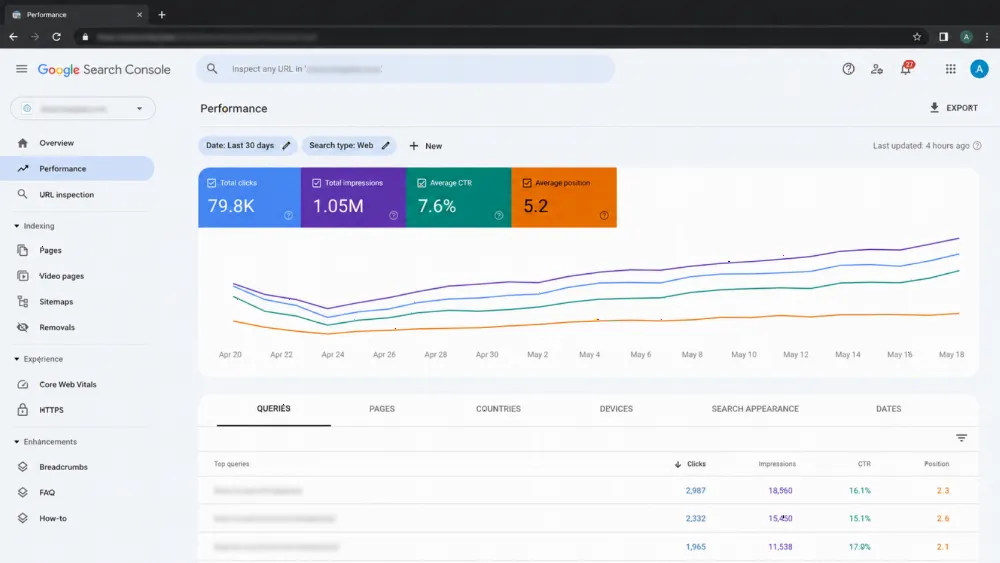
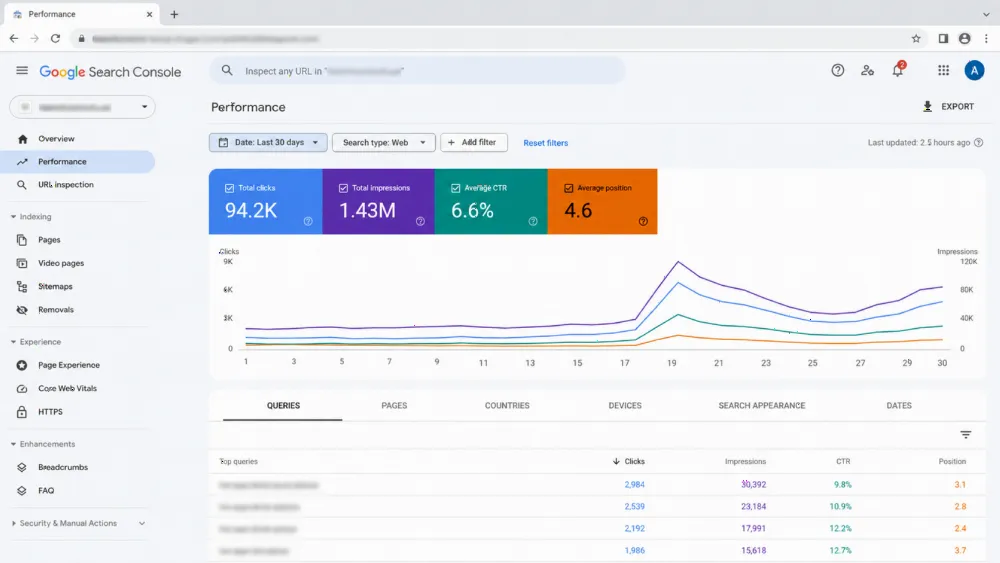
Integrate SEO data with your CRM. Pipe Google Search Console and analytics into Salesforce or HubSpot so every opportunity carries its origin story. Without that connection, SEO remains an expense line; with it, it becomes a revenue channel you can defend in budget season.
Abandon last-click attribution. A buyer finds your blog in January, clicks a retargeting ad in March, attends a webinar in May, and books a demo via direct search in July. Last-click gives SEO zero credit for the January touchpoint — the one that created the opportunity. Use multi-touch models (W-shaped or linear) so SEO gets credit for both the first touch that created awareness and the BOFU touch that closed the deal.
Track first-touch pipeline separately. Isolate how much pipeline began with organic search as the account's very first interaction with your brand. That number proves SEO is an engine for net-new business, not just a harvester of existing demand.
Watch pipeline velocity. Organic inbound leads typically close faster than outbound leads because they arrive pre-educated and pre-sold. Documenting that speed difference is one of the most persuasive arguments for SEO budget.
Our technical SEO audit includes measurement setup reviews, and the companion piece on WebStackRank's B2B SEO approach goes deeper into the operating model.
What mistakes most often derail B2B SEO programmes?
The "me, me, me" blog. Corporate blogs full of award announcements and new-hire posts rank for nothing and convert no one. Buyers care about their problems, not your press releases. Keep company news in a press section; fill the blog with customer-centric problem-solving.
Chasing volume over intent. Ranking #1 for a 50,000-search term that attracts students and job seekers is worse than ranking #3 for a 50-search term that attracts buyers. Audit your keyword portfolio for commercial intent quarterly.
Content decay. Teams publish relentlessly and never revisit. Meanwhile, competitors update their guides and steal your rankings. Historical optimization — finding pages that slipped from page one to page two, refreshing them with new data and examples, and republishing — often outperforms net-new content in half the time.
Ignoring the AI layer. 73% of B2B buyers now use AI tools in purchase research, and Averi's March 2026 analysis of 680 million citations found AI search traffic converts at 14.2% compared with 2.8% for traditional organic search (PR Newswire). If your content is not structured to be cited by answer engines — clear facts, direct answers, original data — you are invisible in the fastest-growing discovery channel.
Before a redesign, protect what you have with our SEO migration checklist. And when traffic stalls despite solid content, run the diagnostics in our technical SEO playbook for 2026 — crawl and indexation issues silently kill B2B programmes more often than content gaps do.
Frequently asked questions
How long does B2B SEO take to generate pipeline?
Expect 4–6 months before meaningful pipeline and 9–12 months for compounding returns. B2B sales cycles run months, so SEO-influenced revenue lags traffic. Track leading indicators (rankings for BOFU terms, demo-page traffic) in the first quarter to confirm direction — our no-retainer SEO programme reports on pipeline metrics from month one.
Should B2B companies gate their content?
Gate only high-value downloadable assets like templates, calculators, and benchmark reports. Never gate content you want to rank in search — Google cannot fill out forms, and ungated educational content earns the links that power everything else.
What is the most important B2B SEO metric?
Pipeline value and closed-won revenue attributed to organic search. Rankings and traffic diagnose problems; only CRM-integrated revenue metrics prove SEO's worth to the business.
How many keywords should a B2B SEO strategy target?
Fewer than you think. Ten high-intent keywords that map to your buying committee outperform a hundred informational terms. Start with BOFU terms that convert, expand into MOFU comparisons, then build TOFU authority.
Do B2B buyers still use Google, or just AI tools?
Both. Forrester's 2026 research found generative AI and conversational search is now the single most-named research source for buyers (Daily Guardian), but traditional search still dominates overall volume. Winning both requires citable, structured content plus classic SEO fundamentals — see our guide on how to get ChatGPT to recommend your business.
How do you target C-suite executives with SEO?
Target their concerns, not how-tos: strategic frameworks, risk management, compliance, ROI models, and industry outlooks. Keep it data-backed and concise, authored by peers — your own executives or recognized SMEs — rather than junior writers.
The bottom line
A winning B2B SEO strategy is not about chasing algorithms. It is about understanding the buying committee, anticipating each stakeholder's searches across a months-long journey, and building content that converts attention into pipeline. Technical excellence, intent-mapped keywords, authoritative architecture, ruthless conversion design, and CRM-level measurement — executed together, they turn organic search from an opaque expense into the most defensible revenue channel in the business.
Ready for SEO that reports in revenue, not rankings? Talk to WebStackRank about a no-retainer SEO programme built around your pipeline targets — or start smaller with a technical SEO audit that finds the leaks first.