If you operate a service-based business—whether you are a plumber in Chicago, an HVAC technician in Dallas, or a landscaper in Seattle—your digital livelihood depends heavily on one specific piece of digital real estate: the Google Map Pack. When a homeowner's pipes burst at 2:00 AM, they do not turn to a phone book, nor do they scroll to the bottom of page three on a search engine. They type "emergency plumber near me" into their smartphone and call one of the top three businesses that appear on the map.
Mastering local seo usa is no longer a luxury for American service businesses; it is a fundamental requirement for survival and growth. The United States represents one of the most highly competitive, diverse, and lucrative local search markets in the world. To capture this market, you need a strategy that specifically targets your immediate geographic area, builds undeniable trust, and signals to search engines that you are the best possible solution for a local searcher's problem.
In this comprehensive guide brought to you by WebStackRank, we will demystify the Google Maps ranking system. We will explore exactly what it takes to dominate your local market, from the technical foundations of your website to the way you interact with your community. Whether you are launching a new enterprise or trying to scale a multi-location service company, this guide will provide you with a clear, actionable roadmap.
Understanding the Landscape: Local vs. National Search
Before diving into the tactical steps of optimization, it is crucial to understand the fundamental differences in local vs national search strategies.
National SEO is about broad informational queries and capturing a wide audience. An e-commerce brand selling running shoes wants to rank nationally for "best marathon running shoes." The search engine's goal is to provide the best informational content or product pages regardless of where the searcher is physically located.
Local SEO, on the other hand, is entirely dependent on geography. When someone searches for "roof repair," Google understands that this query has "local intent." The searcher doesn't want to read a Wikipedia article about the history of roofing; they want a professional who can drive to their house today. Therefore, Google alters its search engine results page (SERP) to feature the "Local Pack" or "Map Pack"—a highly coveted block of three local business listings that appear above the traditional organic blue links.
For service-based businesses, prioritizing local search means focusing on localized keywords, building a hyper-local backlink profile, and maintaining flawless business listings. You are not competing against the entire internet; you are only competing against the other roofers, plumbers, or electricians in your specific zip codes and cities.
The Core Algorithm: Proximity, Relevance, and Prominence
To understand how to rank in the Google Map Pack, you must first understand the three pillars of the local search algorithm. Google explicitly states that local results are based primarily on proximity relevance and prominence ranking factors. Let's break down what each of these means and how you can influence them.
1. Proximity (Distance)
Proximity is exactly what it sounds like: how close is your business to the searcher? Google uses the location data from the user's mobile device or desktop IP address to determine their exact location. If a user is standing in downtown Austin and searches for "coffee shop," Google will show coffee shops within a few blocks, not across town.
For Service Area Businesses (SABs) like pest control or house cleaning, proximity is calculated based on the address you used to verify your business, even if you hide that address from the public display. While you cannot "fake" your physical location, you can optimize your digital presence to stretch your proximity radius as wide as possible by building strong relevance and prominence.
2. Relevance
Relevance measures how well a local Business Profile matches what someone is searching for. If someone searches for "tankless water heater installation," Google needs to know that your plumbing business actually offers this specific service.
You build relevance through:
- Selecting the correct primary and secondary categories on your business profile.
- Detailing your specific services and products on your website.
- On-page SEO, including headers, meta titles, and localized content.
- The keywords customers naturally use when leaving reviews for your business.
3. Prominence
Prominence refers to how well-known a business is. Some places are more prominent in the offline world—like famous museums or landmark hotels—and search engines try to reflect this offline prominence in local search results. However, for a standard local service business, prominence is built digitally.
You build prominence through:
- The volume and average star rating of your Google reviews.
- Backlinks from highly authoritative and locally relevant websites.
- Mentions of your business across the web (citations and directories).
- Your organic search ranking (strong traditional SEO boosts your Map Pack rankings).
The Foundation: Google Business Profile Optimization
Your Google Business Profile (GBP) is the lifeblood of your local visibility. It is the actual entity that ranks in the Map Pack. Merely "claiming" your profile is not enough; you must optimize every single available field. Here are the essential Google Business Profile optimization steps every service business must take:
Step 1: Claim and Verify Your Profile
Start by ensuring you have primary ownership of your GBP. Google will require verification, usually via a postcard sent to your business address, a phone call, or a video verification showing your work vehicles, tools, and office space. This step is vital to prove you are a legitimate business operating in the area.
Step 2: Select the Right Categories
Your primary category is the strongest relevance signal you can send to Google. If you are a plumber, your primary category should be "Plumber." Do not try to be clever or overly broad. Furthermore, take advantage of secondary categories. A plumbing business might add "Drainage service," "Water heater installation service," and "Gas installation service."
Pro Tip: Analyze the top three competitors in your market. Whatever primary category they are using is likely the one you should be using.
Step 3: Write a Keyword-Rich Business Description
You have 750 characters to describe your business. The first 250 characters are the most important as they often appear before the "read more" cutoff. Naturally weave in your core services and your primary service areas. For example: "XYZ Plumbing is a family-owned plumbing company serving Miami, Florida, and the surrounding areas. We specialize in emergency leak repair, water heater installations, and comprehensive drain cleaning."
Step 4: Add High-Quality Photos and Videos
Profiles with photos receive significantly more requests for directions and clicks to their websites than those without. Upload photos of your team, your branded trucks, your office building (if you have one), and before-and-after shots of your work. Geo-tagging these photos (adding location metadata before uploading) used to be a major ranking factor; while its impact has diminished, uploading fresh, real (non-stock) photos regularly signals to Google that your profile is active.
Step 5: Detail Your Services and Products
Google provides specific tabs for Services and Products. List every service you offer. Give each service a detailed description and a price if applicable. If you are an HVAC company, don't just put "HVAC Services." Create separate entries for "AC Repair," "Furnace Installation," "Duct Cleaning," and "Thermostat Replacement." This builds immense relevance for long-tail keyword searches.
Step 6: Utilize Google Posts
Google Posts function like mini-social media updates directly on your search result. Use them to announce special offers (e.g., "$50 off AC tune-ups this spring"), share recent blog posts, or highlight positive customer reviews. Posting once a week keeps your profile fresh and engaging for prospective customers.
Step 7: Populate the Q&A Section
Anyone can ask a question on your GBP, and anyone can answer it. Do not leave this to chance. Pre-populate your Q&A section by having someone ask your most frequently asked questions (e.g., "Do you offer 24/7 emergency service?", "Are your technicians licensed and insured?"), and then answer them yourself from your business account. This provides instant value to searchers and integrates more relevant keywords into your profile.
The Importance of Citations and Directory Listings
Once your GBP is optimized, you must establish trust across the broader internet. Google cross-references the information on your GBP with other databases to ensure your business is legitimate and operational. This introduces the concept of NAP consistency across web directories.
What is NAP?
NAP stands for Name, Address, and Phone number. For local SEO, consistency is paramount. If your business is listed as "Smith & Sons Plumbing" on Google, "Smith and Sons Plumbers" on Yelp, and "Smith's Plumbing" on the Better Business Bureau, search engines become confused. This confusion dilutes your digital authority and can harm your rankings.
How to Build and Maintain Citations
- Start with the Big Players: Ensure your NAP is perfectly consistent across Facebook, Yelp, Apple Maps, Bing Places, and the Better Business Bureau.
- Industry-Specific Directories: If you are a contractor, get listed on Angi, Houzz, HomeAdvisor, and Thumbtack. If you are a lawyer, Avvo and FindLaw are essential.
- Local Directories: Look for your local Chamber of Commerce, city business directories, and local news community pages.
- Data Aggregators: In the United States, data aggregators like Data Axle, Factual, and Foursquare distribute business information to hundreds of smaller directories. Ensuring your information is correct with these aggregators will naturally fix dozens of downstream citations.
Conduct a regular audit of your citations using automated tools to catch and correct any discrepancies. Even a change from "Suite 100" to "Ste 100" or a change in a local area code tracking number can disrupt your NAP consistency.
On-Page SEO: Structuring Your Local Website
Your Google Business Profile and your website work in tandem. A highly optimized website will elevate your GBP in the Map Pack, and a highly visible GBP will drive massive traffic to your website.
Geotargeted Keyword Research
The first step of on-page optimization is geotargeted keyword research for service areas. You need to know exactly what your potential customers are typing into the search bar.
Typically, local keywords follow a specific formula:
- [Service] + [City] (e.g., "roof repair Denver")
- [Service] + near me (e.g., "electrician near me")
- [City] + [Service] (e.g., "Seattle landscaping")
However, service businesses often serve an entire metropolitan area, not just the city they are based in. You must identify all the suburbs, counties, and neighborhoods where you operate. Use keyword research tools like Ahrefs, SEMrush, or Google Keyword Planner to find the search volumes for these specific local modifiers.
Crafting High-Converting Local Landing Pages
If your business operates in multiple cities or suburbs, simply listing them on your homepage is not enough. You need dedicated pages for each major area you serve. Optimizing city-specific landing pages is a highly effective way to capture search traffic outside of your immediate physical location.
How to structure a city-specific landing page:
- Targeted URL: yourwebsite.com/service-area/city-name-service/
- Localized H1 Tag: Include the specific service and the city name (e.g., "Expert AC Repair in Frisco, TX").
- Unique Content: Never copy and paste the same content and just swap out the city name. Google recognizes this as duplicate content. Write unique copy discussing the specific challenges of that area (e.g., how the humidity in that specific coastal town affects HVAC systems).
- Local Proof: Embed a Google Map showing the specific service area. Include photos of your team working in that specific city.
- Localized Reviews: Pull reviews specifically from customers who live in that city and feature them prominently on the page.
- Clear Call to Action (CTA): Make your phone number clickable (click-to-call) and provide a simple contact form above the fold.
Technical Advantage: Local Business Schema
To give search engines an absolute, undeniable understanding of your business details, you should be implementing local business schema markup on your website.
Schema markup (or structured data) is a piece of code placed in the backend of your website. It translates your business information into a language that search engine bots read instantly. Instead of Google having to "guess" your phone number by reading your footer, Schema explicitly says, "This is the customer service phone number for a local plumbing business."
A standard Local Business JSON-LD schema script will include:
- Your official business name.
- The specific URL of your website.
- Your exact logo URL.
- Your physical address (Street, City, State, Zip).
- Your contact information.
- Your geographic coordinates (Latitude and Longitude).
- Your business hours.
- Links to your social media profiles.
Adding this code does not change how your website looks to a human visitor, but it significantly boosts your technical relevance in the eyes of the search algorithm.
The Necessity of Mobile-First Indexing
In today's digital environment, Google utilizes mobile-first indexing for local search. This means that Google predominantly uses the mobile version of your website's content for indexing and ranking. Since the vast majority of "near me" searches occur on smartphones, your website must be lightning-fast, highly responsive, and incredibly user-friendly on a mobile device.
To optimize for a mobile-first experience:
- Ensure text is easily readable without zooming.
- Space out clickable elements (like buttons and links) so they can be easily tapped with a thumb.
- Compress all images so the site loads in under three seconds on a 4G/5G connection.
- Implement a "sticky" header with a click-to-call phone number so users can contact you no matter how far down the page they scroll.
Building Prominence: Local Link Building
In the world of SEO, backlinks (links from other websites pointing to yours) are essentially votes of confidence. While national brands try to get links from Forbes or major blogs, local service businesses need a different approach. You want links that prove you are an active, trusted member of your specific geographic community.
Engaging in local link building through community involvement is not just good for SEO; it is excellent for public relations and brand building.
Highly effective local link-building strategies include:
- Sponsorships: Sponsor a local Little League baseball team, a 5K charity run, or a high school theater production. These organizations almost always have a "Sponsors" page on their website where they will link back to your business.
- Local Chambers of Commerce and Networking Groups: Joining your local Chamber usually comes with a highly authoritative backlink from their member directory. The same goes for local BNI (Business Network International) chapters.
- Local News and PR: Do you have a unique company story? Are you offering free services to veterans on Veterans Day? Pitch these stories to local digital newspapers and radio stations. A backlink from a local news outlet carries massive local authority.
- Partnering with Non-Competitors: If you are an electrician, build relationships with local plumbers, roofers, and HVAC techs. You can exchange links on a "Recommended Local Partners" page on your respective websites.
- Local Scholarships: Offer a modest scholarship ($500 - $1000) for local high school seniors heading to college. Local high schools and community colleges will frequently link to your scholarship page from their financial aid resources sections.
The Currency of Trust: Reputation Management
For a local service business, your online reviews are your most valuable currency. They dictate whether a consumer will click on your listing in the Map Pack, and they heavily influence whether Google puts you in the Map Pack to begin with. Managing online reputation for small businesses is a continuous, active process.
Asking for Reviews
You cannot afford to be passive about collecting reviews. Satisfied customers often forget to leave reviews, while angry customers will go out of their way to do so. You need a systematic approach to request reviews after every successful service call.
- Timing is everything: Ask for the review immediately after the job is completed, while the customer is still experiencing the relief of having their problem solved.
- Make it easy: Do not ask them to "search for us on Google." Send them a direct short-link via SMS or email that opens directly to your GBP review prompt.
- Train your technicians: Equip your field staff with business cards featuring a QR code that links to your review page. Incentivize your team for every 5-star review that mentions their name.
Leveraging Reviews for SEO Authority
Reviews do more than just build trust with humans; they provide algorithmic signals to Google. Leveraging customer reviews for SEO authority involves encouraging your customers to use specific keywords when they write their reviews.
While you cannot legally (or ethically) tell a customer exactly what to write, you can guide them. In your review request email, ask specific questions:
- "What specific service did we perform for you today?"
- "What city or neighborhood are you located in?"
- "How was your experience with our technician, [Name]?"
When a customer writes, "John did a fantastic job with our emergency drain cleaning in downtown Chicago," they are feeding Google highly relevant local keywords directly tied to your business entity.
Responding to Reviews
You must respond to every single review you receive—both positive and negative.
For positive reviews: Thank the customer, mention the service provided, and subtly mention the location. "Thanks for the 5-star review, Sarah! We were happy to help with your water heater replacement in Austin. Let us know if you need anything else!"
For negative reviews: Breathe, do not get defensive, and respond professionally. Apologize for the less-than-stellar experience and offer a phone number or email to take the conversation offline to resolve the issue. Future customers read negative reviews primarily to see how the business owner handles conflict. A professional, empathetic response can actually turn a negative review into a trust-building asset.
Measurement and Adaptation: Navigating the Local SEO Journey
SEO is not a "set it and forget it" marketing channel. The digital landscape is dynamic, competitors are actively trying to outrank you, and search algorithms change. To succeed in local seo usa, you must continuously track your progress and adapt your strategy.
Understanding Map Fluctuations
A common source of anxiety for business owners is watching their rankings bounce around. Why do map rankings fluctuate? There are several normal reasons:
- User Location Variance: The Map Pack is highly sensitive to the exact location of the searcher. You might rank #1 when searched from the north side of town, but #4 when searched from the south side.
- Google Algorithm Updates: Google frequently updates its core algorithm and its local ranking systems to combat spam and improve user experience. These updates can cause temporary reshuffling.
- Competitor Actions: If a competitor suddenly gets a surge of new reviews, builds local links, or optimizes their GBP, they might temporarily leapfrog you in the rankings.
- Time of Day: If your business hours are set to close at 5:00 PM, Google may rank you lower for searches happening at 8:00 PM, preferring to show businesses that are currently open.
Tracking Performance with Geo-Grids
Because proximity is so crucial, traditional rank trackers (which check a single location) are insufficient for local SEO. You need to be tracking geo-grid search performance.
A geo-grid tool drops a grid of nodes (e.g., a 5x5 or 7x7 grid spaced out by a mile each) over your city. It then simulates a search for your keyword at every single node and reports your ranking at that exact latitude and longitude.
This provides a visual "heat map" of your visibility. You might see a cluster of green "1s, 2s, and 3s" near your physical office, fading into yellow "4s and 5s," and eventually red "10+s" as you move further away. Your goal over time is to expand the green area of your geo-grid by building more prominence and relevance in the areas where you are currently weak.
Utilizing the Best Tools
To execute a high-level strategy, you should leverage the best local search marketing tools available in the industry:
- BrightLocal or Whitespark: Exceptional tools for auditing your NAP citations, tracking your local rankings, and monitoring your online reputation.
- Local Falcon or GeoRanker: The industry standards for running highly accurate geo-grid ranking reports.
- Pleper: A fantastic Chrome extension that provides deep insights into your competitors' Google Business Profile categories and attributes.
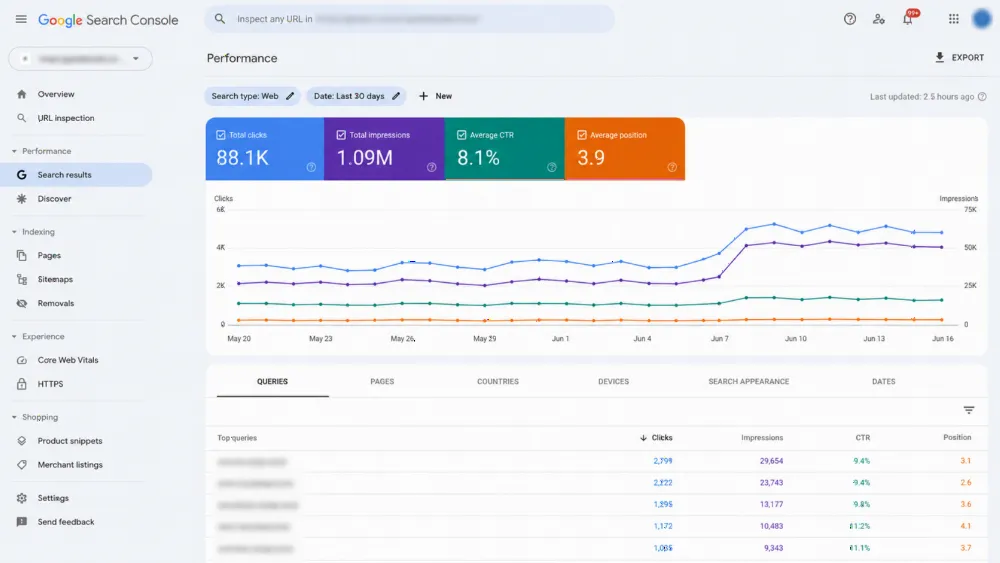
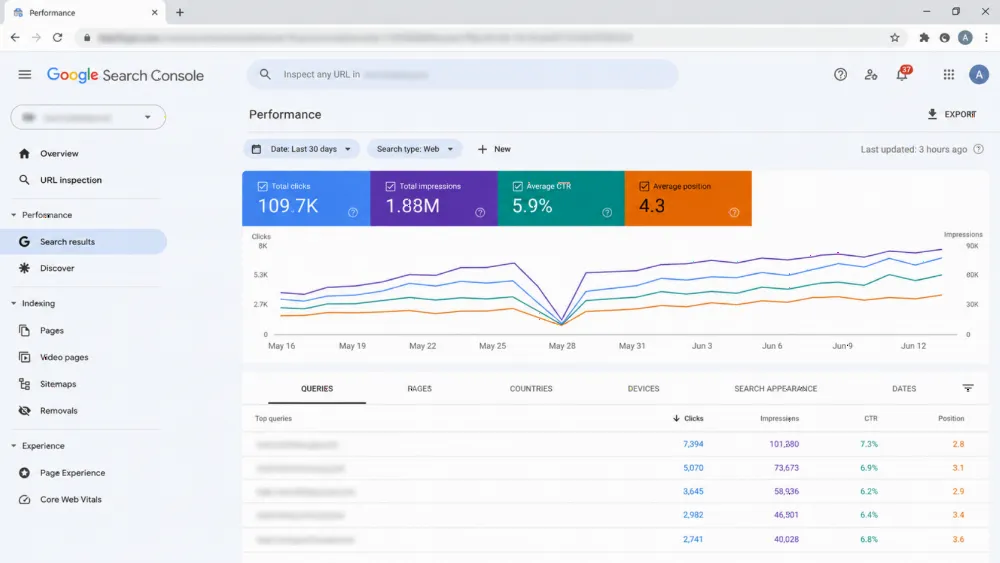
- Google Search Console & Google Analytics: Essential (and free) tools directly from Google to track the organic traffic hitting your website, monitor page speed, and ensure your site is free of technical errors.
Advanced Tactics: Staying Ahead of the Curve in the USA Market
As the US market continues to saturate, basic optimization will only get you so far. Service businesses that want to dominate multiple geographic areas need to deploy advanced tactics.
Service Area Business (SAB) Optimization
If you are a plumber, you likely work out of your truck and do not have a storefront where customers visit you. Google classifies you as a Service Area Business. You are allowed to hide your physical address on your GBP while setting a defined "Service Area" (up to 20 cities, zip codes, or counties).
A critical warning: Do not create multiple "fake" virtual offices or use PO Boxes to try and trigger multiple Map Pack listings in different cities. Google's spam filters in the US are highly aggressive and will suspend your profile, completely erasing your online visibility. Instead, focus on building robust, unique city-specific landing pages on your website and driving localized links to those specific pages to capture organic traffic outside your immediate physical proximity.
Leveraging Google Local Services Ads (LSAs)
While this is technically an advertising strategy rather than organic SEO, it is intrinsically tied to local search. In the USA, Google Local Services Ads appear at the very top of the SERP, above the Map Pack. They feature a "Google Guaranteed" green checkmark.
You pay per lead (phone call or message), not per click. To get approved, Google requires background checks on your business and field workers, as well as proof of insurance and licensing. Because LSAs rely heavily on your review count and star rating to determine ad placement, your organic reputation management directly fuels your paid advertising efficiency. Integrating LSAs with your organic local seo usa strategy creates an impenetrable wall of visibility at the top of the search results.
User Experience (UX) and Behavioral Signals
Google is increasingly using behavioral signals to determine rankings. This means they monitor how real human beings interact with your GBP and your website.
- Do people search for your brand name directly? (This is a massive positive signal).
- When they click your listing, do they immediately ask for directions or click to call?
- If they visit your website, do they stay and read the content, or do they immediately bounce back to the search results?
To optimize these signals, your brand needs to be memorable, and your website must immediately answer the searcher's question. Clear typography, fast loading times, and intuitive navigation will reduce bounce rates and signal to Google that users are highly satisfied with your business as a search result.
Conclusion
Conquering the Google Maps ranking system is arguably the most profitable marketing endeavor a local service business can undertake. When done correctly, local seo usa transforms your digital presence into an automated, 24/7 lead-generation machine.
Success requires a holistic approach. It is not just about sprinkling keywords on a page or buying a directory listing. It requires a flawless, highly descriptive Google Business Profile. It demands a fast, mobile-friendly website structured with technical precision and localized landing pages. It relies on the consistency of your business data across the entire internet. And perhaps most importantly, it depends on your real-world reputation—your ability to provide outstanding service, secure glowing customer reviews, and actively participate in your local community.
By understanding the interplay of proximity, relevance, and prominence, and by meticulously applying the strategies outlined in this guide from WebStackRank, you will position your service business above the competition. You will ensure that the next time a local customer is in desperate need of your services, your business is the first—and most trusted—option they see. Start auditing your presence today, claim your digital territory, and watch your local business thrive.
Want to dominate your Map Pack? WebStackRank runs data-driven local SEO on a fast, SEO-friendly website, backed by a rigorous technical SEO audit. Keep reading: our guide to Local SEO maps, landing pages & reviews and AEO for local businesses in the USA. Ready to start? Talk to our team.