Answer Engine Optimisation (AEO) makes AI assistants — ChatGPT, Google AI Overviews, Perplexity, Gemini — name your local business when someone asks for a recommendation. It works by feeding machines clean facts: a complete Google Business Profile, consistent citations, schema markup, conversational content and genuine reviews that AI can verify and quote.
Want AI engines to name your business? WebStackRank delivers generative engine optimisation and data-driven local SEO, grounded in a thorough technical SEO audit — talk to our team.
Why is AEO suddenly critical for local businesses?
The shift is measurable. Comscore reported that 39.4% of US Google desktop searches included an AI Overview in June 2026, up from 25.8% a year earlier (Search Engine Land), while SparkToro and Similarweb found 68% of US searches now end in zero clicks — users get the answer without visiting any website (Colorlib/SparkToro). For local queries, the stakes are sharper: a usability study found 69% of people seeking local services like dentists still clicked through, but they treated the AI output as a curated shortlist — if you're not named in the answer, you're not on the shortlist (Search Engine Land).
Traditional local SEO chased rankings in the "10 blue links" and the map pack. AEO asks a different question: when an AI answers a conversational query about your service and city, does it cite you? The two disciplines overlap — reviews, citations and content still matter — but AEO optimises for machines that synthesise, not humans that click. Our companion playbook AEO for local and national brands covers the brand-level strategy.
How do local businesses actually appear in AI Overviews?
Modern AI search runs on retrieval-augmented generation (RAG): the assistant performs a live web search, pulls the top factual documents, reads them and synthesises an answer. For local queries, it draws from three sources:
- Google Business Profile data — hours, location, services, pulled in real time.
- Customer reviews — AI summarises sentiment, matching review phrases ("family-friendly", "great with kids") to the asker's intent.
- Authoritative citations — your website and trusted directories (Yelp, BBB, Chamber of Commerce) cross-verified against each other.
Here's what matters most for local: Profound's 2026 analysis found that the growth in Google's AI Mode citations came almost entirely from Business Profile and Product Knowledge Panel pages — hitting hospitality, home services, restaurants, real estate and healthcare hardest (iPullRank). Your GBP isn't just a listing anymore; it's a citation source. And consistency is the gatekeeper: if your website says you open at 8 AM but Yelp says 9 AM, the AI loses confidence and picks a competitor with cleaner data. Keep your local SEO foundation tight first.
What is entity-based optimisation — and why does AI care?
Stop thinking in keywords; start thinking in entities — the distinct "things" AI models understand: your business, your city, your services, your attributes. AI builds a knowledge graph of relationships between entities. When the web consistently associates "Apex Pro Plumbing" with "Atlanta", "water heater repair" and "24/7 service", the model learns that mathematical relationship — and retrieves your business when someone asks for an emergency plumber in Atlanta.
Build your entity identity deliberately:
- One central node — your homepage or About page — that every external profile points back to.
- SameAs links in schema connecting your site to your Facebook, Yelp and directory profiles, telling AI these are the same entity.
- Co-occurrence — your brand name appearing near your services and city on third-party sites (event sponsorships, press releases, local news).
Even unlinked brand mentions count: an LLM extracts "the best pizza in town can be found at Luigi's Pizzeria on Main Street" as a fact with positive sentiment, hyperlink or not. Generate genuine local buzz and the machines notice. For the broader entity strategy, see how to get ChatGPT to recommend your business and our AI visibility audit checklist.
What schema markup do local businesses need for AEO?
Structured data is how you speak the AI's native language. Instead of hoping a crawler understands that a string of numbers is your phone number, JSON-LD schema labels it explicitly. The essentials for a brick-and-mortar business:
- The most specific business type —
Dentist,Plumber,RoofingContractor, not justLocalBusiness. - Core NAP facts — name, address, telephone matching your Google Business Profile exactly.
- areaServed — the cities and neighbourhoods you cover (critical for service-area businesses that travel to customers).
- sameAs — links to your social and directory profiles, consolidating entity identity.
- Review and FAQ schema where relevant, plus opening hours and price range.
Deploy it as JSON-LD in the page head — it's the format Google prefers and the easiest to maintain. Schema doesn't guarantee citations, but it removes ambiguity, and AI systems reward factual certainty. Our technical SEO playbook covers the implementation basics, and technical SEO audit services catch the markup errors that silently cost you.
How do you optimise your Google Business Profile for conversational queries?
People don't ask AI the way they typed into Google. Traditional search: "vet clinic near me." Conversational search: "Are there any vet clinics open on Sunday near downtown that specialise in exotic birds?" Your GBP must hold the semantic data to answer the second version.
Three upgrades that matter:
- Expand services in customer language. Don't just list "Landscaping" — add "drought-resistant front yard landscaping" and "weekly lawn mowing for large estates". Mirror how people actually talk.
- Populate the Q&A section yourself. Seed it with real conversational questions and thorough answers: "Do you offer emergency HVAC repair on holidays?" → "Yes — 24/7, 365 days a year, including all major holidays, across the greater Chicago area." These become exact-match fuel for AI answers.
- Collect semantically rich reviews. A generic "five stars, great service!" is useless to an AI. Train staff to request specifics: "If you were happy with the brake pad replacement on your Honda today, we'd love a review mentioning it." When someone asks for the best mechanic for Honda brake repairs, those detailed reviews trigger your business as the definitive answer.
Treat GBP optimisation as the front line of your local SEO maps ranking system — and if managing it all in-house is too much, our no-retainer SEO service handles profile, reviews and citations end to end.
What content strategy wins AI answers for service businesses?
Keyword-stuffed service pages ("If you need a roofing contractor Denver, contact our Denver roofers today") actively damage credibility with language models. Write for how people ask:
- The bite-snack-meal structure. Under each question-style H2, give a 2–3 sentence direct answer (the bite AI can lift), then bullet context (the snack), then the full deep dive (the meal).
- FAQs on every service and location page — not one generic FAQ page. Answer ultra-specific local questions: "How long does a kitchen remodel take in a Miami condo?" "Do I need a permit for cabinet replacement in Miami-Dade County?" Granular, localised answers are exactly what AI models crave.
- Author bios with credentials for professional services. Lawyers, doctors, accountants: list licences, years of experience and use Person schema. AI systems weight E-E-A-T signals when choosing sources.
One caution: conversational queries trigger AI Overviews at very high rates — WashU research found nearly 65% of question-form queries produced an overview (Digital Information World). Writing in question-and-answer form is literally writing in the format AI prefers. To scale this across many locations, use a programmatic SEO system, and run an AI visibility audit to find where your brand is already — and isn't — being cited.
Why do voice searches make AEO non-negotiable?
Voice assistants — Siri, Alexa, Google Nest, in-car systems — give one answer, not ten links. Ranking third on desktop still earns clicks; in voice, if you're not the definitive answer, you don't exist. Voice queries are longer, conversational, hyper-local (GPS-driven) and high-intent — the user is usually ready to call or visit now.
Winning voice means combining everything above: impeccable GBP data (correct coordinates, current hours), lightning-fast page loads, and content that matches spoken queries. If your business serves customers who search on the go — restaurants, emergency services, retail — voice readiness isn't optional anymore. Speed is the technical half of this: our guide to fast, SEO-ready websites covers the performance work voice assistants reward.
How do you fix citations that confuse AI?
AI models hunt for consensus. If your website says you close at 5 PM, Yelp says 6 PM and an old Chamber listing says 4 PM, the model experiences data conflict and moves on. Run a citation cleanup:
- Audit everything. Search your phone number and business-name variations to find every directory listing.
- Standardise NAP formatting. Pick one exact format — "Ste." vs "Suite", punctuation, abbreviations — and use it identically everywhere.
- Push corrections through data aggregators to fix hundreds of smaller directories at once.
- Claim and update the big four — Google, Yelp, Facebook, Bing — plus your industry directories.
Beyond accuracy, build trust signals: respond to every review (positive and negative), earn backlinks from trusted local entities (city government, universities, local news), and keep your GBP and site actively updated. Consistent activity tells AI crawlers your data is alive and maintained — see programmatic SEO for scaling content freshness across locations.
How do you measure AEO performance?
Zero-click answers make this tricky — the user may never visit your site. But these signals work:
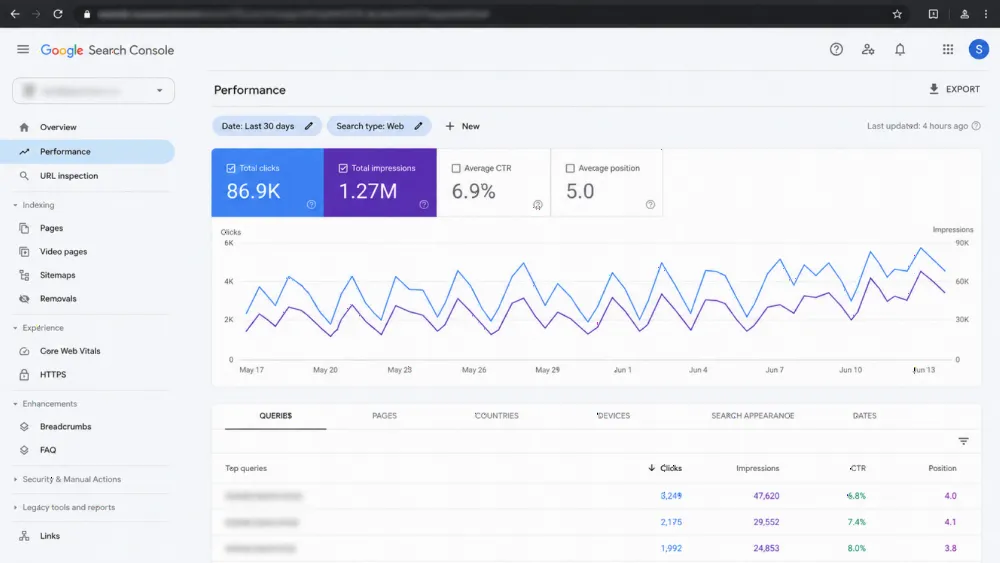
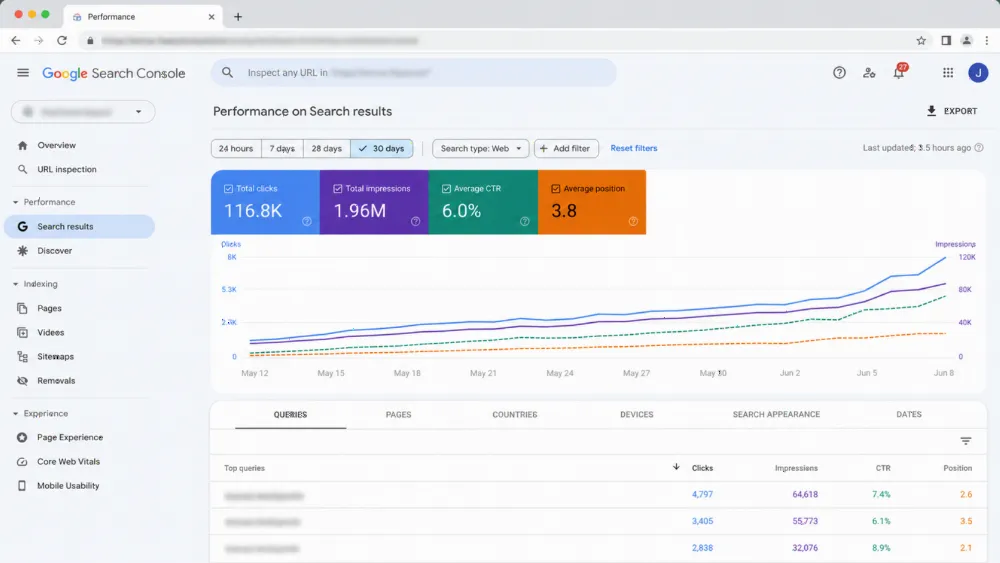
- Google Search Console: watch impressions for long-tail, conversational queries. A spike in question-form impressions means your AEO work is gaining traction.
- GBP Insights: track direct calls and direction requests. AI Overviews surface GBP listings directly, so rising calls without rising website clicks is a classic AEO-success signature.
- Brand-mention tracking: monitor how often AI assistants name your business (manual spot-checks across ChatGPT, Perplexity, Gemini) and whether citations link to you.
- SERP feature trackers: advanced tools now track AI Overview appearances and citation carousels — watch whether your brand appears in the generated text.
AEO compounds: every clean citation, review and schema deployment makes the next one more effective. Start with a baseline AI visibility audit or the broader SEO audit checklist, fix what's broken, then re-measure quarterly.
Frequently asked questions
What is AEO for local businesses?
AEO (Answer Engine Optimisation) is the practice of making AI assistants recommend your local business. It combines entity optimisation, Google Business Profile completeness, citation consistency, schema markup, conversational content and reviews — so AI models can verify your facts and cite you in generated answers.
How is AEO different from local SEO?
Local SEO aims to rank your page or map listing so users click through. AEO aims to make your business the answer itself — named and cited inside AI-generated responses. Local SEO feeds clicks; AEO feeds AI synthesis. You need both: local SEO builds the visibility AEO converts into recommendations.
Why do AI Overviews matter for local search?
Because scale is here: 39.4% of US desktop searches showed an AI Overview in June 2026 (Comscore), 68% of searches end without a click (SparkToro/Similarweb), and conversational queries trigger overviews ~65% of the time. For local services, the AI answer is becoming the shortlist — if you're not in it, you're invisible.
How long does AEO take to work?
Citation cleanups and schema deployment can improve AI visibility within weeks. Review accumulation and entity authority compound over 3–6 months. GBP optimisation for conversational queries often shows results fastest, since Business Profile data feeds AI answers in real time.
Do unlinked brand mentions help AEO?
Yes. LLMs use natural language processing to extract facts and sentiment from text, so a local news article praising your business builds entity authority even without a hyperlink. In AEO, genuine buzz across the web is a ranking signal in its own right.
Should I still invest in traditional local SEO?
Absolutely. Reviews, citations, local content and GBP optimisation are the raw material AI systems verify. AEO doesn't replace local SEO — it repackages its outputs for answer engines. Businesses with strong local SEO foundations adopt AEO far faster.
What is the fastest AEO win for a local business?
Populate your Google Business Profile completely — services in customer language, a seeded Q&A section, current hours and photos — then add JSON-LD LocalBusiness schema with matching NAP to your site. These two steps make your facts machine-readable and consistent, which is the foundation everything else builds on.
Ready to become the answer AI gives? WebStackRank builds AEO systems for US local businesses — entity optimisation, schema, citation cleanup and conversational content that makes AI name you. Talk to our team.