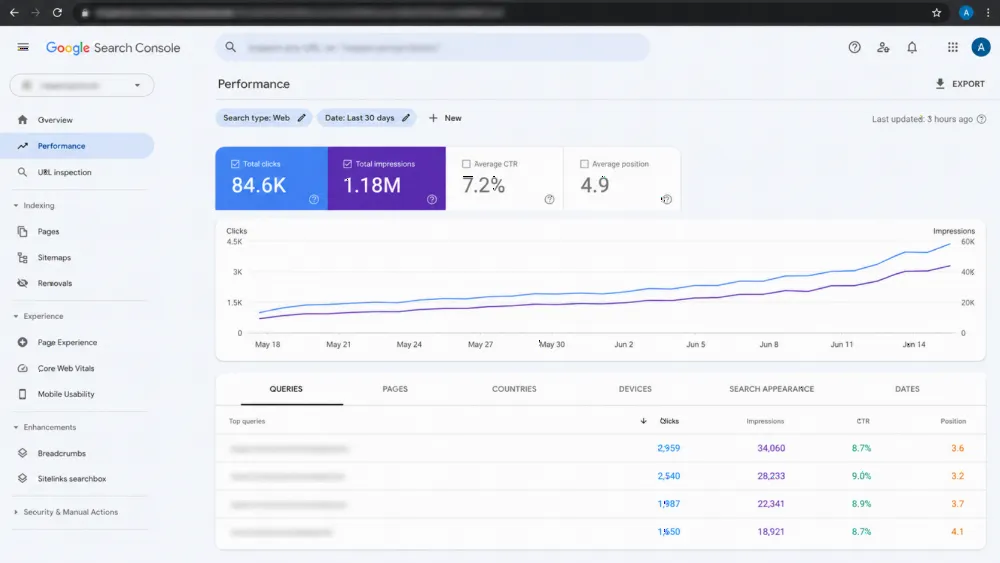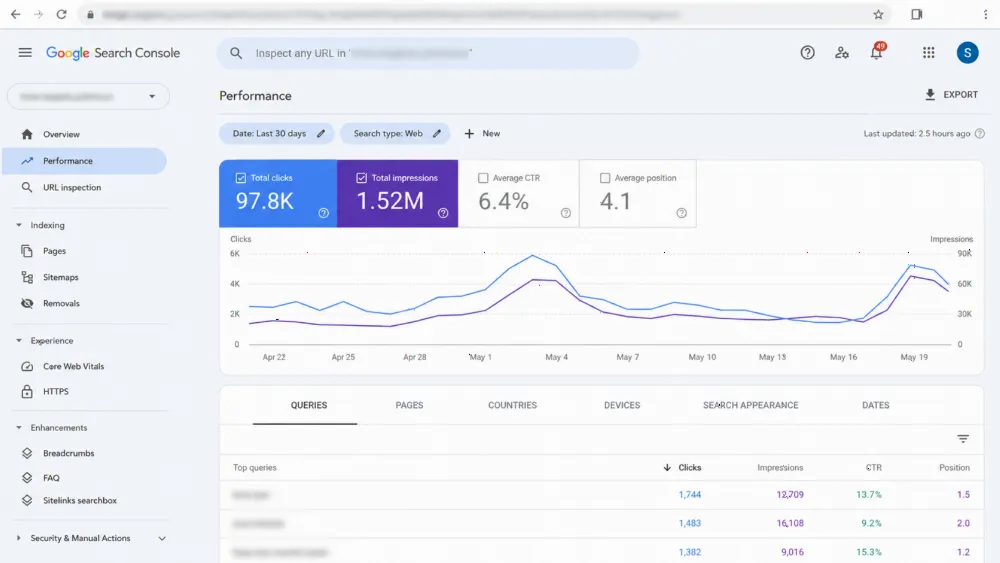
Medical website design builds healthcare sites that load fast on a worried parent's phone, protect patient privacy, guide searchers to the right care, and book the appointment without a phone call. In 2026 that means HIPAA-safe forms, WCAG 2.2 accessibility, medical schema markup, and content structured to earn trust before a patient ever walks in.
Building or rebuilding a practice site? Our core web development services cover healthcare builds with privacy and accessibility engineered in — see pricing to start.
What makes medical website design different from other industries?
A restaurant site can afford a broken reservation widget; a clinic site cannot afford a broken appointment flow. Three forces make healthcare web design a specialty, not a template job.
Privacy law. In the US, HIPAA governs how covered entities handle protected health information. The Department of Health and Human Services has issued specific guidance on online tracking technologies and PHI — meaning a casually installed analytics script or chat widget can quietly create liability. The EU's GDPR and the UK's Data Protection Act add a parallel layer for practices with cross-border patients.
Accessibility expectations. WCAG 2.2 is the global reference, and US enforcement under the ADA treats healthcare provider websites as places of public accommodation. Your patients include older adults, low-vision users, and people navigating one-handed from a hospital bed. A site they can't use is both an ethical failure and a legal one — see our web accessibility compliance guide for the standard.
Trust and E-E-A-T. Google treats medical content as "Your Money or Your Life." Its quality guidelines look for clear authorship, real credentials, reputable citations, and structured content that AI summarizers can confidently quote. Patients check your site on a phone in a hospital parking lot, between contractions, after a fall, or while caring for a parent. The bar is genuinely higher than for a contractor's brochure site. Our AEO guide for local businesses shows how to structure that content for answer engines.
What does every medical website need?
Whether you're a solo dermatologist or a multi-location pediatric group, the skeleton is consistent. The decoration changes; the bones don't.
Provider profiles with real credentials. Every clinician gets a dedicated page: real photograph, board certifications, medical school, residency, fellowship, and a human bio. This is your E-E-A-T foundation — and per a peer-reviewed study on physician selection, patients use provider information online to form first impressions and judge expertise before ever booking (PMC/BMC Medical Informatics).
Booking-first conversion paths. Online scheduling, click-to-call, and short HIPAA-aware intake forms. Google research shows 53% of mobile visits are abandoned when a page takes longer than three seconds to load — and a patient in pain won't wait. Design the appointment path for the worst day of someone's life, not the best.
Service and condition pages that answer questions. One in-depth page per service line ("pediatric asthma treatment," "same-day crown"), written in patient language with question-based headings. This is where healthcare SEO foundations pay off: structured, specific content ranks and gets cited by AI answers.
Insurance, pricing transparency, and logistics. Accepted plans, what to bring, parking, telehealth options. Patients comparison-shop; hiding this information just sends them to the practice that publishes it.
Reviews and reputation. Your Google Business Profile is often the first impression — hours, phone, reviews, and booking links all visible before your site. Our local SEO maps ranking guide covers the mechanics. As healthcare marketers at EtherealMinds put it: "patients are not rating your skill, because they cannot judge it. They are rating the experience you wrap around it" (source). The website is where that experience starts.
For dental practices specifically, see our dedicated dental website design guide and geo strategy for dental clinics.
How do you handle HIPAA and patient privacy on a website?
Start with a simple rule: if a tool can see PHI, it needs a business associate agreement or it doesn't go on the site. Practical steps:
- Forms: use HIPAA-eligible form builders with encryption in transit and at rest; never route patient details through plain email.
- Analytics and tracking: audit every script against HHS guidance on tracking technologies. Strip third-party pixels from pages where patients submit health information.
- Chat widgets: only deploy chat tools that sign a BAA and support healthcare mode; a generic widget logging symptoms is a liability.
- Portals and scheduling: integrate with your EHR/patient portal rather than duplicating PHI collection on the marketing site.
- Telehealth: with 54% of Americans having used telehealth as of early 2024 and roughly 80% of physicians planning to continue offering it (telehealth market data), your site must present virtual-visit options as clearly as in-person ones. FAIR Health's Q1 2026 tracker found telehealth utilization rose 10.1% quarter over quarter, with mental health conditions accounting for 52.1% of telehealth patients nationally — and rural use growing faster than urban (Becker's).
Document every decision. Privacy isn't a plugin; it's a configuration discipline across the whole build.
What does accessible healthcare design look like in practice?
Accessibility for a medical site means: real text (never text baked into images), keyboard-navigable menus and forms, sufficient color contrast, form labels and error messages screen readers can parse, captions on patient-education videos, and a logical heading structure. Test with actual assistive technology, not just a scanner — automated checkers catch roughly a third of real barriers.
It also means designing for your actual users: larger tap targets, readable base type sizes, plain-language alternatives to medical jargon, and appointment flows that work with a screen magnifier. Our lead-gen website UX framework applies here too — every extra field in an intake form costs you booked appointments.
How should specialty practices adapt the formula?
- Dermatology / med spa: visual proof matters — before/after galleries (with consent), treatment timelines, pricing ranges. See our dental and aesthetics-adjacent guidance for the visual-proof playbook.
- Mental health: telehealth-first flows, therapist bios that feel human, insurance clarity, and crisis-resource placement. With mental health the top telehealth diagnosis category across every age group and region (FAIR Health), the virtual-booking path deserves homepage priority.
- Pediatrics: design for the parent — after-hours guidance, new-patient paperwork online, vaccine and milestone content that ranks for worried-parent queries.
- Medical devices / B2B healthcare: clinician and procurement audiences need spec sheets, clinical evidence, and rep-contact workflows rather than booking buttons.
DIY builder vs template vs custom: which fits your practice?
| Approach | Strengths | Trade-offs | Best when |
|---|---|---|---|
| DIY builder | $200–$600/year, fast | Weak HIPAA posture, poor SEO control | Testing an idea |
| Template + professional setup | $3k–$10k, decent speed | Limited differentiation | Solo practice, simple needs |
| Custom healthcare build | HIPAA-safe architecture, accessible, SEO-ready | $10k–$40k+ | Group practices, specialties, multi-location |
Most practices that depend on new-patient flow land on a custom or heavily customized build — the compliance and accessibility requirements alone justify professional engineering. Our Next.js development agency page explains when a modern stack earns its cost for performance-critical sites. Cost context: our 2026 website cost guide.
What mistakes cost practices patients?
The expensive ones: a PDF of "new patient forms" instead of online intake; stock photos of models in white coats instead of your actual team; service pages under 400 words that can't rank for anything; no online scheduling while competitors offer it; phone numbers as images; and — the quiet killer — a site that looks abandoned, with a copyright date three years old and a blog that stopped in 2022. Patients read staleness as "this practice may have closed."
What does a realistic 30-day medical website build look like?
Week one: discovery — services, providers, compliance requirements, EHR and scheduling integrations, competitor and keyword research. Week two: architecture and design — sitemap, wireframes, visual design with accessibility baked in. Week three: development — HIPAA-safe forms, booking integration, schema markup, content migration. Week four: QA — cross-device testing, accessibility audit with assistive tech, privacy review of every script, analytics, launch, and staff training. Insist on SEO-friendly development as a scoped line item — healthcare SEO must be engineered in from day one.
Frequently asked questions
How much does a medical website cost in 2026?
A professional practice website typically runs $10,000–$40,000 depending on providers, locations, booking integrations, and compliance requirements. Template-based setups cost $3,000–$10,000 but rarely meet HIPAA and accessibility needs properly.
Do medical websites need to be HIPAA compliant?
If the site collects, transmits, or stores protected health information — intake forms, chat, scheduling — every tool touching that data must meet HIPAA safeguards, including business associate agreements with vendors. A marketing site with no PHI collection has a lighter burden, but most practice sites cross the line.
What is the most important feature of a doctor's website?
Online appointment booking. Patients increasingly expect to schedule without calling — and with telehealth now mainstream, the booking flow must present virtual and in-person options side by side.
How do patients find doctors online in 2026?
Google search and Maps, review platforms, and increasingly AI answer engines. Structured provider data, reviews, and question-answering content determine whether you're found — or whether the practice down the street is.
How often should a medical website be updated?
Content quarterly at minimum: provider changes, new services, updated hours, fresh patient-education articles. Google and AI engines favor recently refreshed health content, and stale sites erode patient trust.
Can we use online chat on a medical website?
Yes, but only with a HIPAA-eligible chat tool under a business associate agreement. Generic chat widgets that log symptom descriptions create compliance exposure.
Key takeaways
- Medical sites must convert anxious visitors, satisfy regulators, and earn clinical trust simultaneously.
- HIPAA-safe forms, tracking audits, and BAA-covered tools are non-negotiable infrastructure.
- WCAG 2.2 accessibility is a legal and ethical requirement, not a feature.
- Booking-first design and telehealth parity reflect how patients actually seek care now.
- Structured, credentialed content wins both Google rankings and AI citations.
Your website is the front door patients walk through before they ever see your waiting room. Build it like the practice depends on it — because it does. Explore our core web development services, get an estimate from the quote calculator, or contact us to scope your practice's build.