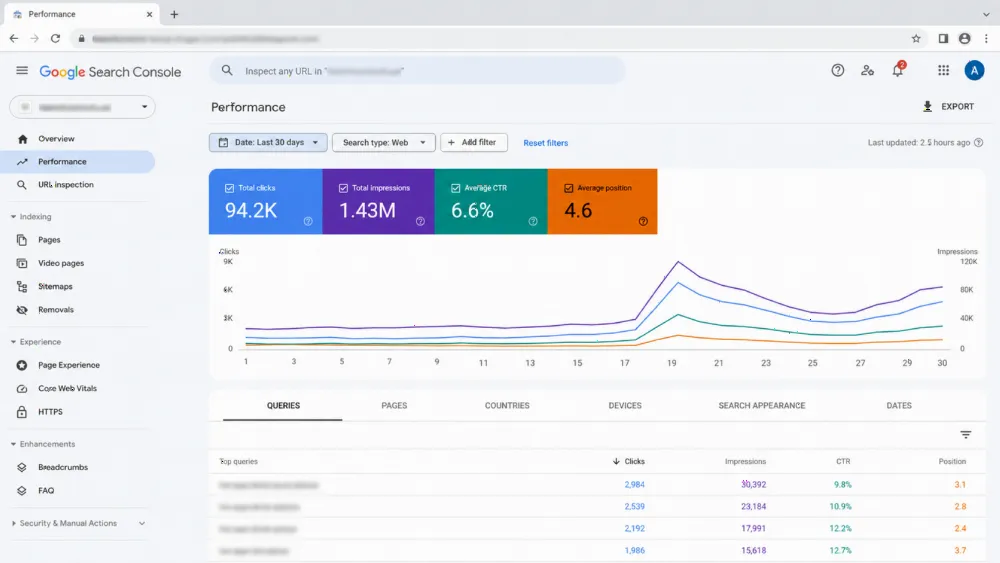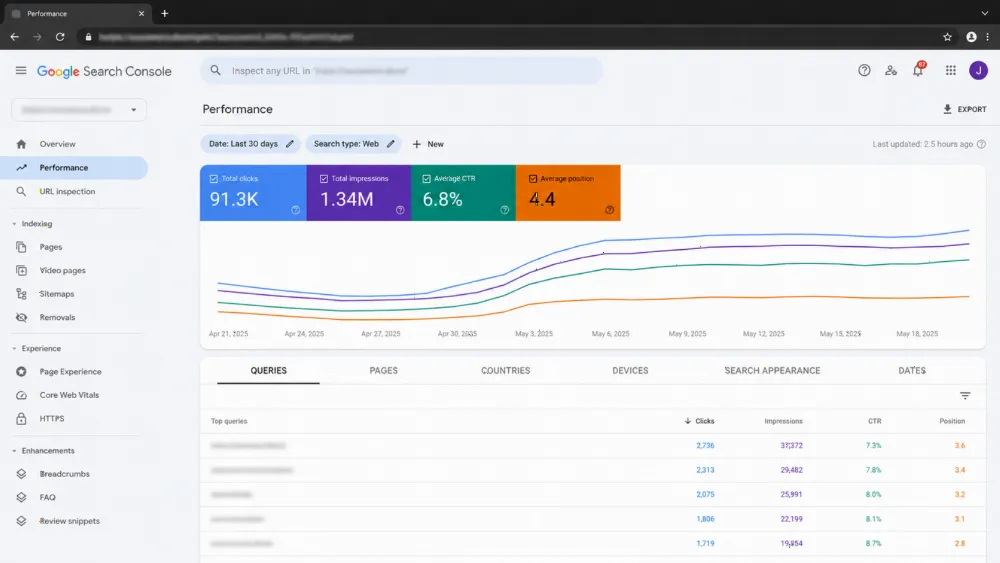
Web design in Miami sits inside one of the most competitive, bilingual, and visually demanding small-business markets in the United States. A working South Florida site needs fast mobile performance, clear conversion paths, English and Spanish copy where it matters, and a Google Business Profile that holds map rankings from Brickell to West Palm Beach.
Building in South Florida? Get an itemized quote for a fast, bilingual-ready website — fixed pricing, no retainer.
What Does "Web Design Miami" Really Mean in 2026?
For most South Florida owners, "web design" is shorthand for a stack of jobs that used to belong to four or five people: information architecture, visual design, copywriting, front-end development, CMS setup, accessibility, performance tuning, on-page SEO, and analytics. A modern Miami engagement is closer to a small product launch than a brochure refresh.
The brief changes by industry. A Brickell law firm needs trust signals, fast loading on cellular, bilingual landing pages, and attorney schema. A Wynwood restaurant needs a menu that loads in under two seconds, reservation integration, and photography that holds up on a small screen. A Miami Beach med spa needs HIPAA-aware forms, consent-respecting galleries, and Core Web Vitals that survive heavy imagery.
The underlying skills are universal — clean structure, fast pages, honest copy, working analytics. The risk is hiring on price alone and getting a template with a logo dropped on top, then wondering why the phone never rings. Compare any proposal against our technical SEO playbook for U.S. websites before you commit. The safest baseline is SEO-friendly web development — performance and structure from day one.
The South Florida Market: Miami, Fort Lauderdale & the Palm Beaches
South Florida is not one market. From Homestead to Jupiter you cross at least six distinct local economies, and buying behavior changes street by street. Brickell finance, Wynwood creative, Coral Gables old money, Hialeah working-class Hispanic, Fort Lauderdale marine and tourism, Boca Raton affluent suburban — one generic "Miami" site rarely serves all of them well.
The defining fact: about 71.5% of Miami's population is Hispanic or Latino, and nearly 58% of residents are foreign-born (HispanicPro, citing Census data). WalletHub's 2026 analysis ranked Miami No. 4 nationally for Hispanic entrepreneurs — and No. 1 in Hispanic business friendliness — with Fort Lauderdale at No. 2. Bilingual capability isn't a niche feature here; it's a commercial advantage.
The startup picture adds fuel: the Miami–Fort Lauderdale metro pulled in $1.14 billion across 117 venture deals in Q3 2026 alone, with fintech and medtech leading (Refresh Miami, citing PitchBook). New companies mean new websites, new competition, and higher design standards every quarter.
Three market realities for your build:
- Bilingual search is real search. Spanish queries have real volume and far less competition. Properly localized pages win cheaply.
- Mobile dominates. Tourists, commuters on I-95, and on-the-go locals all browse by phone. Google found 53% of mobile visitors abandon pages taking longer than 3 seconds (Colorlib, 2026).
- Visual bar is high. This is a design-conscious, image-driven culture. Weak visuals lose to competitors' Instagram-grade sites before copy is even read.
Serving Florida broadly? Our Florida web development team builds across the state. For neighborhood-level map rankings, use the local SEO maps system.
How Much Does Web Design Cost in South Florida?
Miami pricing runs above the national average — bilingual requirements, high design standards, and competitive SERPs all add scope. National anchors: agency rates of $100–$149/hour, most projects under $10,000, large builds averaging about $38,105 (Sagnik Bhattacharya, on Clutch 2026); 61% of small-business buyers spent under $10,000 (DianApps). Current national benchmarks are in how much a website costs in 2026.
| Scope | South Florida range | Timeline |
|---|---|---|
| Starter / template-based | $2,500–$6,000 | 2–4 weeks |
| Custom SMB site (agency) | $7,000–$20,000 | 4–8 weeks |
| Bilingual / multi-location | $15,000–$40,000 | 8–12 weeks |
| Ecommerce / custom app | $30,000+ | 12+ weeks |
Pitfall: Quotes that treat Spanish pages as a free add-on. Real localization — translated, culturally adapted, separately keyword-targeted — is 30–50% more content work. Auto-translate plugins are not localization.
Action: Get itemized quotes that split design, development, copywriting (per language), photography, and ongoing support. Our fixed-price vs. retainer guide shows how to compare bids apples-to-apples.
What Does a High-Performing South Florida Website Include?
Definition: A site that gets found in two languages, loads fast on hotel wifi, and converts visitors into calls, bookings, or sales.
Method — the South Florida checklist:
- Performance budget: under 2.5 seconds on mobile, on a mid-range phone, on cellular. Tourists on hotel wifi and locals on the Metrorail won't wait.
- Bilingual architecture: decide between subdirectories (/es/), subdomains, or separate pages — then implement hreflang correctly so Google serves the right language. Each language needs its own keyword research; direct translation misses how people actually search.
- Neighborhood-level local SEO: dedicated pages for Brickell, Wynwood, Coral Gables, Doral, Fort Lauderdale, Boca Raton — with unique content, not swapped city names. Pair with optimized Google Business Profiles per location using our local SEO maps system. Structure conversion paths with the lead-gen website framework.
- Conversion paths: click-to-call, WhatsApp chat (huge in Latin American–adjacent markets), online booking, and quote forms — every page needs one clear next step.
- Visual quality: professional photography is non-negotiable in this market. Budget it like development, not like an afterthought.
- Review engine: a system that routes happy customers to Google reviews. In hospitality, legal, and medical, review count and recency decide the map pack.
Example: A Coral Gables dental practice added properly localized Spanish service pages with hreflang and saw Spanish-query appointments become 30% of new bookings within six months — traffic their English-only competitors never saw.
Pitfall: The "Google Translate button" approach. Machine-translated pages rank poorly, convert worse, and can embarrass a premium brand.
Action: Audit your top three competitors for Spanish pages. If none have them, you just found your cheapest competitive advantage.
How Do You Rank in South Florida's Bilingual, Competitive Market?
SEO here is two markets in one. English SERPs in Miami are among the most competitive local results in the country — legal, medical, real estate, and hospitality keywords are fought over by sophisticated agencies. Spanish SERPs for the same services are often wide open.
Method:
- Map both keyword universes. Run keyword research in English and Spanish separately. "Abogado de accidentes" and "accident lawyer" are different competitions with different volumes.
- Build location + language matrices. Brickell × English, Brickell × Spanish, Doral × Spanish — each combination that has demand gets a real page.
- Win the map pack per location. Separate Google Business Profiles, neighborhood reviews, local citations, and service-area precision. One profile can't rank everywhere from Homestead to Jupiter.
- Earn local links. Chambers, local press, event sponsorships, university partnerships — South Florida link equity comes from community presence.
- Publish with depth. Competitive English keywords need 1,500+ word service pages with original data, FAQs, and schema. Thin pages don't survive here.
For the ongoing system, our SEO-ready web development guide covers the technical foundation this strategy needs. Start with a technical SEO audit to find what you are working with.
Pitfall: Targeting "Miami" as one keyword. Nobody searches that way when buying — they search neighborhoods, services, and "near me." Build for how people actually search.
Action: Pick your five highest-value services, build the location × language matrix, and start with the combinations where competitors are weakest.
What Mistakes Do South Florida Businesses Make?
- Template with a palm tree. Slapping tropical stock photos on a generic theme fools nobody. South Florida buyers have sharp visual taste — invest in real design and photography.
- Ignoring WhatsApp. In markets with heavy Latin American ties, WhatsApp is a primary business channel. A site without click-to-WhatsApp is missing conversions daily.
- One Google Business Profile for three locations. Each physical location needs its own profile, its own reviews, its own photos. Consolidation kills map visibility.
- No hurricane-season contingency. Storm season disrupts business annually. Sites with emergency banners, updated hours schema, and clear communication templates handle disruptions; others go dark.
- Designing desktop-first. Check your analytics: mobile is likely 65%+. If the agency leads with desktop mockups, they're designing for the minority of your visitors.
- Skipping maintenance. Hacked WordPress sites are endemic in high-competition local markets. Budget care or go managed — and see what websites really cost including upkeep. Competitive English keywords also demand the depth in our 2026 technical SEO playbook.
A Boca Raton Service Business: Illustrative Walk-Through
Weeks 1–2 — Bilingual discovery. English and Spanish keyword research, competitor audit across Palm Beach County, content inventory in both languages. Deliverable: sitemap with the location × language matrix.
Weeks 3–5 — Design. Mobile-first design with real photography, WhatsApp integration points, click-to-call prominence. Two revision rounds.
Weeks 6–9 — Build. Development, hreflang implementation, schema markup, speed optimization, booking/CRM integrations, review-request automation.
Week 10 — Launch. Redirect mapping, analytics in both languages, Google Business Profile optimization per location. Launch mid-week.
Ongoing — Compound. Monthly content in both languages, review generation, link building via local partnerships. Follow the lead-gen website framework for the growth playbook. Lock scope and cost up front with fixed-price web design packages.
Budget reality: $12,000–$30,000 for bilingual agency scope; monolingual equivalent runs 30–40% less.
How Does WebStackRank Approach South Florida Projects?
Bilingual-first, mobile-obsessed, fixed-price. We research both language markets, design for South Florida's visual standards, and engineer for sub-2.5-second mobile loads. Pricing is published — what a website really costs, the 2026 cost guide, and fixed-price packages. You own everything.
Frequently Asked Questions
How much does web design cost in Miami?
Most Miami small businesses pay $7,000–$20,000 for a custom agency site. Starter sites run $2,500–$6,000; bilingual or multi-location builds run $15,000–$40,000; ecommerce and custom apps start around $30,000. Bilingual scope typically adds 30–50% to content costs.
Do I really need Spanish pages on my Miami website?
If your customers include Spanish speakers — statistically likely in South Florida — yes. Spanish local SERPs are far less competitive than English ones, making bilingual pages one of the cheapest wins available. Use professional localization, not auto-translate.
Should I hire a Miami agency or work remotely?
Either works if the team understands South Florida: bilingual SEO, neighborhood-level local search, WhatsApp conversion paths, and the visual standards of the market. Verify with case studies and live speed tests, not office addresses.
How long does a South Florida website take to build?
Simple sites take 2–4 weeks; agency builds take 4–8 weeks; bilingual or multi-location projects take 8–12+ weeks. Bilingual content doubles the copywriting timeline — plan for it.
Can one website rank in Miami, Fort Lauderdale, and West Palm Beach?
Yes, with dedicated location pages per market, separate Google Business Profiles per physical location, and local schema. A single generic "South Florida" page won't rank in any of the three.
What's the difference between web design and web development?
Design is the visual layer; development is the engineering — code, CMS, integrations. Modern Miami projects need both, and the line has nearly disappeared. Be wary of mockup-only sellers.
How do I protect my rankings during a redesign?
Use a proper migration: URL mapping, 301 redirects, content parity checks, and Search Console monitoring. Our redesign migration checklist walks through the full process — skipping it is how businesses lose years of SEO overnight. Plan the budget with how much a website costs in 2026.
Ready to Win South Florida Search?
Miami rewards businesses that respect both its languages and its standards. Get an itemized quote for a fast, bilingual, conversion-focused website built for South Florida — fixed pricing, full ownership, no retainers.