Adult web design is the specialist discipline of building websites for adult content businesses — studios, performers, subscription platforms and ecommerce stores. It demands age verification, 18 U.S.C. § 2257 record-keeping, high-risk payment processing, adult-friendly hosting and DMCA-aware architecture. This guide explains what a compliant adult build actually requires in 2026.
Planning an adult platform or store? Webstackrank delivers compliance-first builds — regulatory mapping, adult-friendly infrastructure and payment integration handled before design begins. Start with a confidential scoping call via our project submission page.
What does "adult industry web design" actually cover?
The term covers three distinct project types, each with a different compliance profile:
- A studio or performer brand site — portfolio, booking and fan funnel. Compliance is lighter but age-gating and performer ID documentation still apply.
- A subscription content platform — paid membership, fan-platform alternative or tube-style site. The heaviest compliance load: 2257 records, DMCA, chargeback management and complex hosting.
- An adult ecommerce store — novelties, wellness products. Age-gating, descriptive content limits and payment-processor underwriting dominate.
"Adult web design" is also a market category: the agencies and studios that openly take adult work, understand the regulatory stack, and hold working relationships with hosts and processors that mainstream agencies lack. The work spans content management, billing, video delivery and legal documentation — not just pages.
For the ecommerce side, our ecommerce website design guide covers conversion architecture that applies to adult retail too, and Shopify vs WooCommerce 2026 explains why mainstream platforms are usually off-limits for this sector. Subscription platforms share DNA with SaaS website builds — membership funnels, churn reduction and gated content.
Why is adult web design a specialist discipline?
Mainstream agencies decline adult work for three concrete reasons: their hosting partners ban it, their payment integration partners will not underwrite it, and their teams have no working knowledge of the laws. Hire a generalist and you typically get a beautiful interface bolted onto infrastructure that fails within weeks of launch.
Adult builds run on a different stack:
- Hosting: specialist providers such as M247, OrangeWebsite or adult-friendly VPS hosts — not AWS, Vercel or mainstream shared hosting, whose acceptable-use policies prohibit adult content.
- Payments: high-risk gateways like CCBill, Segpay, Epoch, RocketGate and Verotel — never Stripe, PayPal or Square, whose terms exclude adult content.
- CDN and video delivery: only providers that explicitly permit adult content in their acceptable-use policies.
- Compliance tooling: 2257 record-keeping databases, age-verification SDKs, DMCA submission workflows and performer onboarding with ID capture.
Build on the wrong stack and the site gets taken down — sometimes within days of a routine content review. Operators have lost hosting, processors and email accounts simultaneously because someone tried to route an adult business through mainstream tooling. If you want to understand the underlying build technology first, read React and Next.js for business owners and WordPress vs Webflow vs custom — then apply the adult-stack constraints on top.
Which laws does an adult website have to follow?
Compliance is the single biggest difference between adult and mainstream web design. The perimeter is broader, the penalties are steeper, and the rules keep shifting.
18 U.S.C. § 2257 (United States). If your site publishes visual depictions of actual sexually explicit conduct, federal law requires records proving every performer was over 18 when the content was produced — typically legal photo ID, the URL where the content appears, the producer's name and an inspection address. A "Custodian of Records" statement must appear on the site. This is a federal statute with criminal penalties, and enforcement remains active for primary producers according to the U.S. Department of Justice's Child Exploitation and Obscenity Section.
Age verification laws (the 2024–2026 wave). A growing number of jurisdictions require commercial entities hosting adult material to verify users are 18+. U.S. states with active age-verification laws include Louisiana, Texas, Utah, Mississippi, Virginia, Arkansas, Montana, North Carolina and Kansas — and the list keeps growing. The UK's Online Safety Act 2023 imposes similar duties on services accessible from the UK, and France and Germany run their own regimes. The burden falls on the operator, not the visitor; reported civil penalties reach up to $10,000 per day in some states, and several major platforms have been effectively blocked from Texas and Louisiana over non-compliance.
Adult industry attorney Corey Silverstein, advising operators on this wave, puts it bluntly: "Start preparing. If you run your own site, consider geofencing restricted states, removing explicit content, or partnering with third-party AV providers." (from a SexWorkCEO interview on age-verification law). That preparation work belongs in the build plan, not in a panic after launch.
DMCA safe harbor. If your site allows user uploads, you need a registered DMCA agent in the U.S. Copyright Office's designated-agent directory, a published notice-and-takedown procedure and a documented repeat-infringer policy. Without these, you lose safe-harbor protection under 17 U.S.C. § 512 and become directly liable for user uploads.
Data protection: GDPR, CCPA and beyond. Age-verification data, billing records and account data are all personal data under modern privacy law. Adult sites collect more sensitive data than mainstream sites — including ID documents in some flows — so the privacy policy must reflect that reality, not recycle a generic template.
How do hosting, payments and video delivery work for adult sites?
Hosting. Most large cloud providers prohibit adult content in their acceptable-use policies — AWS, Google Cloud, Microsoft Azure, Vercel, Netlify and consumer Cloudflare plans all restrict or ban it. You need a host that explicitly permits adult content: OrangeWebsite (Iceland, a strong free-speech jurisdiction), M247, certain offshore providers and dedicated adult-industry hosts. For application architecture on compliant infrastructure, see our custom web application development service.
Payment processing. You cannot run an adult business through Stripe, PayPal or Square — their terms exclude adult content, and accounts processing it get frozen with funds reserved, often for months. The adult-specific processors are CCBill, Segpay, Epoch, RocketGate and Verotel. Underwriting takes two to six weeks (versus one to three days mainstream), reserves commonly run five to ten percent of monthly volume held for six months, and processing fees typically land in the five to fifteen percent range — versus 2.4–2.9% for mainstream gateways. Key insight: start the processor application the day you decide to build, not the day before launch. Underwriting is the longest single item on the critical path.
CDN and video delivery. Subscription platforms need HLS or DASH adaptive streaming, signed URLs to prevent hot-linking, token authentication and DRM for premium content — on a CDN whose policies explicitly permit adult material. Bunny.net and certain Cloudflare Enterprise plans allow it; specialist providers serve the highest-volume sites.
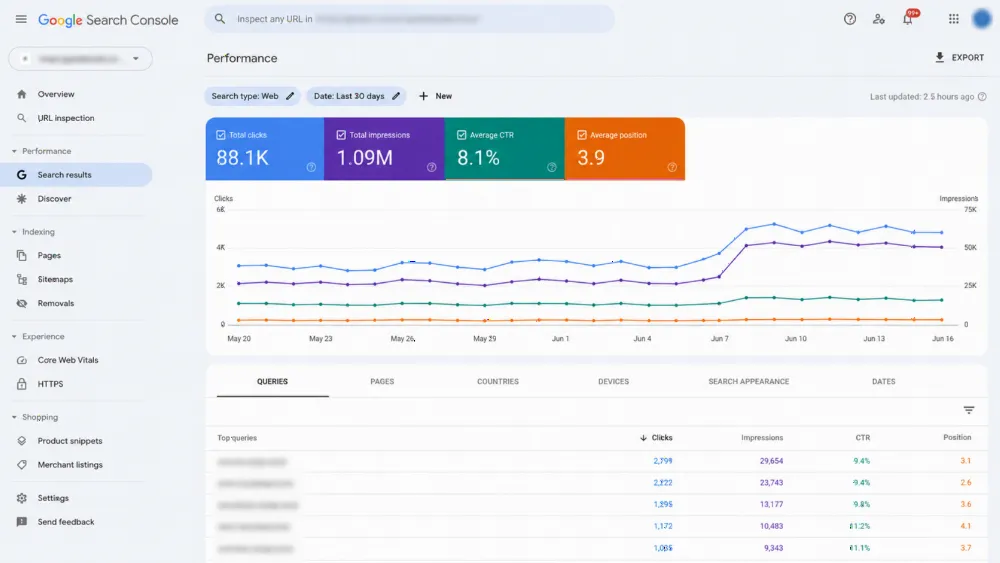
Search and SEO. Google's SafeSearch and adult-content classifiers exclude most adult sites from default results, and Bing runs its own filter. Practical acquisition focuses on direct traffic, brand search, partner referrals and adult-friendly directories — not the Google-first playbook. Our technical SEO audit service can assess what visibility is realistically available for your model.
The comparison below summarises how far apart the two worlds are at infrastructure level:
| Build component | Mainstream business site | Adult industry site |
|---|---|---|
| Hosting | AWS, Vercel, mainstream hosts | Adult-friendly host only (M247, OrangeWebsite, specialist VPS) |
| Payment gateway | Stripe, PayPal, Square | CCBill, Segpay, Epoch, RocketGate, Verotel |
| Underwriting time | 1–3 days | 2–6 weeks |
| Processing fees | 2.4–2.9% | 5–15% plus reserves |
| Age verification | Optional | Mandatory in a growing list of jurisdictions |
| 2257 record-keeping | Not applicable | Mandatory for primary producers of explicit visual content |
| DMCA agent | Recommended | Mandatory if user uploads are allowed |
| CDN | Any provider | Adult-permitted CDN only |
| Google SEO | Primary acquisition channel | Largely unavailable — alternative channels required |
| Typical timeline | 4–8 weeks | 6–12 weeks (processor underwriting drives this) |
What mistakes get adult sites shut down?
These are the failures we see most often when reviewing existing adult builds before a redesign:
- Building on mainstream hosting. The site launches, gets discovered during a routine content review, and is suspended. Migrating mid-takedown is brutal — DNS, content and billing all move at once, often without working email.
- Using a mainstream payment processor. Stripe and similar gateways freeze and reserve funds the moment they detect the business type. Recovering held funds typically takes months.
- No 2257 statement or records. Even sites not producing explicit content sometimes need a "no records required" statement explaining why. Missing it invites legal risk.
- Ignoring state age-verification laws. Non-U.S. operators often assume U.S. state laws do not apply to them. If your traffic includes those states, they typically do — and penalties accrue daily.
- No registered DMCA agent. Without one, there is no safe harbor for user-generated uploads.
- A recycled mainstream privacy policy. Adult sites collect more sensitive data, including verification documents. The policy must reflect that.
- No security baseline. Adult sites are heavily targeted by scrapers, credential-stuffers and DDoS. CSP, HSTS and rate limiting are essential, not optional.
- Underestimating chargebacks. Adult subscription businesses see higher chargeback rates than mainstream ecommerce. Without a fraud rules engine and a clear cancellation flow, you lose your processor.
Our core web vitals launch checklist and website handover ownership checklist cover the operational side of a safe launch, while responsive web design services covers the front-end layer.
How does a typical adult platform project unfold?
A subscription platform build moves through these stages. Timelines compound because compliance work runs in parallel with design and development — trying to compress the sequence is the most common scheduling mistake.
Weeks 1–2: Discovery. Business model, jurisdiction, content type and target markets define which compliance regimes apply. Payment processor selection starts immediately — underwriting is the longest item on the path to launch.
Weeks 3–4: Design and architecture. Membership funnel, content gating, performer onboarding, payout flows and admin tooling are mapped. The age-verification vendor is selected and the integration scoped.
Weeks 5–8: Build. Core platform development, payment integration, operator content management and the member front end. A staging environment with no live explicit content runs through compliance review.
Weeks 9–10: Compliance and security pass. 2257 records workflow tested, DMCA submission form built, privacy policy and terms reviewed by qualified counsel, penetration test run on staging.
Weeks 11–12: Soft launch and monitoring. Processor activation, controlled traffic, fraud rules tuned, chargeback dispute workflow exercised — then go live.
For the engineering behind this, see our Next.js development agency service and core web development services. For the operational plumbing — billing alerts, moderation queues, payout flows — the n8n vs Zapier vs Make automation guide shows how to wire the back office without custom code for everything.
Frequently asked questions
Can I use Stripe or PayPal for an adult website?
No. Their terms of service exclude adult content, and accounts that process it are frozen with funds held in reserve — often for months. Adult businesses must use high-risk or adult-specific processors such as CCBill, Segpay, Epoch, RocketGate or Verotel, with underwriting that takes two to six weeks and fees in the 5–15% range.
What is 18 U.S.C. § 2257 and does it apply to my site?
It is the U.S. federal record-keeping law for visual depictions of actual sexually explicit conduct. If your site publishes such content as a primary producer, you must maintain age-verification records for every performer and publish a Custodian of Records statement. Violations carry criminal penalties. Sites that do not produce explicit content should still publish a statement explaining why no records are required.
Do age-verification laws apply if I am based outside the U.S.?
Generally, yes — if your traffic includes the states with active laws. The compliance burden falls on the website operator, and penalties can accrue daily. Many operators geofence restricted states, partner with third-party age-verification providers, or both. Get jurisdiction-specific legal advice before launch.
Why was my adult site taken down by its host?
Almost always because the host's acceptable-use policy prohibits adult content and the site was discovered during a routine review. AWS, Google Cloud, Azure, Vercel, Netlify and mainstream shared hosts all restrict or ban it. Rebuild on a host that explicitly permits adult content — OrangeWebsite, M247 or a dedicated adult-industry host.
Can an adult site rank on Google?
Rarely in default results — SafeSearch and adult-content classifiers filter most adult sites out. Adult SEO focuses on brand search, direct traffic, partner referrals and adult-friendly directories and search engines rather than the standard Google-first playbook.
How long does an adult web project take?
Six to twelve weeks for a subscription platform, versus four to eight for a mainstream build. Payment processor underwriting (two to six weeks) is the critical path — apply on day one of the project, and never build the entire platform before the approval lands.
What does adult web design cost?
Expect a premium over mainstream builds of similar scope: compliance mapping, specialist hosting, age-verification integration, 2257 tooling and longer timelines all add cost. A serious subscription platform typically starts in the mid-five figures; a compliant adult ecommerce store less. Request a confidential scope via our project submission page.
Build it compliant from day one
Adult projects fail on infrastructure and compliance, not on design. Webstackrank maps your regulatory perimeter first — every state, country and platform you will reach — then aligns hosting, payments and architecture to it. Submit your project confidentially or explore our ecommerce web development service for the retail side.