A permanent makeup website has three jobs: prove your healed results like an editorial beauty brand, take bookings with deposits and consent forms attached, and rank locally for microblading, powder brows, and lip blush. Nail all three and your site becomes your quietest, most consistent salesperson.
Losing clients to Instagram DMs? Get an instant estimate for a PMU website built around bookings — not a generic salon template.
What does web design for PMU actually mean?
Permanent makeup is a regulated cosmetic tattooing service. Clients pay $400 to $1,200 — sometimes more — to have pigment implanted into their skin by an artist they trust. The website is where that trust begins. A real PMU site is not a flyer with prices; it is a working studio: a portfolio that proves healed results, a booking system that takes deposits, an FAQ that answers every new-client question, and a brand that signals you take the craft seriously.
Web design for PMU sits at the intersection of three disciplines: beauty-industry visual standards, the conversion mechanics of a service business, and the local SEO playbook of a regulated profession. Get one wrong and the site leaks bookings. Get all three right and the site sells while you work.
This is a specialized corner of beauty web design — if you are deciding between a PMU-specific build and a general beauty site, our salon and spa website design guide covers the broader category, and our salon & spa industry builds include PMU-specific patterns for galleries, deposits, and intake flows.
Why doesn't a generic salon template work for PMU artists?
Most PMU artists start with a hair-salon theme or a free builder template. It looks fine for two weeks. Then the gaps show. Hair salons sell $80 repeat visits; PMU artists sell three-hour appointments that need a paid deposit. The buyer's journey is completely different, and a hair-salon template is built for the wrong job.
Here is what breaks when you reuse generic salon design for permanent makeup:
The gallery treats hairstyles and brow tattoos the same. PMU clients need to see healed results, not fresh work. Generic galleries don't separate those views, so visitors assume the dark, scabbed day-one photos are the final look — and leave.
The booking widget collects a name and a phone number. PMU bookings need a consent screening question, a deposit, a reference-photo upload field, and a confirmation that the client isn't pregnant or on certain medications. A default salon template has none of that.
The pricing page shows one number. Most PMU services have a base price plus a touch-up fee at 6–8 weeks. Hiding that detail until the appointment costs you trust.
There's no home for aftercare. Artists end up emailing the same healing PDF every week instead of linking to it on their site.
A purpose-built PMU site solves all four problems in the layout itself. That gap — aesthetic and function treated as the same job — is the easiest source of lost bookings to close. Tattoo businesses face the same trust mechanics; see our tattoo studio website design guide for the parallel playbook.
Which pages does every PMU artist website need?
Pages aren't navigation items; each one has a job in the booking funnel. If a page has no job, cut it. If a job isn't covered, add the page. This eight-page core works for almost every solo artist and studio:
- Homepage. One sentence on what you do and where, a hero image of healed work (never day-one), social proof, and a clear path to "Book Now" or "View Services."
- Services overview. A grid of every treatment — microblading, powder brows, combo brows, lip blush, eyeliner, scalp micropigmentation, areola restoration — each tile linking to its own detail page.
- Individual service pages. One page per service covering what it is, how long it takes, the healing timeline, who isn't a candidate, and pricing including the touch-up. These pages capture most of your SEO traffic.
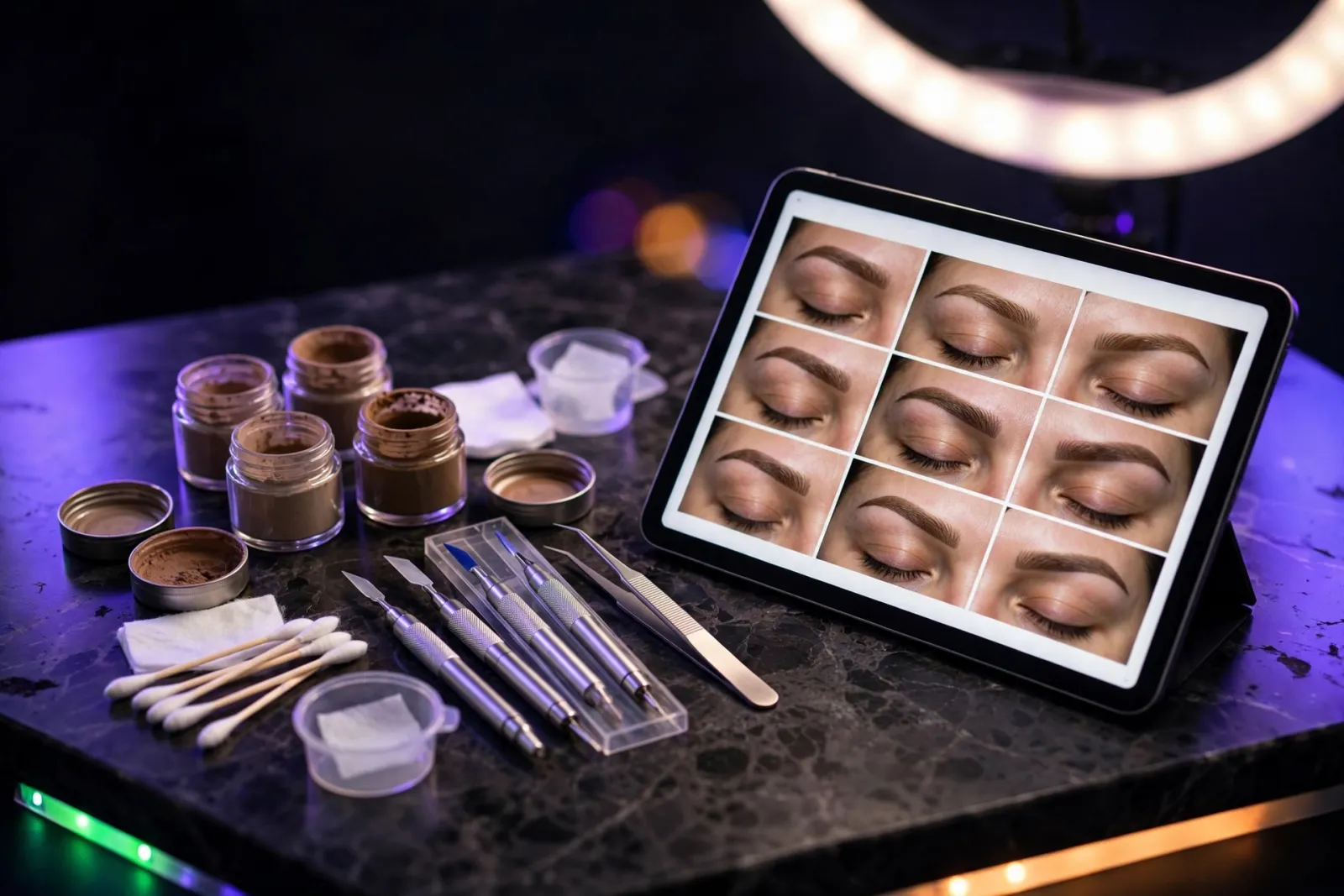
- Portfolio / healed-work gallery. Filterable by service, every photo labeled as day-one, day-seven, or fully healed at six weeks. This single change moves conversion rates more than almost anything else.
- About the artist. Real photo, real certifications, years working, insurance status, studio location. Clients buy the artist as much as the service.
- Pre-care and aftercare. Downloadable PDFs or clean web pages. Saves hours weekly and reassures nervous new clients.
- Book now. Connected to a booking platform handling deposits, intake forms, and reminder texts — never a bare "contact us" form.
- Contact and location. Address, parking notes, map embed, phone, hours. This page also anchors your local SEO.
Optional but high-value: a blog for compounding SEO, a press page if you've been featured, and a referral or loyalty page.
Which booking platform should a PMU studio use?
The booking platform you embed matters more than the theme. Deposits, intake forms, and SMS reminders are the difference between a no-show rate near 5% and one closer to 25%. Here's an honest snapshot focused on PMU-relevant features:
| Platform | Deposits | Custom intake forms | SMS reminders | Typical monthly cost | Best for |
|---|---|---|---|---|---|
| Square Appointments | Yes | Basic | Yes (paid tier) | $0–$69 | Solo artists starting out |
| Vagaro | Yes | Strong | Yes | $30–$90 | Multi-room studios |
| Mindbody | Yes | Strong | Yes | $129+ | Larger studios with staff or classes |
| GlossGenius | Yes | Beauty-specific | Yes | $48+ | Solo PMU artists wanting a polished client view |
| Acuity (Squarespace Scheduling) | Yes | Highly customizable | Yes | $20–$61 | Artists already on Squarespace |
None is "best" in the abstract. The right pick depends on whether you take card-on-file deposits, how many artists you book, and whether you sell retail. A well-designed PMU site embeds the chosen platform so seamlessly that clients never feel they've left your site — the kind of conversion-focused UX work that separates template installs from professional builds. And since beauty traffic skews heavily mobile — around 80% by most industry estimates — the booking flow must be flawless on a phone, a point covered in depth in our salon & spa website guide.
How do PMU clients actually find you on Google?
Prospective clients mix service terms ("microblading near me"), brand terms ("Bella Brows reviews"), and concern terms ("does microblading hurt"). Three SEO ideas matter more than the rest:
Local SEO is the whole game. The highest-leverage action for a PMU artist is a fully optimized Google Business Profile. Google's official guidance confirms that profiles with complete information — photos, hours, services, regular posts, consistent name/address/phone — perform meaningfully better in local results. Your contact page and schema must mirror that profile exactly. Our local SEO system for service businesses maps this process step by step.
Service pages outrank homepages. A homepage trying to rank for powder brows, lip blush, microblading, and eyeliner simultaneously will rank for none of them. One service per page, one primary keyword per page, each deep enough to answer the client's top five questions. This matches what Google's Helpful Content guidance rewards: content built for a real reader, not a crawler. It is the same architecture we recommend in our medical practice website guide for procedure pages.
Reviews and photos compound. Fresh, dated photos and a steady drip of new reviews signal an active business to Google. Artists who add 4–8 new healed-work photos a month and request reviews from happy clients typically see local-pack rankings climb within 60–120 days. BrightLocal's local consumer research consistently finds that nearly nine in ten consumers read reviews before choosing a local business — and in a $400–$1,200 trust purchase, that number only bites harder. There is no shortcut to this, and no real competitor to it.
What mistakes cost PMU studios bookings?
Across audited studios, the same handful of problems repeats. Fix these and bookings usually recover within a month:
- Day-one healing photos in the hero. Fresh PMU work looks dark and swollen to a first-timer. Lead with healed work; put labeled day-one shots deeper in the gallery.
- "Contact us for pricing." No pricing — or at least starting prices plus the touch-up fee — and visitors assume it's unaffordable and bounce. A range is fine. Silence isn't.
- No deposit in the booking flow. Free bookings produce no-shows. A $50–$150 deposit filters serious clients without scaring real ones away.
- Confusing service names. "Combo brows," "ombre brows," and "powder + microblading" can mean the same thing depending on the artist. Pick one name per service and use it everywhere — site, booking system, Instagram.
- Broken mobile booking. If the booking page doesn't work cleanly on a phone, you don't have a booking page.
- Stock photography of unrelated faces. Stock brows read as "this artist has no portfolio yet." Use your own work or leave the slot empty.
- Missing trust markers. Bloodborne pathogens certification, license number where required, insurance, training credentials, sterilization standards. A nervous first-timer must be able to find them — the tattoo studio website playbook covers the same trust stack for a sibling industry.
As Jeff Bezos famously said, "If you do build a great experience, customers tell each other about that. Word of mouth is very powerful." In PMU, the website is most clients' first experience of you.
What does a full PMU site build look like?
This is the practical sequence most studios should follow, whatever platform they choose:
- Brand decisions first. Name, typeface pair, palette, logo — two to three weeks. Most PMU brands lean editorial: serif headings, generous white space, muted color, photography-first.
- Photography and portfolio. Shoot 20–30 healed-work photos in consistent lighting; label each by service and healing stage. No back catalog? Start with what you have — never fake it.
- Information architecture. Map the eight pages above. Choose your booking platform. Write a one-sentence purpose for every page.
- Copywriting. Service pages first — they're the SEO workhorses. Write like a knowledgeable friend, not a brochure. Cover what it is, how long it takes, the healing arc, who isn't a candidate, what it costs.
- Design and build. Mobile-first. Hero image loads under 2 seconds; booking button reachable in one tap on every page — Google's Core Web Vitals threshold of 2.5 seconds for largest paint is the number to beat.
- SEO foundation. Service-page titles and metas, LocalBusiness and Service schema, clean URLs, sitemap submitted to Search Console at launch.
- Launch and iterate. Track which service pages convert, which calendar dates fill, where the funnel leaks. Update photos monthly; refresh service copy quarterly.
Brand, photography, IA, copy, design, SEO, launch — the platform is downstream; the sequence isn't. Artists who need the identity built from scratch should do branding work before the site build, so design and brand ship together instead of fighting each other. And pair the build with SEO-friendly development so the schema, speed, and structure are native — not bolted on later.
Frequently Asked Questions
How much does a PMU website cost in 2026?
A clean, conversion-focused PMU artist site typically lands between $3,500 and $9,000, depending on brand identity work, photography direction, multi-service pages, and a fully embedded booking and intake system. Solo template builds on Squarespace or Wix can launch for $200–$600 a year in platform costs but usually leave bookings and SEO on the table.
Do I need online booking, or is Instagram DM enough?
DMs work until they don't. Most artists hit a ceiling around 30–40 clients a month, where DM bookings start eating evenings and producing no-shows. A booking platform that takes deposits and pre-fills intake forms gives that time back and cuts no-shows materially. Even if Instagram stays the first touchpoint, the conversion belongs on your site.
Should I show before-and-after photos on my homepage?
Yes — but only healed pairs, never day-one. Fresh PMU work looks dramatic and can scare a first-time client. Label every photo with its healing stage. A row of three to five healed pairs above the fold typically outperforms any other homepage element for booking conversion.
What pages does a permanent makeup website need?
At minimum: homepage, services overview, one detail page per service, portfolio gallery, about-the-artist, pre-care and aftercare, booking, and contact. Eight pages covering every job the site does. A blog is optional but compounds over time for SEO.
Can I build a PMU website on Wix or Squarespace?
You can, and many solo artists start there. The trade-off is how cleanly you can integrate deposit-aware booking, custom intake forms, and structured data for SEO. Builders are a reasonable first-12-months move; a custom or Webflow/WordPress build becomes worth it once bookings are consistent.
How do I rank for "PMU artist near me"?
Three things, in order: a fully optimized Google Business Profile with regular photo uploads, one service page per treatment with clean local SEO basics, and a steady stream of reviews. Artists who do all three typically see local-pack rankings move in 60–120 days. Very little competition does this well — which is exactly the opportunity.
How do I handle consent forms and healing instructions on my site?
Consent forms belong inside your booking platform's intake flow, not as a standalone PDF. Healing instructions can live as clean web pages (good for SEO) and also be emailed automatically after confirmation. The website is the canonical source; the email is the reminder.
Sources & Further Reading
- Google Search Central — Creating helpful, reliable, people-first content
- Google Business Profile Help — Improve your local ranking
- Google web.dev — Core Web Vitals
- Schema.org — LocalBusiness structured data
- Society of Permanent Cosmetic Professionals — Standards and best practices
- BrightLocal — Local Consumer Review Survey
Ready to build a PMU website that books real clients?
If your current site is a generic salon template that doesn't handle deposits, healed-work labeling, or local SEO, you're losing bookings every month without seeing the number. The fix is a website built around how PMU clients actually decide and book. Submit your project details and we'll scope a build for your studio, your services, and your market — or start with an instant estimate.
Last updated: October 2026