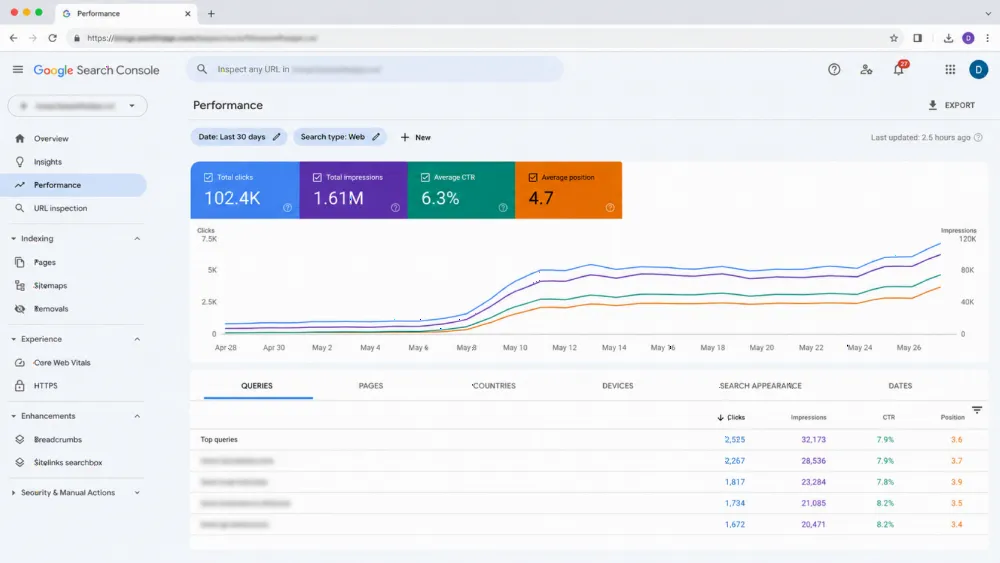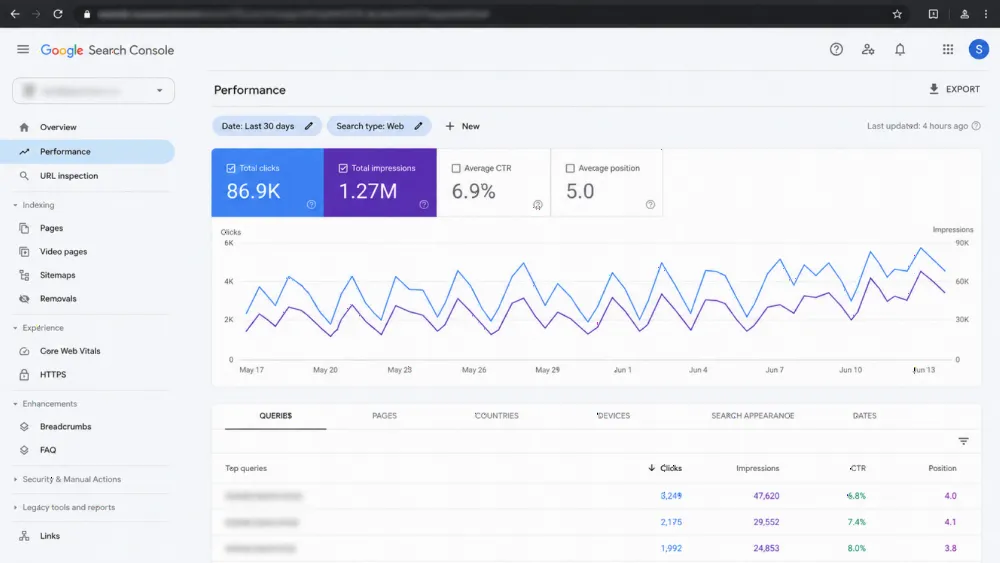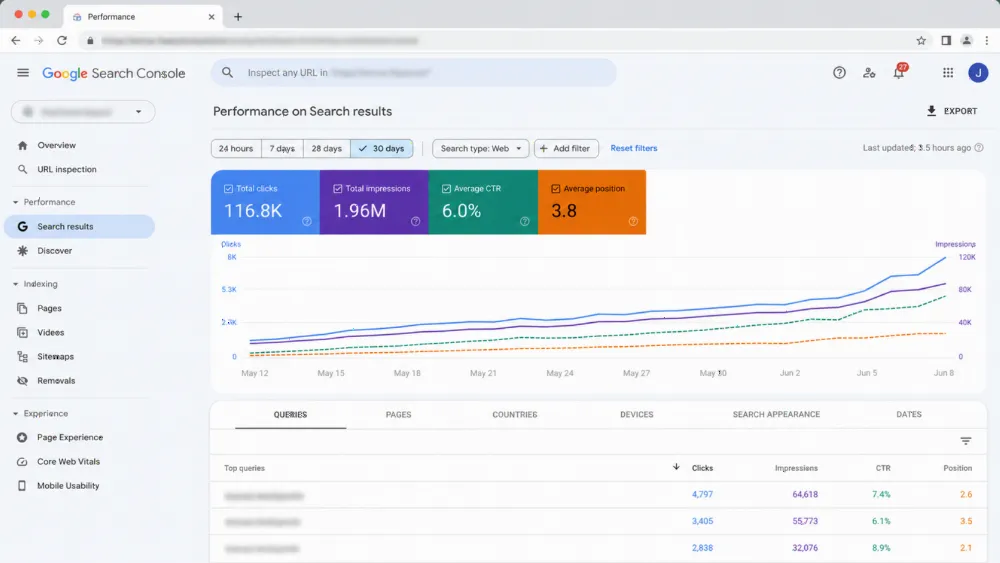
Accounting web design is the practice of building professional websites for CPAs, accountants, bookkeepers, and financial advisors that earn trust at first glance, surface credentials clearly, respect privacy rules, and convert local searches like "CPA near me" into booked consultations. A good accounting website is calm, credible, and concrete — the opposite of how most firms look online.
Planning a firm redesign? Get an instant estimate for your accounting website — trust signals, compliance, and local SEO scoped in.
What does accountant web design mean in 2026?
Accountant web design is more than a brochure site with a calculator stock photo. It is the deliberate construction of a digital storefront a prospect can use — in three minutes or less — to verify the firm is credible, understand exactly what it does, and book a consultation.
The category spans solo CPAs, regional practices, virtual bookkeepers, tax preparers, fractional CFO services, financial planners, RIAs, and wealth management firms. Each has its own regulatory backdrop, ideal client, and conversion path. A good site is shaped to match.
The brief reads simple: clear services, real credentials, easy booking, fast pages, no clutter. But accounting and financial services have stricter trust thresholds than almost any consumer category. Visitors are deciding whether to hand you their tax records, payroll data, or life savings. Anything hinting at amateurism — a broken contact form, a low-resolution headshot, a fabricated-looking testimonial — can cost the lead before the first call. Benjamin Franklin's line fits this market precisely: "An investment in knowledge pays the best interest." The website is where that knowledge-first positioning either lands or doesn't.
Why does a website matter more for accountants than most businesses?
For a restaurant, the website supports the brand but rarely closes the sale — the food does. For an accountant, the website often is the sale. By the time a prospect calls, they have made a near-final decision based on the homepage, service pages, and about page.
Three forces have raised the bar in recent years. First, AI tax tools and discount preparers have commoditized basic compliance work, pushing firms to differentiate on advisory services — which only works if the website explains those services well. Second, "near me" behavior on mobile has made local search the dominant lead source for solo CPAs and small firms. Third, generative search (Google AI Overviews, ChatGPT, Perplexity) increasingly answers "who's the best accountant in [city]" by reading websites directly. A shallow or outdated site is invisible to this new search layer.
The American Institute of CPAs has repeatedly noted in its trend reports that firms differentiating on advisory services grow faster than compliance-only firms. That positioning lives or dies on the website. A firm selling forward-looking advice cannot afford to look like a 2012 brochure site — a point echoed in our lead-generation UX framework, which covers how professional-services sites turn expertise into enquiries.
Which pages does every CPA and financial advisor site need?
Most accounting firm sites run four or five pages. That is rarely enough to rank for the searches that matter, and never enough to convert a researching prospect. The minimum architecture for a serious firm:
- Service pages — one per offering. Tax preparation, bookkeeping, payroll, advisory/CFO services, audit, IRS representation: each deserves its own URL, H1, and FAQ. This is how Google understands what you do, and how a prospect Googling "monthly bookkeeping for ecommerce businesses" lands on a relevant page instead of a generic one.
- Industry and client-type pages. Medical practices, real estate investors, restaurants, ecommerce brands, freelancers — build a page per vertical you genuinely serve. These capture long-tail traffic ("CPA for dentists in Philadelphia") and prove you understand that industry's tax wrinkles. Generic sites lose to specialized ones every time.
- Booking and contact infrastructure. A phone number alone isn't enough. The site needs a real online scheduler (Calendly, Acuity, or embedded), a short intake form, and stated response-time expectations. Wealth managers especially need frictionless discovery-call scheduling — no three-email chains.
Filled out, the minimum looks like this: homepage (positioning, top services, social proof, primary CTA); About/Team (real headshots, real credentials, real bios); a tax services page; a bookkeeping page; an advisory/CFO page (where the margin lives); an industries landing page with one sub-page per vertical; a pricing or "how we work" page (even a starting-from price builds trust); a contact and booking page with an embedded scheduler; and an insights/blog for quarterly tax updates, deadline reminders, and advisory tips.
One page per service is the single biggest SEO lever in this category — the same architecture that works for attorney websites, another regulated, locally competitive vertical. And if your firm is deciding how AI-driven search should change this architecture, the GEO playbook for law firms translates directly to accountants.
How do trust, compliance, and privacy shape the design?
Trust is the entire game. Visitors aren't buying a haircut; they're choosing who sees their bank statements. The site must signal competence before asking for anything.
The most credible accounting and wealth management sites share a trust stack: verifiable credentials (CPA license numbers, CFP® designations, EA status, IRS PTIN, AICPA membership, state society membership, FINRA/SEC registration links for advisors); real photography of real people (headshots of every client-facing team member — stock images of suited strangers are worse than none); named partners and locations (full address, registered entity name, partner names on the about page — faceless firms lose to firms with faces); honest testimonials (real names and roles where engagement letters allow; first names plus industry-only attribution where they don't — never fabricated); and security indicators (HTTPS sitewide, a visible privacy policy, and a clear note on how portal documents are encrypted and stored).
Compliance has a technical layer. The FTC's Safeguards Rule — an amendment to the Gramm-Leach-Bliley Act — requires firms that prepare tax returns, including most CPA practices, to maintain a written information security program. The website is part of that program: TLS encryption, secure file transfer (never email attachments for tax documents), strong authentication on client portals, and a privacy policy that accurately reflects data collection.
Wealth managers and RIAs face additional layers. The SEC's marketing rule (updated in 2021, enforced since) governs testimonials and endorsements — required disclosures, paid vs. unpaid distinction, no cherry-picking — plus conflict disclosures and performance-claim rules. A designer who doesn't know this can accidentally publish something that triggers a compliance review. Always run financial-services site content past the firm's compliance officer before launch. Regulated-service builds are a core use case for core web development services that build custom, compliant architectures rather than template installs — and the same discipline applies to insurance and mortgage broker sites, which share the trust-first conversion pattern.
Template, custom, or DIY: which build approach fits your firm?
Most firms weigh three options: a DIY builder, a templated WordPress site, or a custom build from a senior agency. Each has a fair use case.
| Factor | DIY builder (Wix / Squarespace) | Templated WordPress | Custom build |
|---|---|---|---|
| Typical cost | $0–$500 setup + $20–$40/mo | $1,500–$5,000 one-time | $8,000–$30,000+ one-time |
| Best for | Solo bookkeepers testing the market | Single-location firms, 1–5 staff | Multi-partner firms, RIAs, wealth managers |
| Local SEO ceiling | Limited — thin schema and speed | Solid with the right developer | Strong — built for ranking from day one |
| Integrations (CRM, portal, scheduler) | Basic, often via widgets | Plugin-based, sometimes fragile | Native and reliable |
| Compliance flexibility | Low — you don't own the stack | Medium — depends on hosting | High — full control of data flow |
| Speed of launch | 1–2 weeks | 4–6 weeks | 6–12 weeks |
| Long-term ownership | Locked to the platform | You own the code | You own the code and design system |
The honest read: a sole-practitioner bookkeeper with two clients doesn't need a $20,000 custom site. A regional firm with three partners, eight staff, and a goal of doubling advisory revenue almost certainly does. Match the build to the business. For current market numbers, see how much a website costs in 2026.
Which mistakes cost accounting firms clients?
Across hundreds of accounting and financial advisor sites audited or rebuilt, the same mistakes recur — most easy to fix once flagged:
- One vague "Services" page instead of dedicated service pages. The single biggest SEO miss in the category. Each major service needs its own URL or you won't rank for it.
- Stock photography of handshakes. Visitors can tell, and it erodes the trust the site is supposed to build.
- No pricing signal at all. You don't need every fee published, but a "starting from" range or packaged-service tier filters bad leads and reassures good ones.
- Buried credentials. CPA license, CFP® status, and affiliations belong on the homepage and about page — not only in a footer disclosure.
- Contact form as the only conversion option. Add an online scheduler. A large share of qualified prospects in 2026 won't fill out a contact form — they want to book a time and move on.
- No content for the questions clients actually Google. "What does a fractional CFO do?" "Sole proprietorship vs. S-corp?" These articles drive qualified traffic and build authority faster than any other tactic.
- Ignoring mobile speed. Finance sites tend to run slower than average, and a four-second mobile load loses roughly half of visitors before anything renders — Google's Core Web Vitals guidance sets 2.5 seconds as the largest-paint target. Our technical SEO guide covers the fix.
- Treating the blog as optional. Quarterly tax updates, deadline reminders, and advisory insights are the cheapest high-leverage SEO content a firm can produce.
- No local schema. Without LocalBusiness or Accounting structured data, "near me" searches pass you by — the local SEO system for service businesses maps the full setup.
Before any redesign, run the 50-issue SEO audit checklist against the current site. Owners routinely find that a handful of quick fixes outperform a full rebuild for the first 90 days.
What does a mid-size CPA firm redesign look like?
Illustrative walk-through for a mid-sized firm — three partners, twelve staff, two offices, a mix of tax, bookkeeping, and advisory:
Weeks 1–2: discovery and positioning. The first job isn't design — it's deciding what the firm wants to be known for. Most firms try to be everything to everyone, which is why their sites read as generic. Discovery typically identifies two or three industries with real depth (say, dental practices, restaurants, real estate investors) and shapes the architecture around them.
Weeks 3–4: information architecture and content. Map the nine-page minimum to actual offerings, then write each service page around real search intent. A "monthly bookkeeping" page is written for the owner who Googles "monthly bookkeeping for restaurants Philadelphia" — not for the accountant who already knows what it is.
Weeks 5–7: design and build. Quiet, confident layout. Real headshots taken on location. Credentials front and center. Embedded scheduler on the contact page. LocalBusiness and Accounting schema on every service and location page. A blog set for a quarterly publishing rhythm. Speed targets: under 2.5 seconds on mobile per Google's Core Web Vitals guidance.
Weeks 8–9: compliance review, QA, launch. The firm's compliance officer reviews testimonials, performance language, and disclosures. Forms are tested, schema validated in Google's Rich Results Test, the site submitted to Search Console.
The honest outcome: indexed within two weeks, page 2–3 for niche terms within a month, page 1 for primary local terms over three to six months of consistent publishing and internal linking. Anyone promising page-one rankings in 30 days is selling something. Pairing the launch with a no-retainer SEO engagement keeps that compounding on track without a long-term contract.
Frequently Asked Questions
How much does a website for an accounting firm cost?
For a serious custom build, most US and UK firms invest $8,000–$30,000, with mid-sized regional firms typically landing at $12,000–$18,000. Solo bookkeepers or new practices can start with a quality templated build at $3,000–$6,000. DIY platforms cost less but cap growth and the SEO ceiling fast.
How long does it take to build a CPA or accountant website?
A templated site for a single-location firm usually takes four to six weeks. A custom multi-page build with real content, photography, schema, and a scheduler runs six to twelve weeks — mostly gated by how quickly the firm reviews drafts and supplies testimonials, headshots, and credentials.
Do accounting websites need HIPAA or SOC 2 compliance?
The website itself usually doesn't need HIPAA unless you serve healthcare clients and transmit protected health information through it. But US tax-preparation firms fall under the FTC Safeguards Rule, which requires a written information security program covering any system touching client data — including portals linked from the site. Consult a qualified compliance professional for your situation.
Should an accounting firm use WordPress or a custom build?
WordPress suits most small and mid-sized firms — it balances flexibility, cost, and ease of editing. A fully custom build on Next.js or a similar modern stack is worth the extra investment for larger firms, multi-location practices, RIAs, and wealth managers needing tighter integrations and faster performance.
What pages convert the most leads on a CPA website?
The highest-converting pages are service pages matching a specific niche ("bookkeeping for ecommerce" rather than just "bookkeeping"), followed by the About/Team page (which closes the trust loop), and the booking page when it includes an embedded scheduler. The homepage drives traffic but rarely converts directly.
How do I rank in "near me" searches?
Three things working together: a complete, well-maintained Google Business Profile; LocalBusiness or Accounting schema on every relevant page; and city-specific service pages that genuinely talk about the local market. Reviews matter enormously — aim for steady, real Google reviews over time rather than a single batch.
Can a financial advisor use client testimonials?
Yes, with care. Under the SEC's updated marketing rule, registered investment advisers can use testimonials and endorsements provided they include required disclosures, distinguish paid from unpaid endorsements, and avoid cherry-picking. Always have compliance counsel review testimonial copy before publishing.
Sources & Further Reading
- FTC — Safeguards Rule: What Your Business Needs to Know
- SEC — Investment Adviser Marketing Rule
- AICPA & CIMA — Trends and standards for the accounting profession
- Google web.dev — Core Web Vitals
- Google Search Central — LocalBusiness structured data
Ready to build a website your firm can stand behind?
For a CPA, accountant, bookkeeper, or financial advisor, a serious redesign pays for itself faster than almost any other marketing investment. Tell us about your firm, your services, and your ideal client — we'll come back with a fixed-scope proposal. Or use our quote calculator for an instant ballpark before a single call.
Last updated: October 2026