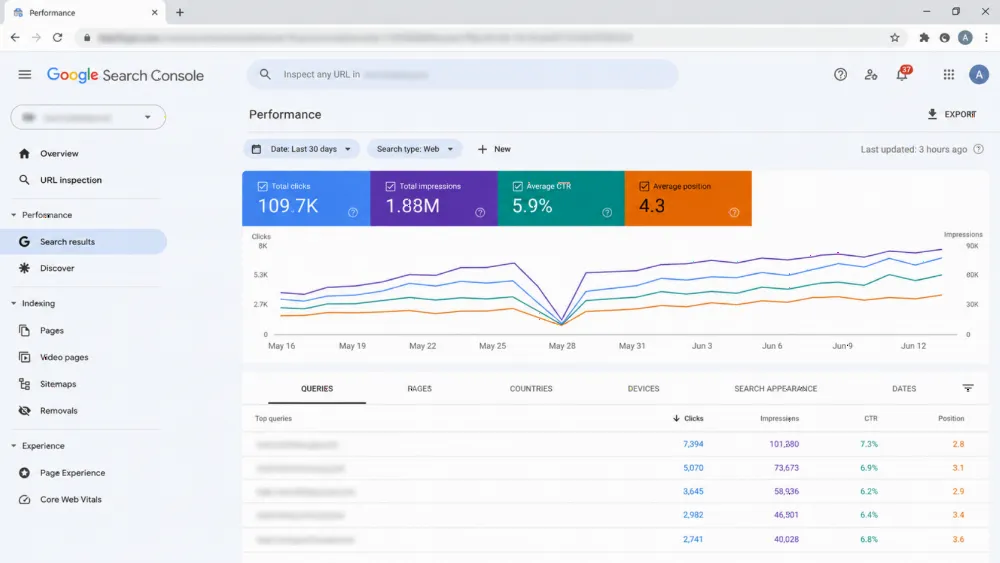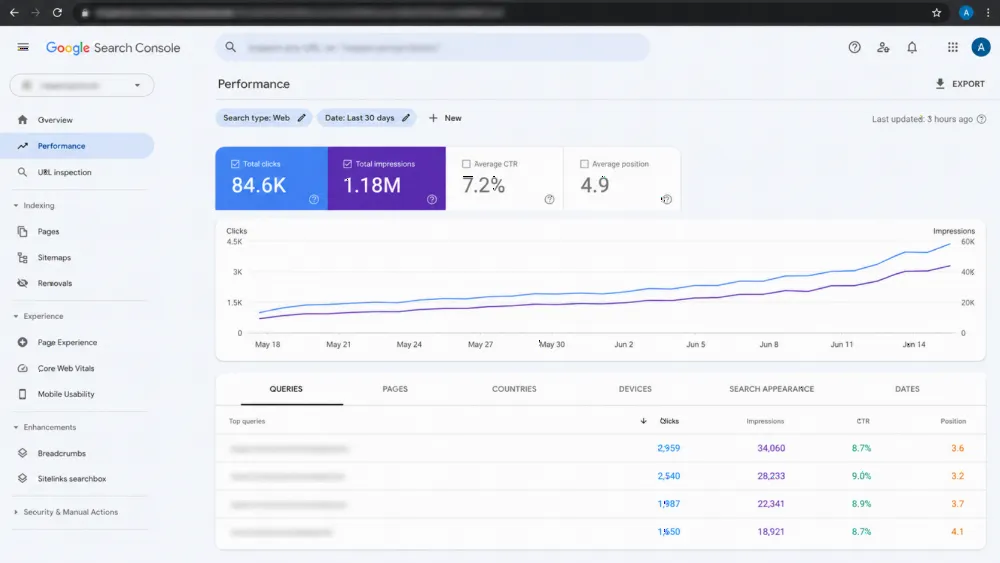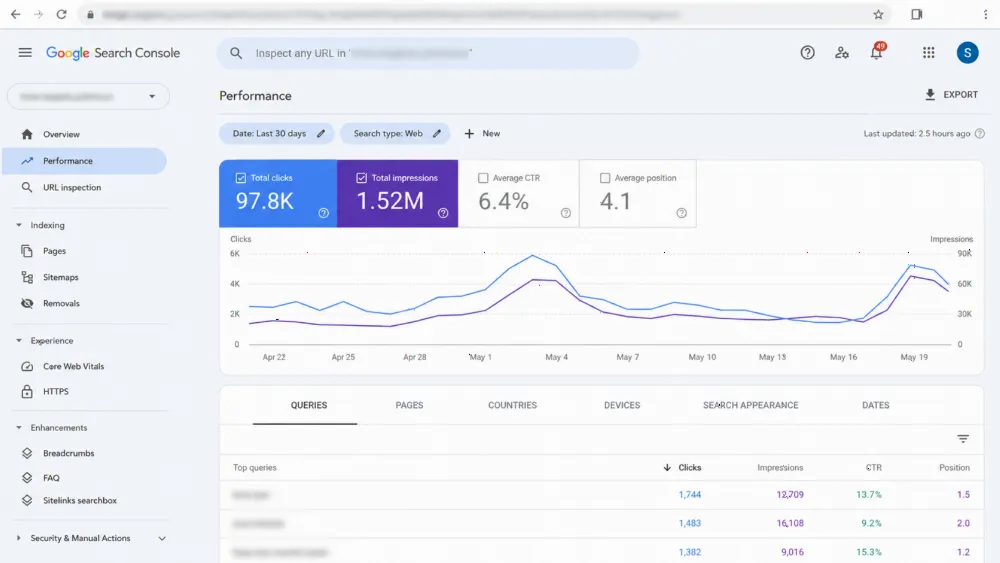
Generative Engine Optimization (GEO) structures your content and online presence so AI answer engines — ChatGPT, Google AI Overviews, Gemini, Perplexity, Claude — cite or recommend your business inside their answers. Where SEO fights for a ranked link, GEO fights to be part of the answer itself.
For Dubai businesses, this matters now: AI Overviews launched across MENA with Arabic support in May 2025, AI Mode reached UAE users in August 2025 — and you can rank well on Google while staying invisible when someone asks an AI who to hire.
Want to know where you stand in AI answers? Run our free AI visibility check — it takes minutes and shows your current share-of-answer.
What is GEO and how does it differ from SEO?
The origin. The term comes from an academic paper, "GEO: Generative Engine Optimization," presented at KDD 2024 by researchers from Princeton, Georgia Tech, the Allen Institute for AI and IIT Delhi. Testing nine content techniques, the study found the right ones could lift a page's visibility inside AI answers by up to 40% (arXiv Aggarwal et al., KDD 2024) — with added statistics, cited sources and expert quotations as the biggest movers.
The practical difference:
| Dimension | Traditional SEO | GEO |
|---|---|---|
| Goal | Rank a URL on page one | Get cited inside the AI's answer |
| Unit of success | Position and clicks | Mentions, citations, share-of-answer |
| How content is found | Index of pages ranked by signals | Retrieval of passages, then synthesis |
| What wins | Keywords, backlinks, technical health | Fact density, first-hand expertise, entity authority, consensus |
| Where you compete | Google results page | ChatGPT, Gemini, Perplexity, AI Overviews, Claude |
You'll also see it called AEO, AIO, AI SEO or LLMO — the industry hasn't settled on one label. AEO leans toward winning direct answers; GEO covers the full job of retrieval and citation. Our AEO vs SEO breakdown maps the relationship in detail.
Not rivals. GEO is an additive layer on top of solid SEO. Google's own 2026 guidance confirmed that optimising for its AI features is still, fundamentally, SEO — so a strong technical foundation remains non-negotiable. A technical SEO audit is the right starting point if that foundation is shaky.
Why does GEO matter for UAE businesses right now?
AI search is live in the Emirates. AI Overviews switched on across the Middle East and North Africa in May 2025 with Arabic included, and AI Mode — powered by Gemini 2.5 — began rolling out to UAE users from August 2025, with Arabic support following in 2026. This isn't a coming trend; it's the current interface.
Buyers ask longer questions. Google has noted early AI Mode users type queries two to three times longer than a normal search (Google The Keyword). "Best dentist Dubai Marina" is becoming "which dentist in Dubai Marina does Invisalign, takes my insurance, and has Saturday appointments." Long, specific, conversational queries are exactly where AI answers replace the blue-link list — and where being uncited means being unseen.
The economic weight is real. Public First estimated in 2025 that generative AI could add up to AED 298 billion to the UAE economy (Public First commissioned by Google), with Vision 2031 and the "AI for All" programme with Google pushing adoption across every age group. Your customers are being trained to ask AI first.
Coverage keeps climbing. BrightEdge data tracked across a full year found AI Overviews appearing on roughly 48% of queries by early 2026, up from about 31% a year earlier (BrightEdge) — with healthcare, education and B2B technology triggering them on the large majority of searches. Gartner projects traditional search volume could fall by around 25% by 2026 as buyers move to AI assistants.
The honest flip side. Around half of searches still return classic blue links. Traditional organic SEO remains the foundation of most of your visibility — GEO is the new ceiling, not a replacement for the floor. Drop your fundamentals to chase AI and you lose more than you gain.
How do AI engines decide what to cite?
The mechanics. When someone asks an AI a question, it rarely searches their exact words. It uses query fan-out — breaking the prompt into several smaller searches — then retrieval-augmented generation to pull relevant passages from across the web and stitch them into one answer. Four patterns hold across most engines:
- Consensus beats claims. Models are built to avoid inventing facts, so they look for the same fact stated across multiple independent sources. One self-congratulatory page is not enough — a Yext study of 6.8 million citations found 86% of AI citations trace back to brand-managed sources (Yext), split between first-party sites and listings, reviews and directories.
- Brand mentions matter more than expected. Citation analyses find branded search volume among the strongest correlates of AI citation frequency. If people Google your name, AI recommends you more.
- Sources vary by engine. ChatGPT leans heavily on Bing's index and human-validated sources like Reddit. Perplexity prizes freshness and updates fast. Google AI Overviews are rooted in normal Search ranking — so they reward the same things that rank you organically.
- The overlap is shrinking. Research shows the overlap between Google's top organic results and AI-cited sources has fallen from roughly 70% to under 40%. You can dominate page one and still be absent from the AI answer — which means open ground for businesses willing to claim it early.
To see where your brand sits today, the fastest diagnostic is our AI visibility audit checklist — it walks through baselining your citations before you spend a dirham.
The 2026 reality check most agencies skip
What Google actually said. On 15 May 2026, Google published its first official guidance on optimising for generative AI features, and it named several popular GEO tactics as simply not required for AI Overviews and AI Mode:
- llms.txt files — Google may crawl them, but they get no special treatment for AI features. (Our llms.txt guide explains the file's real, limited uses.)
- Content "chunking" into tiny AI-friendly pieces — Google's systems understand full pages fine.
- AI-specific rewriting — models understand natural language and synonyms; machine-flavoured prose adds nothing.
- Schema as an AI ranking signal — it still earns rich results in classic Search, but independent tests show it has little to no effect on ChatGPT citations.
Around the same time, Ahrefs released a study spanning more than a billion data points reaching the same conclusion: much of the GEO playbook being sold right now is either unnecessary or unproven.
What Google validated instead is refreshingly old-fashioned: first-hand, non-commodity content is the single biggest visibility lever; genuine multimodal content (real images and video) gets surfaced in AI answers; and technical hygiene — a crawlable, indexable site with clean semantic HTML — is the floor everything stands on. SEO-friendly web development exists precisely to build that floor correctly.
The nuance worth keeping. Google's surfaces run on core Search, so "optimising for Google's AI is still SEO." But ChatGPT, Perplexity and Claude run on different rules, where Reddit threads, brand mentions and freshness carry real weight. GEO isn't dead — it got resized and honest. If you want the machine-readable side handled properly, see how to get ChatGPT to recommend your business.
A GEO playbook Dubai founders can actually run
1. Lead with experience and original data. The cheapest competitive moat in 2026 is being the only source of a specific fact. Publish your own numbers: a real client result, a price benchmark for your service in the UAE, a short customer survey. Replace "our service is great" with specifics — AI engines quote numbers and skip fluff. SaaS founders should read our GEO for SaaS for sector-specific angles on this.
2. Structure every page to be the answer. Put the question a customer would actually ask in an H2 or H3, then answer it in the first two sentences — before any preamble. Keep sections self-contained so they make sense lifted out of context, because that's exactly how AI pulls them. Add a real FAQ section. This answer-first format is the closest thing GEO has to a cheat code.
3. Build entity authority across the web. AI decides who you are from what the wider web says about you. Keep name, address and phone identical across your Google Business Profile, UAE directories and listings; keep your description of what you do consistent everywhere.
4. Earn mentions, especially the human ones. Reviews on Google and Trustpilot, discussions on Reddit and Quora, and "best agencies in Dubai" roundups all feed the model's trust. Brand mentions on YouTube show a particularly strong correlation with AI visibility — video is worth more than it looks.
5. Get the technical floor right. Check your robots.txt isn't accidentally blocking AI crawlers like GPTBot, OAI-SearchBot and PerplexityBot — a mistake we find on a surprising number of audited sites. Secure solid Bing coverage, since ChatGPT leans on it heavily. Fast, crawlable, well-structured pages are the entry ticket.
6. Don't ignore Arabic and local context. With AI Overviews and AI Mode both live in Arabic, a bilingual presence is now a visibility advantage. Cultural relevance feeds the trust signals AI weighs — content reflecting local realities, from Ramadan timing to Islamic finance norms, reads as more authoritative for UAE queries than a generic translated page. Our guide to SEO for bilingual Arabic-English websites covers the execution.
7. Measure prompts, not just keywords. Pick 20–30 real questions your buyers would ask an AI, run them weekly across ChatGPT, Perplexity, Gemini and AI Overviews, and log who gets cited. That share-of-answer is your new ranking report. Perplexity gives the fastest feedback — often within weeks — so start there.
Common mistakes to avoid
- Paying for debunked tactics. If a vendor's pitch is installing llms.txt "for Google" or adding schema "so ChatGPT cites you," hold it against Google's May 2026 guidance.
- Chasing AI while neglecting SEO. Half of searches still show classic results. Drop your fundamentals and you lose more than you gain.
- Black-hat shortcuts. Cloaking content to AI crawlers, inventing author credentials, or stuffing fake mentions are flagged risks — and AI spam systems already catch most of it.
- Treating it as one-and-done. Citations decay as competitors move. GEO is a habit, not a project.
A simple 90-day start
Weeks 1–4: Audit robots.txt and Bing coverage, fix anything blocking AI crawlers, and rewrite your top three pages answer-first with real data and an FAQ.
Month 2: Tidy your entity footprint — consistent listings and reviews — and publish one piece of original research or a real case study.
Month 3 onward: Earn external mentions, expand into a topic cluster, and track share-of-answer weekly. When you're ready for a hands-on programme, explore our GEO services for Dubai businesses.
FAQ
What is generative engine optimization in simple terms?
GEO is the work of making your content and online presence trustworthy and clear enough that AI tools like ChatGPT and Google AI Overviews cite or recommend you inside their answers — rather than just listing your link.
Is GEO the same as SEO?
Not exactly, but they overlap heavily. Google's 2026 guidance says optimising for its AI features is still SEO. Other engines add their own rules, so GEO is best understood as an extra layer on top of strong SEO, not a replacement.
Does GEO work in the UAE and in Arabic?
Yes. Google's AI Overviews and AI Mode are both live across MENA and support Arabic, so optimising for AI answers is directly relevant to UAE businesses targeting English and Arabic-speaking customers.
Do I need an llms.txt file or special schema to get cited by AI?
For Google's AI features, no — Google stated in May 2026 that llms.txt, content chunking, AI-specific rewriting and schema-as-an-AI-signal are not required. Schema still helps classic rich results; neither is a shortcut to citations.
How do AI engines decide which businesses to recommend?
They retrieve passages from many sources, look for facts repeated across them, and weigh brand mentions, reviews and authority. Consensus and first-hand specifics matter more than marketing language.
Which AI engine should a UAE business focus on first?
Start with the foundation serving all of them: solid SEO, which drives Google AI Overviews directly. For chat engines, ChatGPT has the largest share — fix Bing coverage and earn mentions there first — while Perplexity is the fastest place to see results.
How long does GEO take to show results?
It varies. Perplexity uses real-time retrieval and can reflect changes within weeks. Google AI Overviews track with normal Search performance, so they move on SEO timelines.
The bottom line
AI search has already reached your customers in the UAE, in English and Arabic. The businesses that show up in AI answers over the next year won't be the ones with the cleverest hacks — they'll be the ones producing genuinely useful, fact-rich, first-hand content, keeping their sites machine-readable, and building a consistent reputation across the web.
If you want a second pair of eyes on where your business stands in AI answers today, run the free visibility check — it's the same starting diagnostic we use for UAE clients every week.
Written by the WebStackRank team — we build GEO and AI-visibility programmes for Dubai and GCC businesses. Last reviewed: October 2026.