Manufacturing website design is the discipline of building B2B sites for industrial producers that turn technical buyers into qualified RFQs. Done well, it makes your website a 24/7 sales engineer — capability pages, spec downloads, and structured quote forms — so a procurement engineer can verify you in minutes instead of weeks.
Get a transparent, fixed-price estimate for your manufacturing website before you brief anyone — no sales call required.
What Does Manufacturing Website Design Actually Mean in 2026?
Manufacturing web design is the practice of building, structuring, and maintaining websites for companies that physically make things: CNC shops, injection molders, metal fabricators, contract assemblers, beverage producers, and industrial OEMs. Industrial web design is the wider umbrella — it also covers process-plant equipment, automation suppliers, and heavy industry — while manufacturing web design usually centers on firms that produce parts, components, or finished goods.
The difference from ordinary small-business web design is the buyer. Your visitor is often an engineer or procurement lead with a drawing in one hand and a deadline in the other. The website has to do four jobs at once: act as a capabilities document, pass a two-minute credibility check, run a proper RFQ intake process, and serve as long-tail SEO surface for hundreds of process, material, and tolerance queries. If it can't do all four, revenue is leaking.
The stakes are visible in buyer research. A study of more than 250 manufacturing executives and managers by Industrial Equipment News and R.H. Blake found that 85% conduct preliminary research on vendor and supplier websites before making high-value purchases. Your website is not a brochure; it is the first round of the sourcing interview. That is also why industry-specific web development expertise matters so much here — the team building the site needs to understand how an engineer reads a capability page. Our own B2B SEO strategy framework is built around exactly this buyer-first logic.
Why Do Most Manufacturer Websites Fail to Generate RFQs?
Walk through a dozen mid-size manufacturer sites and a pattern repeats: a factory hero image, a paragraph about quality and trust, and a nav bar with Products, About, Contact. Capabilities are buried. Tolerances are missing. The contact form is five generic fields with no signal of whether the plant is a fit. No shop-floor photos, no certifications, no team.
The cost of that pattern is real, and it is invisible — lost leads never identify themselves. They visit, scroll, leave, and buy from the competitor with the clearer site. According to Gartner's research on the B2B buying journey, business buyers spend only about 17% of the total purchase cycle talking to suppliers; the rest is independent research. Forrester's 2025 buyer survey pushes this further: 61% of the buying journey now completes before the buyer ever contacts a vendor. If your site doesn't answer the questions buyers ask during that 83%, you're eliminated before the first call.
What you notice instead — months later — is flat RFQ volume, longer sales cycles, and growing dependence on a few legacy accounts. Before spending on a redesign, run through our 50-point SEO audit checklist to see which issues are content problems and which are structural. Then read our lead-generation website framework to understand how the conversion system should hang together.
What Pages and Features Does a Serious Manufacturing Website Need?
There is no universal template, but there is a near-universal core. Every item below earns its place by shortening the buyer's verification path.
- Capability pages organized by process and material, not by product. Buyers search by what they need done — "5-axis CNC machining stainless steel," "low-volume injection molding PEEK," "anodized aluminum extrusion tolerances." Each capability page should answer three questions: what you do, what specs you can hold, and which industries you serve with it. A full third of the industrial buyers in the IEN/R.H. Blake study said vendors lack sufficient technical depth — this is where you prove you're the exception.
- A real RFQ workflow with structured fields. Replace the generic contact form with material, quantity, finish, drawing or 3D file upload, target lead time, and end-use industry fields. This single change cuts wasted sales-engineer time and auto-qualifies leads before a human touches them.
- Certifications, audits, and compliance evidence. ISO 9001, AS9100, IATF 16949, ITAR registration, FDA-compliant facilities — list what applies, link to verifying authorities, and carry the logos in the site footer.
- Real photography and shop-floor video. Stock signals "we don't actually do this work." A 90-second floor walkthrough, named equipment photos, and a team page with real faces is the single biggest credibility upgrade most plants can make.
- A resource library with downloadable technical data. PDF spec sheets, tolerance charts, material data sheets, CAD blocks, and STEP libraries attract technical traffic that converts. Keep routine downloads ungated — gate only the assets that genuinely justify the friction.
- Dedicated landing pages for each industry you serve. Aerospace, medical, automotive, oil and gas — each deserves its own page with relevant standards, typical part types, and case examples. Generic "industries we serve" lists neither rank nor convert.
- A technical SEO foundation. Organization, Product, and LocalBusiness schema; clean URL structures like
/capabilities/cnc-machining/; fast Core Web Vitals; an XML sitemap covering every capability and material page.
Quick win: publish one "Materials We Machine" page listing every alloy, plastic, and composite you handle, with a short paragraph and tolerance range per material. Sites built this way routinely see that page generate 20–40% of organic entries, because it captures hundreds of long-tail material-plus-process queries. Statista data puts this in context: 66% of US B2B buyers discover products through internet search results — long-tail coverage is how you get found. For the technical layer, start with our technical SEO audit service, and if you're redesigning, follow our website migration checklist so the new structure doesn't lose the rankings you already have. For budget planning, see how much a website costs in 2026.
How Do Engineers Actually Evaluate a Supplier Online?
Engineers don't browse — they evaluate. They arrive with a specific part, a specific tolerance, and a specific deadline. They want to verify three things, fast: that you can do the work, that you've done it for someone similar, and that you respond when contacted. Hero animations and parallax scrolling don't help. Dense, scannable information helps — bold headings, tolerance charts, material lists, real photos, a quote button visible on every page, a phone number that doesn't hide on mobile, and a response-time promise the team actually keeps.
As the Harvard Business Review's reporting on B2B buying behavior found, buyers who feel high information clarity from a supplier are 2.8 times more likely to consider that supplier seriously. Clarity beats cleverness on a manufacturing site — always. As W. Edwards Deming put it: "In God we trust; all others must bring data." That sentence could be the design brief for every industrial website.
One more habit to design for: engineers save and share. A buyer who finds your capability page emails it to a colleague, drops it in a Slack thread, or pastes it into a sourcing spreadsheet. Design every page as a standalone artifact, with enough context that a cold arrival still understands what the company does and what to do next. When comparing engagement models for this kind of build, read our breakdown of fixed-price vs retainer vs time-and-materials, and after launch, protect the investment with a proper website handover and ownership checklist.
Should You Hire a Generic Agency or a Manufacturing Specialist?
Fit matters more than portfolio size. Here's where the two typically differ:
| Dimension | Generic Small-Business Agency | Manufacturing-Specialist Team |
|---|---|---|
| Discovery focus | Brand colors, logo, "feel" | Capabilities, materials, certifications, ICP, buyer journey |
| Information architecture | Home, About, Services, Contact | Capabilities by process + material + industry + resources + RFQ |
| Forms | Generic 5-field contact form | Structured RFQ with file upload and qualification routing |
| SEO approach | Five broad service pages | 50–300 long-tail pages by process, material, alloy, industry |
| Imagery | Stock "industrial scenes" | Real shop-floor photography, named equipment, team page |
| Schema markup | Basic Organization markup | Organization + Product + LocalBusiness + FAQPage + BreadcrumbList |
| Technical SEO | Default CMS setup | Hardened build with optimized Core Web Vitals |
| Typical outcome | Pretty site, flat RFQs | Steady organic growth in qualified RFQs over 6–12 months |
This isn't a criticism of generalists — they do excellent work for restaurants, salons, and local services. A manufacturing web design company simply spends the first two weeks of discovery understanding your processes, not your brand mood board, and that difference compounds across every page. For a framework on vetting any vendor, read how to choose a web development company. When you're ready, compare scopes on our web design services page.
What Mistakes Cost Manufacturers the Most Inquiries?
After auditing industrial sites for years, the same failure patterns show up again and again:
- Hiding capabilities behind generic "Services" pages. A buyer searching "Swiss screw machining brass" should land on a page that names the process and the material. Burying it under "Services > Machining" kills the search opportunity.
- One enormous "About Us" page with no proof. Replace it with a credibility cluster: facility page, team page, certifications page, equipment list.
- Forcing engineers to request spec sheets. Gating routine technical PDFs behind forms reduces trust and search visibility. Gate only high-value assets.
- No phone number on mobile. Industrial buyers still call, especially for urgent jobs. A sticky call button on mobile is cheap and high-impact.
- Hero video carrying the message without captions. Many engineers browse from quiet offices or shared computers; captions are mandatory if the video matters.
- Treating the website as a one-time project. Manufacturing web design should include quarterly content updates — new capabilities, materials, certifications — or the site stagnates within 18 months.
- No analytics on the RFQ path. If you can't see which capability pages drive traffic and which sources convert, you can't improve them.
The 6sense 2025 Buyer Experience Report adds urgency: 94% of buying groups had a ranked preferred vendor before first contact with any seller — and the vendor preferred before first contact won 77% of the time. Your website is where that preference forms.
Walk-Through: An Illustrative Site Restructure
The following walk-through is a composite drawn from common patterns in industrial web projects, not a specific WebStackRank client. Picture a 60-person contract manufacturer in the US Midwest running CNC machining, light fabrication, and assembly. Their old site had six pages, a stock-photo hero, and one undifferentiated "Capabilities" page listing equipment by brand. Organic traffic averaged 180 visits a month; inbound RFQs averaged four a month, mostly from existing referrals.
The redesign broke the offering into 28 pages: eight process pages (3-axis milling, 5-axis milling, turning, Swiss machining, wire EDM, and more), six material pages (aluminum, stainless, brass, PEEK, Delrin, titanium), four industry pages (aerospace, medical, defense, industrial automation), and ten supporting pages — RFQ, capability downloads, certifications, facility tour, team, careers, tolerance reference, blog, contact. They added schema markup, fixed Core Web Vitals, and replaced every stock image with shop-floor photography shot over two days.
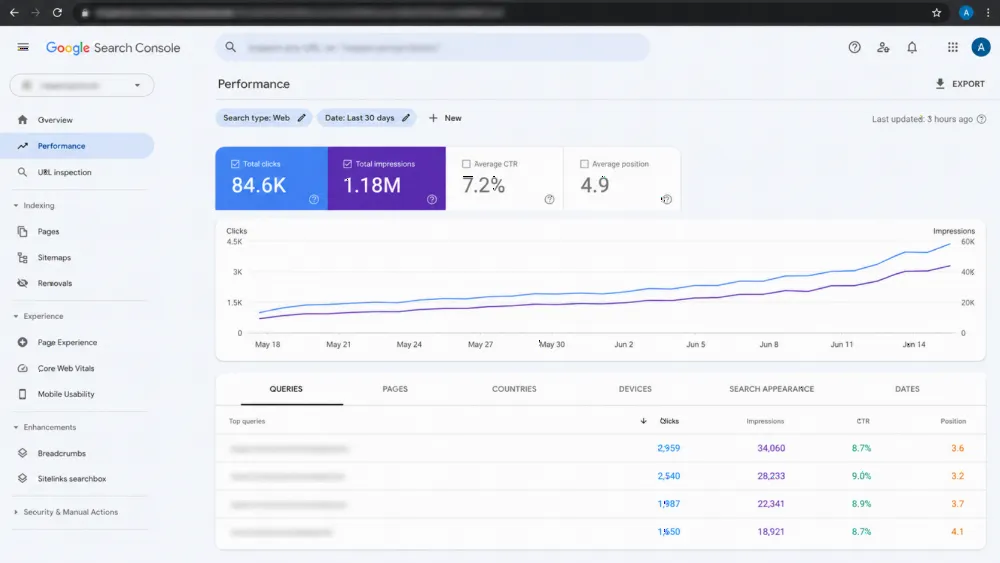
Within six months, organic traffic grew steadily — the materials pages drove the largest share — RFQ volume roughly tripled, and the sales team reported leads arriving better qualified, drawings already uploaded through the structured form. The lesson isn't the exact numbers; it's the mechanism. A site that mirrors how engineers actually search beats a prettier one that doesn't.
How Does WebStackRank Build Manufacturing Websites?
We treat every industrial project as a sales-engineering problem first and a design problem second. Discovery maps capabilities, materials, certifications, and the buyer journey before any design begins. For the build, we typically choose between a hardened WordPress stack for content-heavy manufacturers and a custom Next.js or Laravel build for deep integrations — ERP, CAD libraries, customer portals — which our custom web application development team handles.
Every build is fixed-price with no monthly retainers, full code and IP transfer at handover, and a 14-day standard launch window — see how a two-week website sprint actually runs. Pricing is project-based and transparent: get your estimate from the quote calculator or check our fixed-price web design service.
Frequently Asked Questions
How much does manufacturing web design cost in 2026?
For a serious B2B manufacturing website, budgets typically run from about USD 8,000 for a focused redesign of a small operation to USD 40,000+ for a custom build with 40–100 capability pages, structured RFQ workflows, and ERP or CRM integrations. Cost scales with page count, integrations, and content production — not with company size. See our 2026 website cost guide for detailed ranges.
What's the difference between manufacturing and industrial web design?
The terms overlap heavily. Industrial web design covers any heavy-industry website — equipment makers, process plants, automation suppliers, oil and gas. Manufacturing web design describes sites for firms producing parts, components, or finished goods, including contract manufacturers. The design discipline is largely the same; the page taxonomy, standards, and certifications differ.
Do we need a CAD download portal or a product configurator?
It depends on the buyer journey. A CAD library (STEP, IGES, DXF) is a strong asset for standard-component manufacturers and is usually worth the build cost. A full parametric configurator is heavier — it makes sense for product families with hundreds of variants and less sense for fully custom contract work.
Which CMS works best — WordPress, Webflow, or custom?
For most mid-size manufacturers, a hardened WordPress build is the practical choice: large ecosystem, easy content updates, strong SEO tooling. Webflow suits smaller sites with simpler taxonomies. Custom builds on Next.js or Laravel make sense when the site must integrate with ERP, MES, or a customer portal. Read our WordPress vs Webflow vs custom comparison for the full trade-offs.
How long does a manufacturing website redesign take?
A typical timeline runs 6–12 weeks: 1–2 weeks of discovery and information architecture, 2–3 weeks of design, 3–5 weeks of development, and 1–2 weeks of content production and QA. Tighter scopes can ship in 14 days; deeper integrations or large content libraries take longer.
Should our website list pricing for B2B manufacturing products?
Rarely. Custom manufacturing work is priced per job based on volume, material, and tolerances. What works better is publishing starting points or ranges on standardized service lines, plus a transparent RFQ workflow. Buyers value clarity about how you quote even when exact prices aren't published.
Do we still need a website if most business comes from referrals?
Yes — because referred buyers research you online before committing. A weak website undermines the referral; a strong one confirms it. Even if your site never generates a single cold lead, it materially affects how fast referred buyers move from "introduced" to "signed."
Sources & Further Reading
- Industrial Equipment News / R.H. Blake — B2B Manufacturing Buyer Journey Study — 250+ manufacturing executives on how they research suppliers
- Forrester 2025 B2B Buyer Survey — 61% of the journey completes before vendor contact
- Backlinko / Statista — B2B marketing statistics — 66% of US B2B buyers discover products via search
- Gartner — B2B Buying Journey research (buyers spend ~17% of the cycle with suppliers)
- Harvard Business Review — B2B buying behavior (information clarity drives 2.8x consideration)
- 6sense — 2025 Buyer Experience Report (94% rank vendors before first contact)
Build a Manufacturing Website That Actually Sells
If your current site is a brochure rather than a sales engineer, it is quietly costing you RFQs every month. A well-structured manufacturing website pays for itself within a single sales cycle when the average deal size is meaningful — which it almost always is in industrial markets. Get a transparent estimate from our quote calculator: custom manufacturing web design, fixed price, code ownership at handover.
Last updated: 11 October 2026 (Asia/Dubai)