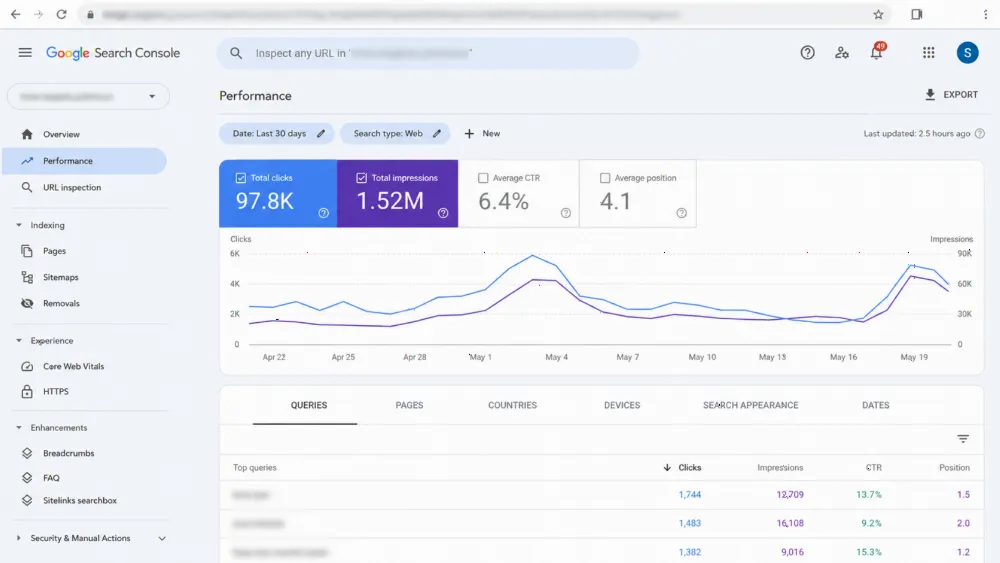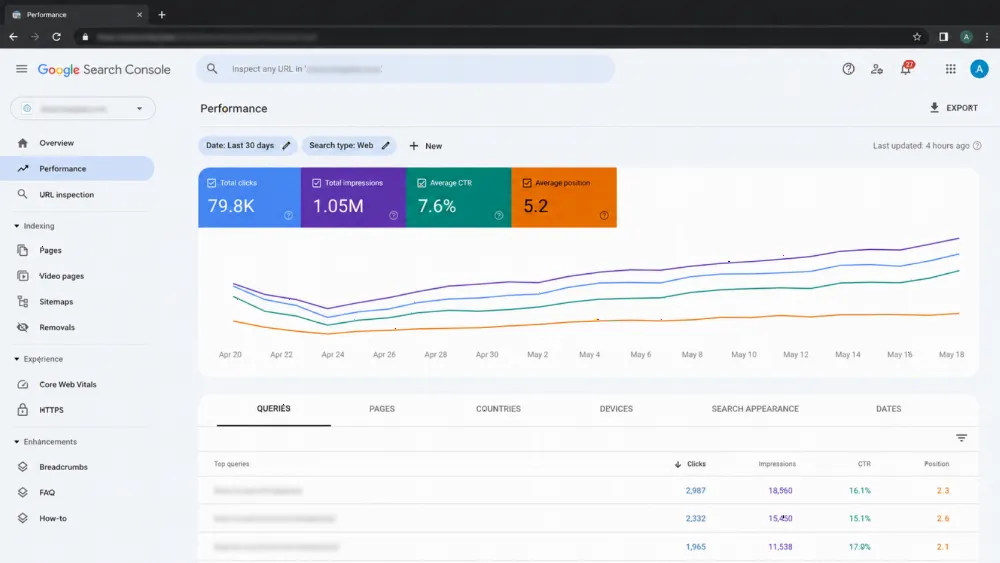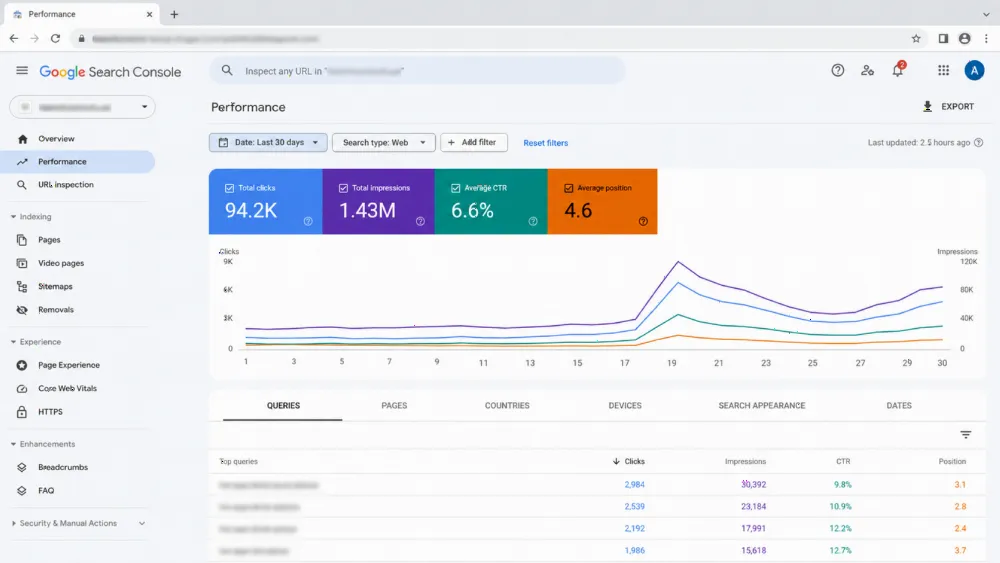
A marketing agency website has one job no other site does: prove through its own design and performance that the team behind it can deliver the same outcome for a client. It ranks for target service terms, demonstrates craft through real work, and turns qualified strangers into briefed prospects.
Submit a brief for a fixed-price agency website build — scoped in 14 days, no retainers, full ownership at handover.
What Must a Marketing Agency Website Actually Achieve?
Most websites have a single primary job — sell a product, book an appointment, capture a lead. A marketing agency website carries a heavier load: it must do all of that and also convince a sceptical buyer that the people who built it know their craft. That second layer is where most agency sites quietly fail.
When a marketing director lands on your homepage, they run a fast, almost subconscious audit. Does it load in under two seconds? Does it rank for the service term they just searched? Is the copy specific or generic? Is the work shown real? Are the case studies measurable? Are the meta tags filled in? Every signal either confirms or contradicts the pitch.
A working agency site delivers four outcomes at once: it ranks for service-plus-location terms, demonstrates craft through the design itself, proves competence with measurable case studies, and routes qualified visitors into a short, low-friction enquiry path. Hit all four and the site does the work of a junior business-development hire. Miss any one and you're paying for traffic that bounces or referrals that never convert. For a structured way to think about this, read our lead-generation website framework, and for budget context, our 2026 website cost guide.
Why Do Most Agency Websites Underperform?
There's an old industry joke that agency websites are the cobbler's children — always shoeless. The reason is structural, not laziness. Agency owners book client work first, do their own work last, and never quite finish. The six-week sprint becomes an eighteen-month redesign that ships at 70% and gets left there.
Patterns we see again and again in agencies we audit: endless redesigns that never ship; design over substance (a beautiful hero, 200-word service pages, numberless case studies); no local SEO — an SEO agency that doesn't rank for its own city + service phrase is hard to trust; generic positioning ("results-driven, data-led, full-service" describes 90% of agencies); and founder bottlenecks where every copy decision waits on one person.
The fix isn't more design effort. It's treating the agency site like a client project — with a scope, a brief, a deadline, and someone other than the founder holding the pen. Data on buyer behavior backs the urgency: the 6sense 2025 Buyer Experience Report found that 94% of buying groups had a ranked preferred vendor before first contact with any seller (6sense Research). Your own website is where that ranking happens. Before redesigning, run through our 50-point SEO audit checklist to diagnose what's actually broken.
What Are the 7 Core Pages Every Agency Website Needs?
Agency web design has converged on a tight page set. You can have more, but anything missing here gets noticed by a serious prospect:
- Homepage — a 30-second pitch: who you serve, what outcome you produce, two or three pieces of proof, one primary call to action.
- Services pages (one per discipline) — SEO, paid media, content, web design, branding. Each a standalone landing page targeting its own keyword cluster, not one combined "What we do" page.
- Case studies (minimum three at launch) — real client work with the brief, the approach, and at least one measurable outcome. Names redacted if NDA'd, but numbers stay.
- About / Team — real photos, real bios, real expertise. No stock headshots.
- Pricing or "How We Work" — at least the structure of pricing. Agencies that hide every number lose half their buyers before the first call.
- Insights / Blog — the engine room for organic rankings on service-adjacent terms. Only launch one you can publish to monthly.
- Contact / Brief — a short, intelligent form. Five fields, not fifteen, plus a calendar embed for a 20-minute call.
Layer legal pages, a careers page if you hire, and one or two paid-channel landing pages underneath. Anything beyond that is usually waste. If you're redesigning, protect existing equity with our website redesign migration checklist, and compare engagement models in our fixed-price vs retainer vs time-and-materials breakdown.
How Should Different Agency Types Design Their Sites?
"Marketing agency" is an umbrella. Underneath sit very different specialisms, and the site that works for one won't work for another:
| Agency type | Primary buyer signal | Proof format | SEO target pattern |
|---|---|---|---|
| SEO agency | Your own rankings for service + city | Traffic and ranking case studies with screenshots | "seo agency [city]", "[city] seo agency" |
| B2B advertising agency | Brand clients, named industries, board-ready visuals | Campaign case studies with reach, CTR, pipeline impact | "b2b advertising agency [region]" |
| Full-service digital agency | Range of disciplines, in-house team, scale | Multi-channel case studies tied to revenue | "digital agency [city]" |
| Niche / vertical agency | Vertical-only client list, regulatory awareness | Vertical outcomes (cases booked, revenue per location) | "[vertical] marketing agency" |
| Local digital agency | Local relevance, community presence | Local SEO results, Google Business Profile growth | "[discipline] agency [city]" |
The point isn't to squeeze yourself into one box. It's to be honest about which box you're closest to and design every decision from there. A B2B ad agency homepage that copies a consumer creative studio's layout reads as confused, because the underlying buyer is different. For deeper positioning theory, see our B2B SEO strategy guide and AEO vs SEO guide.
How Do You Design a Site That Demonstrates Your Marketing Skills?
Agency web design has one unique advantage over almost every other industry: the website itself is a piece of evidence. An SEO agency that loads in 4.2 seconds with no internal links can't credibly sell technical SEO. The site is the demo.
- Performance is non-negotiable. Largest Contentful Paint under 2.5 seconds, Interaction to Next Paint under 200ms, Cumulative Layout Shift under 0.1 (Google web.dev) — Google's published Core Web Vitals thresholds. An agency whose own site fails them leaks trust on every visit. Run ours through the Core Web Vitals 2026 launch checklist as a reference.
- On-page SEO must be visible. A knowledgeable prospect will check your title-tag patterns, unique meta descriptions, H1 keyword usage, and schema validity in dev tools. If those are missing on your own site, the conversation usually ends at the audit stage. A genuinely SEO-aware build bakes structure in from the first wireframe.
- Build a design system, not a one-off layout. Agencies redesign more than most businesses. Reusable components — buttons, cards, case-study templates, service blocks — mean you can ship a new landing page in a day, not a month. That speed compounds into more landing pages, more rankings, more leads.
- Write copy that does the heavy lifting. Plain language. Who you serve, deliverables, timeline, outcomes you've produced before. Quick test: cover the logos on your services page and a competitor's. Can you tell which is which from the words alone? If not, neither can your prospects — and the one with better SEO and faster load wins the click.
As Steve Jobs put it: "Design is not just what it looks like and feels like. Design is how it works." For an agency site, that working evidence includes a technical SEO foundation you can audit yourself — and if you want AI search visibility too, our how-to-get-ChatGPT-to-recommend-your-business guide covers the new discovery layer.
What Mistakes Do Agencies Make on Their Own Websites?
From auditing dozens of agency sites, the same handful of mistakes recurs. Each is fixable in days, not months:
- Stock photography of generic office life. Four people laughing at a laptop proves nothing. Real team photos, real logos, real screenshots — or no images at all.
- Case studies without numbers. "We helped them grow" means nothing. "Organic sessions grew 184% over 9 months" is something a buyer can model.
- One blog post a year. An agency publishing annually can't credibly run a content calendar for a client. Commit to a cadence or remove the blog.
- Service pages with five sentences each. If the buyer can't understand what they're buying from the page alone, they won't book a call to find out.
- Hidden pricing with no signal. A range, a starting point, or "typical engagements start at" keeps wrong buyers out and right ones engaged.
- Twelve-field contact forms. Filters out the same buyers a five-field form would, with worse conversion.
- No internal linking. Especially fatal for SEO agencies — if your case studies don't link to the relevant service pages, you're not eating your own cooking.
Walk-Through: How an Agency Website Should Convert
Take a worked example: a boutique SEO and content agency, six people, based in a UK secondary city. The owner wants to compete for the local "SEO agency [city]" search — a few hundred queries a month, dominated by two older agencies.
Search. The prospect types "SEO agency Plymouth." The agency's homepage ranks third organically, with a title tag naming the city and a meta description promising a specific outcome. Landing. The homepage loads in 1.6 seconds. The first screen names the city, the service, and the buyer. One headline, one sub-line, one CTA: "See a sample audit." Proof. Three case studies with real numbers — a law firm whose organic enquiries doubled in six months, an ecommerce brand owning page one for fifteen commercial terms, a B2B firm tracing 38% of new revenue to organic. Service depth. The dedicated SEO page lays out the engagement model in plain English, with an FAQ block, a monthly retainer range, and a sample 90-day plan. Validation. The team page shows real faces. Case studies link to the services page; the services page links forward. The site interlinks like its owners understand SEO. Conversion. The prospect clicks "Book a discovery call" — five fields, a calendar embed, a slot booked for the next morning. Four minutes, zero doubt about the agency's craft, because the website itself was a working sample of it.
How Does WebStackRank Build Agency Websites?
We build agency sites like any client project — fixed scope, fixed price, and a 14-day launch path. The difference: agency briefs need more rigour, not less, because the buyer is the audience.
Through our web design service, the flow looks like this: positioning workshop — before wireframes, we map your tightest niche and write the hero around it; component-led design — service pages, case-study templates, and landing pages share a system so you can publish new pages quickly post-launch; SEO architecture from day one — title tags, schema, internal linking, and Core Web Vitals targets are part of wireframes, not a finishing pass; three real case studies at launch — if you don't have three written, we run interview sessions and write them before go-live; full ownership transfer — code, content, design files, analytics. No licensing lock-in, no retainer. For agencies needing visual refreshes alongside, see our branding-adjacent services, and scope it all with the quote calculator.
Frequently Asked Questions
How much should an agency spend on its own website?
For a small to mid-size marketing or SEO agency, a serious website typically costs USD 8,000–30,000 depending on page count, case-study production, and custom features. Less is possible on template platforms, but the site rarely competes for the agency's own service keywords. More is justified mainly when the agency runs paid acquisition and needs many landing pages. See our 2026 cost guide.
What pages does an agency website need?
At minimum: homepage, individual service pages, three or more case studies, a team page, a contact page, and a blog you can actually publish to. Useful extras: pricing or "how we work," careers, and one or two campaign landing pages. Anything else is usually padding.
How long does it take to build an agency website?
A focused build with ready content runs four to eight weeks. Agencies needing new case studies written and photography produced typically take eight to twelve. The most common delay isn't design — it's the agency failing to assign one decision-maker to approve drafts. See how a two-week website sprint compresses this.
Should an SEO agency rank on page one for "SEO agency [city]"?
Yes, with caveats. The high-volume city terms (London, New York, Sydney) are competitive enough that even strong agencies sit on page two for a while. But for any secondary city, a well-built site with relevant content and clean technical setup should reach page one within six to twelve months. Failing to do so over a longer horizon is a credibility problem.
What CMS is best for an agency website?
For most agencies, WordPress with a custom theme or a Next.js front end with a headless CMS are the two strongest choices. WordPress wins on familiarity and ecosystem; Next.js wins on performance and developer workflow. Avoid drag-and-drop builders that lock you in — agencies usually outgrow them within a year. Our headless CMS development team builds the latter.
Do I need case studies before launching?
You need at least three. Launching without case studies is the single most common reason new agency sites underperform. If you can't write three from past or pro bono work, you're not ready to launch the site — you're ready to do the work first and launch in two months.
Should my agency website include a blog?
Only if you can publish at least monthly with real substance. A dormant blog hurts more than no blog — prospects see the last post was eighteen months ago and draw conclusions. If you can't commit, use a smaller insights section updated less often.
Sources & Further Reading
- Google Search Central — SEO Starter Guide
- web.dev — Core Web Vitals thresholds (LCP, INP, CLS)
- Google — Article and Service structured data documentation
- Nielsen Norman Group — B2B website usability research
- 6sense — 2025 Buyer Experience Report (94% rank vendors before first contact) (6sense Research)
Ready to Build an Agency Site That Wins Clients?
If your own website is the project you keep deprioritising, it's the project quietly costing you the most. A well-designed agency site pays back its build cost within a few signed retainers, and compounds as case studies stack up and rankings settle in. Submit a brief and we'll scope a fixed-price, 14-day-launch website built specifically for marketing and digital agencies — with the SEO architecture, case-study templates, and service page system you need to stop redesigning and start ranking.
Last updated: 11 October 2026 (Asia/Dubai)