Ecommerce SEO automation uses software and AI to handle repetitive optimisation work — product pages, schema, feeds, reporting — at a scale no manual team can match. The five essential benefits: deeper product-page optimisation, sharper data-driven decisions, major time savings, effortless scalability, and a compounding competitive edge.
Want these systems built for your store? WebStackRank designs ecommerce websites with SEO-friendly development and automation built in — talk to our team.
Benefit 1: How does automation improve product-page optimisation?
Product pages are where ecommerce SEO is won or lost — and where manual work breaks down. With global retail ecommerce at $6.42 trillion in 2025, forecast to near $6.9 trillion in 2026 (eMarketer via Shopify), every catalogue page competes for a share of that spend. A 500-SKU catalogue means 500 titles, meta descriptions, image alt texts and schema blocks to write, update and keep consistent. Automation handles the repeatable layer: template-driven meta tags, bulk alt-text generation, structured data deployment and internal-link rules that apply across the whole catalogue.
The payoff is consistency, which search engines reward. Automated monitoring also catches the silent killers — broken links, out-of-stock pages bleeding crawl budget, missing schema — before they cost rankings. For the full technical build behind this, see our deep dive on ecommerce SEO automation: product pages, schema, feeds and flows, and for the AI-specific layer, AI automation for marketing operations.
Why is automated content creation a game-changer for catalogues?
Product descriptions are the highest-volume writing task in ecommerce — and the most neglected. Automated content generation keeps every listing current, keyword-rich and written in your brand voice, without a copywriter touching all 500 pages. The result: unique, descriptive pages instead of thin manufacturer duplicates that Google ignores.
This matters because content quality directly shapes trust: accurate, up-to-date listings help shoppers decide confidently, which lifts satisfaction and sales. One caution from experience — never publish raw AI output untouched. Review generated descriptions for accuracy (dimensions, materials, compatibility) and brand tone; scaled, unchecked AI content is exactly what Google's quality systems penalise. Human-edited automation wins; unsupervised automation burns. Our programmatic SEO system shows how to combine templates, data and editorial review at scale.
Benefit 2: How does automation sharpen data-driven decisions?
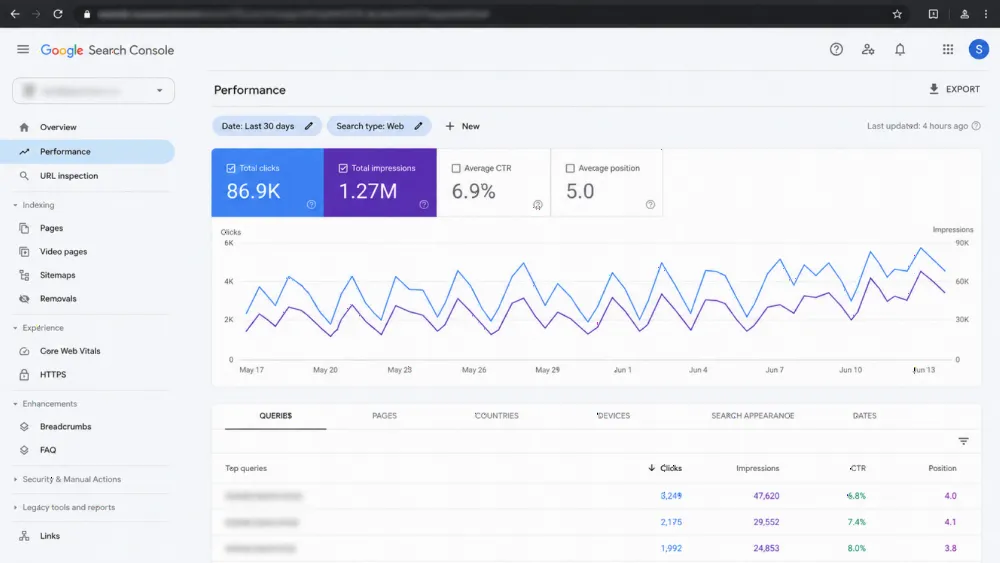
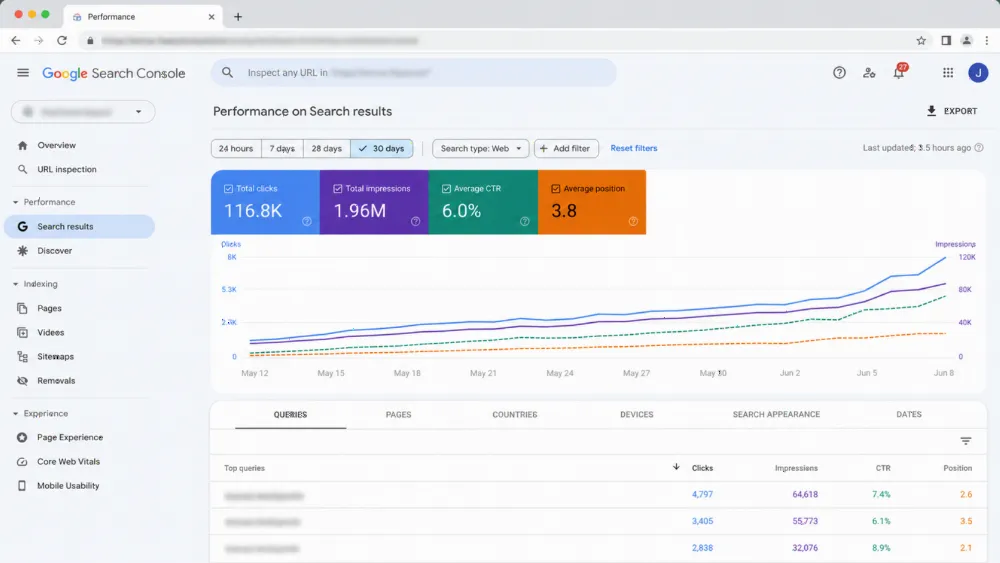
Manual reporting answers "what happened last month." Automated SEO reporting answers "what changed this morning" — keyword movements, traffic shifts, technical issues, competitor moves — with dashboards that update themselves. The advantage is speed of reaction: you can spot a ranking drop on your top category page and fix it the same day, not at the next quarterly review.
The scale of data is what makes this powerful. Automation lets a store track thousands of keywords, analyse traffic sources by segment and flag technical issues continuously — work that would take a human analyst weeks. Real-time analytics also feed smarter decisions elsewhere: precision-targeted campaigns, personalised shopping experiences and demand-based inventory planning. The key is turning data into action, which is why automated reporting should feed directly into a sprint rhythm — see our SEO audit checklist for what to check and how often, and technical SEO audit services when you need the deep diagnostic.
How does AI improve decision-making beyond dashboards?
Dashboards show the past; AI models anticipate the future. Machine learning applied to store data refines customer segmentation, predicts inventory needs from purchase patterns and flags emerging risks — like a category losing visibility before it shows up in revenue. This predictive layer is what separates automated reporting (reactive) from automated intelligence (proactive).
As AI capabilities grow, the stores with the richest first-party data and the cleanest automation pipelines will predict shifts earliest. That requires clean foundations: structured product data, consistent tracking and integrated systems — precisely what custom GPT development and our automation work build around.
Benefit 3: Where does SEO automation save the most time?
Repetitive SEO tasks — keyword tracking, meta tag updates, rank reporting, broken-link checks — consume hours that produce zero strategic value. Automating them returns that time to work that actually grows revenue: merchandising strategy, creative campaigns, partnership deals.
Consider the cart problem: the average documented cart abandonment rate is 70.22% across 50 studies, and Baymard estimates $260 billion in lost orders across the US and EU are recoverable through better checkout design alone (Baymard Institute via Ringly). No manual team can monitor every funnel leak across a large store — but automated flows (abandoned-cart emails, SMS, retargeting) recover revenue while you sleep. Pair them with AI-driven marketing workflows and WhatsApp Business API automation for the channels email misses.
Benefit 4: Why is scalability impossible without automation?
Manual SEO scales linearly with headcount; catalogues don't. When your store grows from 500 to 5,000 SKUs, manual optimisation of every page becomes mathematically impossible — and quality collapses exactly when it matters most. Automation scales sub-linearly: the same workflows that optimise 500 pages optimise 5,000, with bulk updates to meta tags, descriptions and schema deploying in minutes.
This agility also covers market shifts. Seasonal demand spikes, new product launches and algorithm updates all hit harder at scale — automated systems adapt in hours while manual teams take weeks. The stores that grow fastest are the ones whose SEO infrastructure grows with them, not against them. If you're planning that growth, our ecommerce web development service builds the technical foundation — fast, structured, automation-ready — that scale demands.
How do you future-proof ecommerce SEO with AI?
AI doesn't just execute today's playbook — it adapts to tomorrow's. Predictive analytics forecast trend shifts, adaptive strategies reformulate themselves, and personalisation engines tailor every visit. Stores embedding AI into their SEO process stay relevant through algorithm changes that punish static, manual approaches.
The practical future-proofing steps: keep product data structured and clean (AI is only as good as its inputs), maintain editorial oversight on generated content, and build flexible template systems that can absorb new schema types and SERP features. The ecommerce landscape will keep evolving — the winners will be the stores whose automation evolves with it. For the adjacent discipline of winning AI-generated answers themselves, see how to get ChatGPT to recommend your business.
Benefit 5: How does SEO automation create a lasting competitive edge?
In a market where every rival can copy your products, operational speed is the moat. Automated SEO delivers it in three ways: faster adaptation to algorithm changes, richer competitor intelligence (automated tracking of rivals' keywords, backlinks and content), and the ability to identify and dominate niche categories before competitors notice them.
Monitor competitors systematically: their keyword movements, backlink gains and content performance reveal gaps in your own strategy — and opportunities they haven't defended. Combined with AI-driven market positioning (personalised experiences, data-driven trend analysis, predictive modelling), automation turns SEO from a cost centre into an intelligence operation. As one practitioner maxim puts it: automation doesn't just keep you in the race — it lets you set the pace. For the revenue-side pairing, Google Ads for B2B lead generation and our no-retainer SEO agency cover how paid and organic compound.
What should you automate first? A practical priority list
Not everything deserves automation on day one. Start where volume meets repetition:
- Technical monitoring — crawl errors, broken links, missing schema, Core Web Vitals regressions.
- Product-page templates — titles, meta descriptions, alt text, Product schema from structured data.
- Reporting — keyword tracking, traffic dashboards, competitor alerts.
- Email and messaging flows — cart recovery, post-purchase, review requests.
- Content drafts — AI-generated descriptions with mandatory human review.
Then measure: automation should show up as hours saved, rankings stabilised and revenue recovered — not just activity. Our web development consulting helps stores prioritise exactly this roadmap.
Frequently asked questions
What is ecommerce SEO automation?
Ecommerce SEO automation uses software and AI to handle repetitive search-optimisation tasks — product page updates, schema markup, product feeds, keyword tracking, technical monitoring and reporting — at catalogue scale. It replaces manual, page-by-page work with template-driven, data-fed systems.
What are the main benefits of ecommerce SEO automation?
The five essentials: deeper product-page optimisation at scale, sharper data-driven decisions from real-time analytics, major time and resource savings, effortless scalability as catalogues grow, and a lasting competitive edge through faster adaptation and competitor intelligence.
Can AI write product descriptions without hurting SEO?
Yes — with human oversight. AI-generated descriptions reviewed and edited by people produce unique, accurate, keyword-rich pages that perform well. Publishing raw, unchecked AI output at scale risks quality penalties and factual errors. The winning formula is automation plus editorial review.
How does SEO automation help with cart abandonment?
Automation powers recovery flows — abandoned-cart emails, SMS and retargeting — that recapture shoppers automatically. With average cart abandonment at 70.22% and an estimated $260 billion in recoverable US/EU orders (Baymard), these flows are among the highest-ROI automations a store can run.
Is ecommerce SEO automation only for large stores?
No. Small stores benefit most from time savings — automation does the work of a team you can't afford yet. Large stores benefit most from scalability — automation does work no team could do manually. The tools scale from solo founders to enterprise catalogues.
How much does ecommerce SEO automation cost?
It ranges from free tools and platform plugins to managed programmes. The right measure is ROI: hours saved, rankings stabilised, carts recovered. See how much a website costs in 2026 for build costs, and our quote calculator for a project estimate.
Where should I start with ecommerce SEO automation?
Start with technical monitoring and product-page templates — highest impact, lowest risk. Add automated reporting, then recovery flows, then AI-assisted content with human review. Automate the repetitive first; keep strategy and creative judgement human.
Ready to automate your store's SEO? WebStackRank builds ecommerce websites with SEO automation designed in — product pages, schema, feeds and flows that scale with your catalogue. Talk to our team.