If your Saudi site has an Arabic page for every city and service, built from one template with the city name swapped, you do not have a content asset. You have a set Google can read as doorway-style duplication: pages created to rank for similar queries that lead users to intermediate pages no more useful than the final destination. The fix is not another rewrite. It is a page-by-page triage: strengthen pages with genuine local substance, merge weak neighbours into regional pages, and remove the rest with clean redirects.
The short answer: audit the set, then strengthen, merge or remove — page by page (triage table)
Work through the existing set once, with evidence, and give every page one of three verdicts. Strengthen pages for cities where the business genuinely operates and can prove it. Merge pages whose cities are too close or too similar to sustain separate substance. Remove pages for places the business barely serves, redirecting each to the closest useful survivor. No page keeps its URL by default, and none is deleted just for being short.
| Evidence on the page | Verdict | What happens next |
|---|---|---|
| Real branch, staff, projects or service differences, plus enquiries | Strengthen | Build the page out to the standard in the local-substance section below |
| Thin content, but the city sits inside a region you genuinely serve | Merge | Fold it into a regional page and redirect the old URL to that page |
| No real presence, no enquiries, nothing true that is unique to the city | Remove | Redirect to the nearest relevant page and clean up internal links |

Why a thin set is a site problem, not a page problem: doorway logic in Google's own terms
Google's spam policies define doorway abuse as pages created to rank for specific, similar search queries, leading users to intermediate pages not as useful as the final destination. Its examples include multiple pages targeted at specific regions or cities that funnel users to one page, and substantially similar pages sitting closer to search results than a clearly defined, browseable hierarchy. A templated Arabic city set matches that description in structure, whatever the intention was.
That is why the damage spreads: the pattern across the set is the problem, so strong pages can lose visibility alongside the clones, and the set grows in Search Console as crawled but not indexed. Treat this as a set-level repair, not a copywriting refresh. Our guide to SEO for bilingual Arabic and English websites covers the bilingual foundations it sits on.
The audit: similarity, indexing status and real enquiries, page by page
Build one spreadsheet row per city page and record three kinds of evidence. First, similarity: place each page beside two neighbours and mark what changes beyond the city name, headline and one swapped paragraph. Second, indexing status: record each URL's state in Search Console's Page indexing report, separating indexed from crawled, not indexed. Third, real enquiries: calls, messages, form submissions and booked jobs attributable to that page, however roughly.
Add two supporting columns: inbound internal links, and whether a real branch, team or completed project exists in that city. Do not score pages on word count: Google publishes no minimum word count, uniqueness percentage or page-count limit, so any such figure is your own working rule, never a Google threshold. For the indexing mechanics, see our technical SEO playbook on indexing and crawl budget. If the set is too large to audit in-house, that is what a technical SEO audit is for.

Strengthen — the pages with genuine local substance worth building out
Keep a standalone city page only where the business can evidence a real presence: a branch or regular team there, completed work, services that genuinely differ, or city-specific coverage arrangements. Build those pages out with the branch's own facts, photographs, staff, projects and customer questions, in Arabic written for that city, not translated template copy.
The bar is the quality gate in our Arabic creation guide for Saudi city pages without duplicate content. That guide owns how to create such pages; use it here only as the standard a repaired page must reach. If a page cannot reach it with true material, it moves to the merge or remove pile.
Merge — rolling weak neighbours into regional pages that can actually rank
Neighbouring cities sharing one team and one branch rarely sustain separate pages. Dammam and Khobar served from one Eastern Province operation, or smaller cities covered from Riyadh, usually belong on one strong regional page that names each city honestly, explains coverage from the hub, and carries the region's real projects and questions — a destination, not a list of city names.
Redirect every merged URL permanently to the regional page, not to the homepage, and keep that page in normal navigation and the sitemap, inside a browseable hierarchy. Chains rebuilding afterwards should follow the forward programme in our guide to local SEO for a Saudi chain across several cities, not recreate single pages city by city.
Remove — when deletion with a clean redirect beats another rewrite
Some pages should not survive: cities no longer served, pages for a service never offered there, and duplicates of a stronger page for the same city. Rewriting them preserves the pattern that caused the problem. Remove the page, redirect its URL permanently to the closest page a visitor from that city would genuinely use, and record the decision.
Removal is not failure: a smaller set whose pages each earn their place is easier to trust and to keep true. Never delete a page that still earns enquiries without checking first — which is why the enquiry column comes before any verdict.

What "local substance" means for a Saudi city page: evidence, not swapped paragraphs
Local substance is anything that could only be true of that city and that business, and that the business can evidence if challenged: the branch and its team, projects completed in named districts, services offered there but not elsewhere, local operating conditions the team works around, and questions customers in that city genuinely ask. Riyadh, Jeddah, Dammam and Khobar, and Makkah and Madinah differ in demand and customer behaviour in ways a real operator can describe from experience; that description is the substance.
What does not count: a copied paragraph on the city's history or population, stock photographs, a landmark list, or the same service text with district names rotated. If removing the city name leaves a page that could belong anywhere, it has no substance yet, whatever its length.
Repair the links: internal linking and sitemap after consolidation
Consolidation breaks links unless you repair them deliberately. Update every internal link that pointed to a merged or removed URL so it points directly to the survivor, not via a redirect. Remove dead URLs from the sitemap, keep survivors reachable from normal navigation or a clear locations index, and check none is left orphaned, reachable only through the sitemap.
Decide the Arabic and English versions as a pair: if an Arabic page merges, its English counterpart and the language links between them need the same decision. Finish with a crawl to catch redirect chains, links to removed pages and sitemap entries that no longer resolve.
Verify the recovery: Search Console coverage and queries, watched honestly
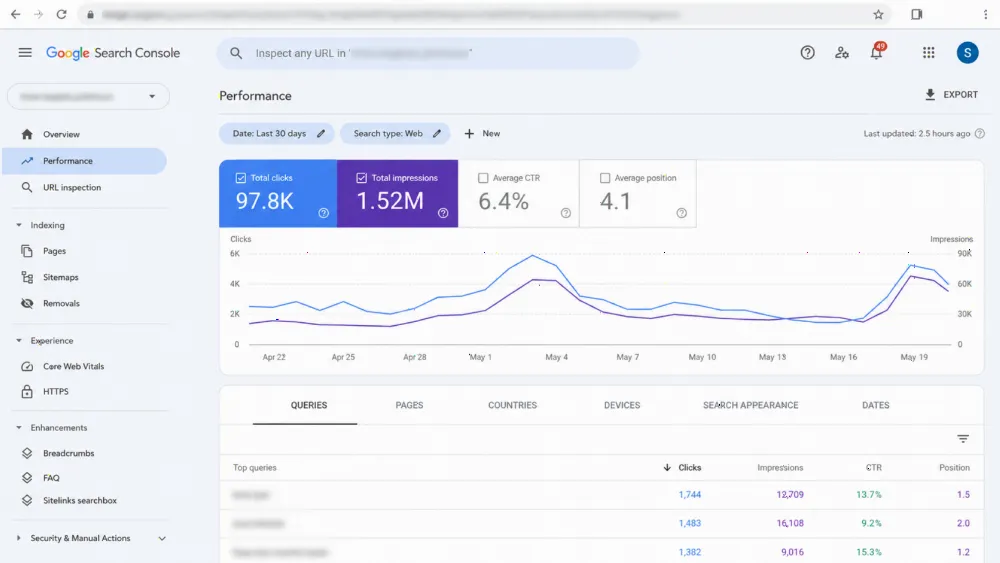
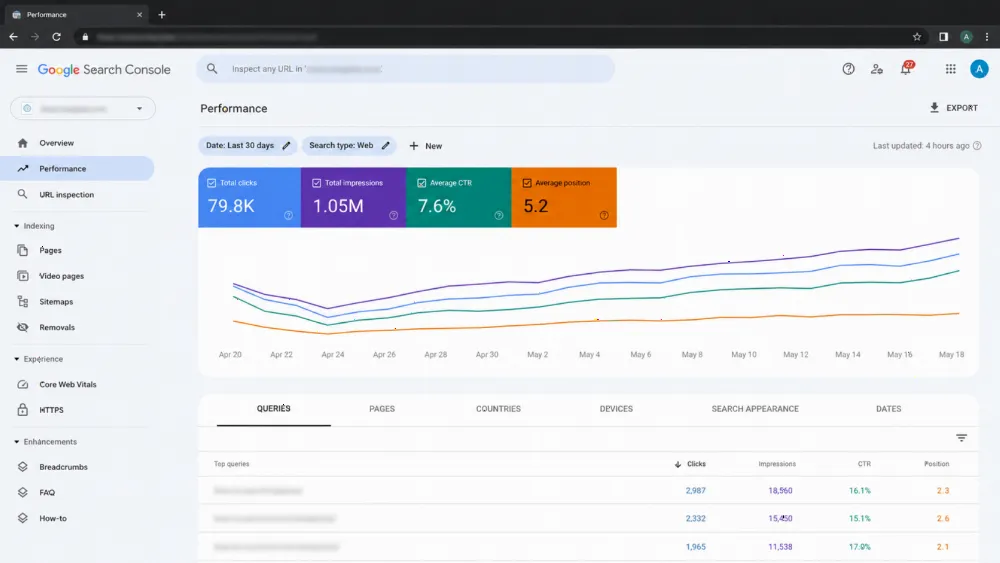
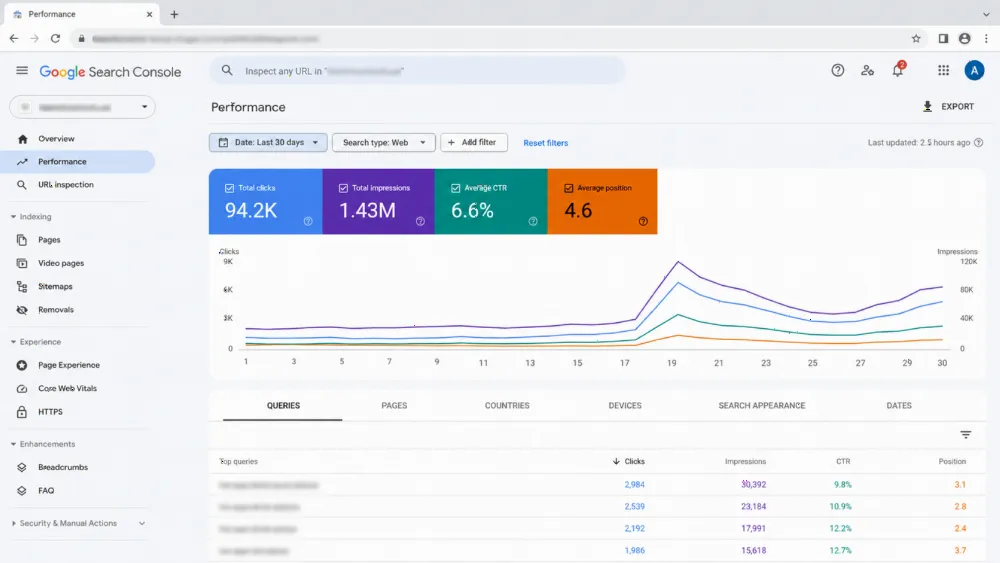
After consolidation, watch Search Console's Page indexing report: the old set's crawled, not indexed count should stop growing as Google recrawls the redirects, and survivors should hold or regain indexed status. Watch each survivor's queries, too — a regional page doing its job draws the city-level queries its merged pages once chased, from one URL instead of five.
Report this honestly: consolidation is a clean-up, not a promise. No honest audit can guarantee a ranking recovery or a timetable, and removed pages stay removed even if a query dips for a while. Judge the work on a cleaner index, stronger survivors and enquiries holding up. Our Saudi Arabia page shows how this repair fits the wider national presence.
Common mistakes: rewriting everything and keeping every URL
The most common mistake is rewriting every page and keeping every URL, which polishes the template instead of breaking the pattern. Close behind: treating a similarity percentage as a Google rule, merging onto the homepage instead of a relevant regional page, deleting enquiry-earning pages unchecked, and rebuilding the same set in English after cleaning the Arabic one.
FAQ
Are Arabic city pages automatically doorway pages?
No. A city page is a doorway problem when it exists mainly to rank for a similar query and adds nothing a visitor could not get from the main page. A page carrying a real branch, team, projects and city-specific answers is a legitimate local page, in any language.
Should I delete every thin city page on my Saudi site?
No. Audit first. Pages with genuine local substance are worth strengthening, thin pages inside a region you truly serve usually merge into a regional page, and only pages with no real presence, no enquiries and nothing unique to say should be removed, each redirected to the closest useful page.
Does Google set a minimum word count or uniqueness percentage for city pages?
No. Google publishes no word-count minimum, uniqueness percentage or page-count limit for city pages. Its spam policies judge whether pages are created to rank for similar queries and funnel users onward. Treat any percentage an agency quotes as that agency's own rule, not a Google threshold.
Should merged city pages use a canonical tag or a redirect?
Use a permanent redirect. It sends visitors and indexing signals to the surviving page and removes the old URL from the set. A canonical tag only suggests a preferred version while the duplicate stays live, leaving the thin pattern in place.
How will I know the consolidation worked?
Watch Search Console's Page indexing report for the old set's crawled, not indexed growth stopping, check survivors stay indexed, and follow each survivor's queries and enquiries. A cleaner index and stable enquiries are the honest measures; no ranking or timetable can be promised.
Get your Saudi city-page set audited and consolidated (CTA)
If your set is too large or tangled to triage in-house, we can run the audit, agree the verdicts with you, and carry out the consolidation and link repair. Start with our SEO services for Saudi Arabia and bring your Search Console coverage export and city-page list.