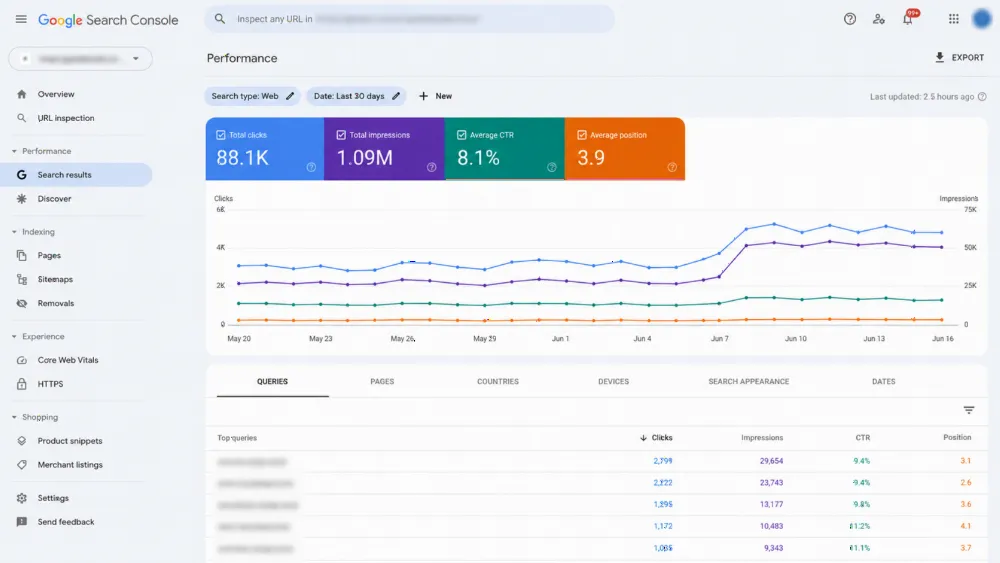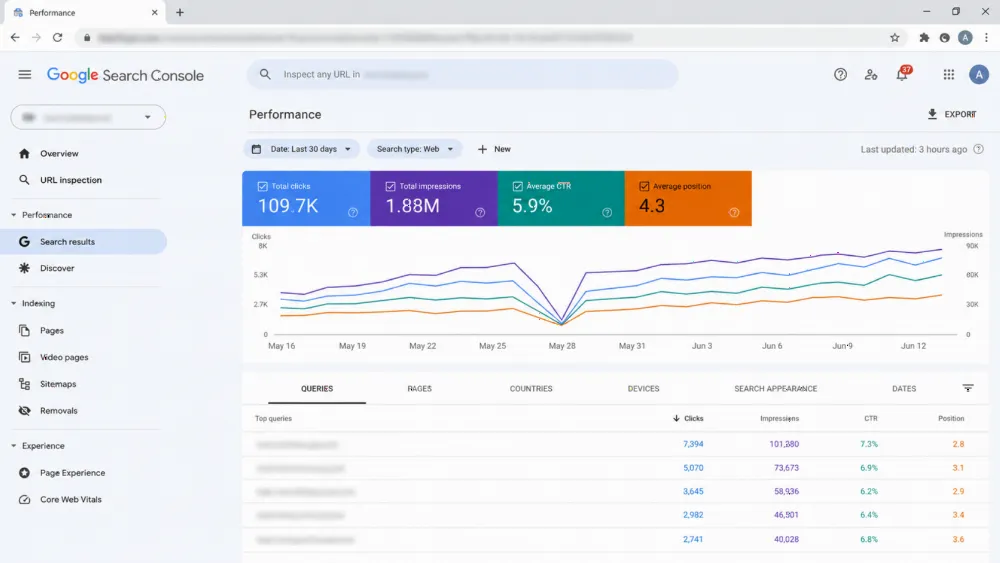
If your website loads quickly on office Wi-Fi but slowly for customers on mobile data across Saudi Arabia, hosting location may be part of the problem — but only part, and guessing is expensive. A server on another continent multiplies the round-trip cost across dozens of requests per page. Before you pay to move, prove it: find where the site is hosted, measure from Saudi Arabia using field data, then separate distance from page weight and server health.
The short answer: how to tell whether distance is your problem, in three checks
Check one: locate the origin. Served from Europe or the United States with no CDN in front of it, every Saudi visit pays full intercontinental round trips, and distance is a live suspect. Check two: measure like your customers, using PageSpeed Insights field data — real Chrome visits at the 75th percentile — mobile against desktop. Check three: read time to first byte (TTFB) alongside page weight. TTFB poor from Saudi Arabia but healthy near the server points at distance; poor from everywhere points at the server.
The yardstick throughout is Google's Core Web Vitals thresholds, from web.dev: Largest Contentful Paint (LCP) at or below 2.5 seconds, Interaction to Next Paint (INP) at or below 200 milliseconds, and Cumulative Layout Shift (CLS) at or below 0.1, at the 75th percentile. Our Core Web Vitals launch checklist covers the full set.
Distance, in plain terms: round trips, TTFB and why mobile data exposes them
A page is not one file. It is the HTML document, stylesheets, scripts, fonts and images, plus calls to payment, chat, analytics and advertising services — each needing round trips between the visitor's phone and the server holding it. Every round trip to a distant origin adds its travel time, and multiplied across requests, that delay becomes the loading time your customer feels.
TTFB is where distance shows up first: how long the browser waits for the first byte, capturing the trip to the server plus the server's thinking time. TTFB alone cannot convict location — an overloaded server inflates it from any distance — but TTFB compared across locations can, as Check 3 shows.
Mobile data exposes this: a variable connection and a weaker phone processor leave no headroom to hide distance.

Check 1 — Find out where your site is actually hosted today
Many Saudi sites are not hosted where their owners assume: the domain may be registered locally while the server sits wherever the original developer's reseller account placed it. Ask your host or developer one direct question — in which city and country is the origin server? — and corroborate it via the control panel, the invoice, and an IP lookup (rough, because a CDN can mask the true origin).
Record three facts: the origin's region, whether a CDN sits in front of it, and whether pages are cached or generated fresh each visit. If a CDN already serves cached pages from an edge near Saudi Arabia, distance may matter far less than you fear.
Check 2 — Measure from Saudi Arabia: field data before lab scores
Start with field data. PageSpeed Insights reports Chrome UX Report (CrUX) field data when your site has enough traffic: real visits over a rolling window, split by mobile and desktop, at the 75th percentile. If mobile field LCP misses the 2.5-second threshold while desktop passes, you have a mobile problem measured where it matters.
Lab data — the simulated Lighthouse test in the same report — is for debugging, not verdicts: it runs once, on a test device, often far from Saudi Arabia. When you run third-party tests, choose a location in or near the Gulf whenever offered, test on a mobile profile, and repeat each test. Our technical SEO playbook covers how field and lab data fit the wider audit.
Check 3 — Separate the location share from page weight and third parties
Now isolate causes. Compare TTFB for the same page from near your server and from near Saudi Arabia. Poor from Saudi Arabia but healthy near the server implicates distance. Poor from everywhere implicates the server itself — overloaded shared hosting, slow code, uncached pages.
Then weigh the page. In the lab report, look at what loads after the first byte: total weight, the largest image or video (your LCP element), and third-party requests. A page can have excellent TTFB and still fail LCP when a hero video, heavy Arabic fonts or marketing scripts take seconds on a phone. Third parties add their own round trips to their own servers, which no hosting move shortens. If the evidence points at weight and third parties, fix those first — sometimes the honest diagnosis is "your hosting is fine."

What a CDN and edge caching fix about distance — and what they cannot fix
A CDN stores copies of your static files — images, stylesheets, scripts, fonts — on edge servers, including locations in or near the Gulf, and serves each visitor from a nearby copy. For those files, the long round trips disappear — why a CDN is often the fastest, cheapest response to a proven distance problem, usually tested before a full hosting move.
Know its limits. A CDN cannot cache what must be generated personally each visit — a dashboard, a basket, a checkout — and the first uncached request to a distant origin still pays full distance. It also does nothing for a slow origin: if the server takes seconds to build the page, only cached-copy visitors are shielded. Treat the CDN as the static-delivery fix; measure dynamic pages separately.
Gulf, Europe or in-Kingdom: reading your options after the diagnosis
With a proven diagnosis, the options read clearly. A Gulf-region origin — in-Kingdom where your provider operates one, or a nearby Gulf location such as Bahrain — shortens every round trip and removes the intercontinental leg. Verify live regions on the provider's official regions page. A European origin is the middle case: closer than the United States, still a real distance, and often acceptable once a CDN carries the static load.
Choose on the evidence, not the map alone: your Check 3 results say how much of your slowness distance owns. If the location share is small, spend on the page, not the move. If it is large and a CDN cannot close it, plan the move properly — our companion guide to moving a Saudi website to in-Kingdom hosting covers the migration itself; see also our guide to web development in Saudi Arabia.

Speed is not residency: the data-location question, kept separate
Do not let the speed argument smuggle in a legal one. Where your customers' data must legally sit is separate from where your website loads fastest. Saudi Arabia's Personal Data Protection Law, overseen by the Saudi Data Protection Authority (SDAIA), governs how personal data is handled and transferred; whether a business faces a specific in-Kingdom hosting duty depends on its sector, regulator and data — it is not a blanket rule for every Saudi website.
Decide the two questions on the right advice: speed, from the measurements above; residency, from your legal obligations, checked against official Saudi sources and, where the stakes warrant it, Saudi counsel.
Common mistakes: buying a bigger plan on the same distant server
The most common mistake is upgrading the hosting plan without changing the geography: more resources on the same distant server leave every round trip exactly as long, so mobile visitors feel almost nothing change. Close behind is testing only from the office, against what field data from real Saudi mobile visits says.
Other recurring errors: judging the site by a single lab score from a foreign test location; blaming "the internet in Saudi" without locating the origin; assuming a CDN covers dynamic pages too; and moving hosts before measuring. The three checks cost an afternoon.
FAQ
How do I find out where my website is hosted?
Ask your host or developer for the origin server's city and country. An IP lookup is only rough — a CDN can mask the true origin — so the provider's written answer is the record to keep.
What TTFB should a Saudi website aim for?
Treat TTFB as a diagnostic, not a pass mark: healthy near the server but poor from Saudi Arabia points at distance; poor everywhere points at the server. The formal yardsticks are web.dev's thresholds: LCP at or below 2.5 seconds, INP at or below 200 milliseconds, CLS at or below 0.1, at the 75th percentile.
Will a CDN fix a slow Saudi website on its own?
Only the distance share. A CDN serves static files from an edge near your visitors, removing long round trips for those files. It cannot fix a slow origin, heavy pages or dynamic pages such as checkout. Measure before and after on mobile field data.
Is hosting in Saudi Arabia always faster than hosting in Europe?
A nearer origin shortens round trips: an in-Kingdom or Gulf origin removes the intercontinental leg a European origin keeps. Whether scores change depends on how much of your slowness distance owns — what the TTFB comparison here measures.
Does Saudi law require my website to be hosted in Saudi Arabia?
Not as a blanket rule. The Personal Data Protection Law governs how personal data is handled and transferred; duties depend on your sector, regulator and data. Check residency against official Saudi sources, separately from speed.
Get a diagnosis measured from your customers' side of the network (CTA)
If your checks point at distance — or you cannot get a straight answer about where your site is hosted — get the diagnosis done properly before you spend on a move. We measure from your customers' side of the network and tell you plainly if your hosting is fine. Where a re-host is genuinely the answer, our web development for Saudi Arabia team scopes it from the evidence. Explore our work across Saudi Arabia.