A small business website in Washington typically costs $4,000–$15,000, while business sites with CMS and integrations run $15,000–$60,000, and custom SaaS, cloud, or aerospace platforms start at $60,000+. Seattle is a Tier-1 hub with premium rates. Your best move: invest in substance — this audience judges digital experiences against the best in the world.
Planning a build? Get a clear budget in minutes with our quote calculator, or see our Next.js development services for high-performance builds.
What does a website cost in Washington in 2026?
Washington pricing runs above the national average, with Seattle commanding the highest rates. Here are realistic 2026 ranges:
| Type of project | Typical cost (USD) | Best for |
|---|---|---|
| DIY builder (Wix, Squarespace) | $200 – $700 / year | Solo operators testing an idea |
| Simple informational site (5–10 pages) | $4,000 – $15,000 | Small businesses needing credibility |
| Business site with CMS + integrations | $15,000 – $60,000 | Established firms, suppliers, brands |
| E-commerce build | $12,000 – $110,000 | Retailers and direct-to-consumer brands |
| Custom / SaaS, aerospace, or platform | $60,000 – $300,000+ | Tech, cloud, aerospace, enterprise |
These are market ranges, not quotes — compare scope and engineering quality, not just the headline number. Our guide to how much a website costs in 2026 breaks down the drivers, and our fixed-price web design services cap budget risk.
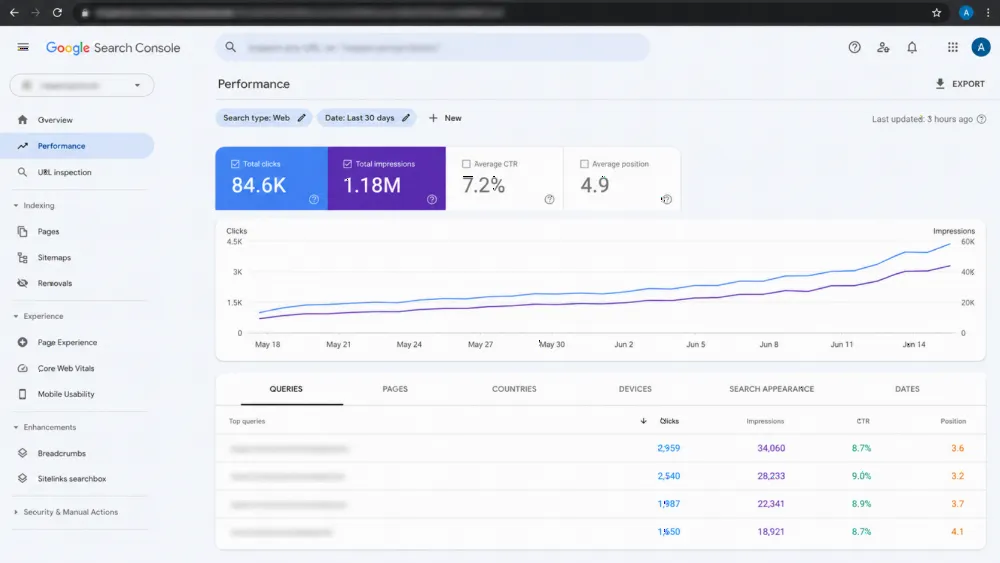
What pushes prices up in Washington: senior Seattle tech talent commands premium rates, and buyers expect original design, genuine performance engineering, conversion optimization, and rigorous accessibility — all of which add hours. Aerospace and B2B sites need precision and credibility content. Privacy obligations (including health-data rules) raise costs for some sites. Don't forget the hidden costs: hosting ($150–$2,500/year), maintenance and security ($250–$5,000/month by complexity), privacy upkeep, and content. Here, ongoing optimization — analytics, testing, iteration — is where long-term value compounds, because standing still means falling behind fast.
Why is Washington such a different web market?
Washington's economy is anchored by world-class technology, and that sets a genuinely high bar. The Seattle metro is a global center for cloud computing, software, and e-commerce, home to companies whose products define how the world uses the internet. Local audiences are exceptionally sophisticated — a site that would impress elsewhere is merely expected here.
But the ground is shifting. Between 2024 and 2025, Seattle shed 18,065 jobs, with a staggering 70% of those losses — about 13,000 — concentrated in the downtown core (Downtown Seattle Association), according to a September 2026 Downtown Seattle Association report. Meanwhile neighboring Bellevue gained 5,375 jobs over the same period. Much of the swing traces to one company: Amazon employs about 49,000 people in Seattle proper (KUOW) but has grown to 15,700 workers in Bellevue — 9.85% of that city's workforce (GeekWire citing City of Bellevue Annual Comprehensive Financ), up from just a few hundred a decade ago. Downtown Seattle's office vacancy hit 35.6% in late 2025 (The Center Square citing Cushman & Wakefield).
The policy environment is part of the story. A 2026 regional competitiveness report found the Seattle area lost nearly 7,000 jobs in 2025 (Challenge Seattle / Partnership for a Competitive Puget Soun) — the first time in two decades outside a recession or the pandemic that local employment growth trailed the nation's — and noted Washington has fallen from 32nd to 47th in CNBC's ranking of states by cost of doing business since 2017. At the launch of the Partnership for a Competitive Puget Sound, Microsoft Vice Chair Brad Smith warned: "You should tax things you want to discourage, like cigarettes, not jobs." The same report notes tech accounts for nearly one in 10 regional jobs and about 24% of total payroll — the stakes of getting digital competitiveness right are enormous.
Yet new engines are firing. Washington's space industry now directly supports roughly 12,300 high-tech jobs contributing $2.3 billion in labor income — averaging about $188,000 per worker (GeekWire reporting Space Northwest / BERK Consulting & Allia), double the state average — with a total statewide footprint of 34,200 jobs and $12.4 billion, according to Space Northwest. And Washington ranked first nationwide in AI infrastructure trade-job availability, with more than 23,600 active positions (Environmental Protection Online reporting an Affordable Cont) driven by cloud and AI operations near Seattle, per Affordable Contractors Insurance. Aerospace manufacturing, maritime and ports, coffee and retail, eastern Washington agriculture and wine — the economy is broader than software, and each sector needs different things from a website.
For tech and SaaS companies, our React and Next.js guide for business owners explains the modern stack behind high-performing sites, and our Pacific Northwest web design guide covers regional expectations.
What should your Washington website prioritize?
- Best-in-class design and performance — the competition genuinely sets the bar here; "good enough" reads as dated.
- Conversion optimization — analytics, testing, and a measurable path from visitor to lead, signup, or sale, especially for tech and SaaS.
- Rigorous accessibility — WCAG 2.1 AA conformance protects you legally and reflects the standards this market expects.
- Privacy and data handling consistent with Washington's regime, including the My Health My Data Act's strict consent rules for consumer health data — which reaches many wellness, fitness, and health-adjacent sites.
- Credibility and precision for aerospace and B2B suppliers; storytelling and e-commerce for agriculture, wine, and consumer brands.
- Mobile-first, sub-three-second performance — our 2026 Core Web Vitals checklist sets the exact thresholds.
- Competitive and local SEO across the Seattle metro, the Eastside, and eastern Washington.
Every build we ship includes SEO-friendly web development as standard, and our technical SEO audit benchmarks existing sites against these standards.
Should you DIY, hire a freelancer, or work with an agency?
A DIY builder is cheapest and fastest — acceptable for a very early test — but it rarely meets this market's expectations for distinction and performance. A skilled freelancer suits a focused project on a moderate budget with a direct relationship, though you carry more vetting and project management. An agency or established studio costs more but bundles design, engineering, project management, QA, accessibility, and ongoing optimization into an accountable team — which, in a market this competitive, often pays for itself through reduced risk and a site that genuinely competes.
The higher your stakes and the more your business depends on the site, the more an experienced team is worth. Our comparison of offshore vs. agency vs. boutique web development and our guide to how to choose a web development company help you weigh the options.
Template, CMS, or custom: which build fits?
| Approach | Strengths | Trade-offs | Best when |
|---|---|---|---|
| Template / builder | Cheapest, fastest | Won't stand out in a sophisticated market | Early-stage tests |
| CMS (WordPress, etc.) | Flexible, easy to update | Needs strong, secure setup | Most established SMBs, suppliers, brands |
| Fully custom | Built precisely to spec, distinctive | Highest cost, longest timeline | Tech, cloud, aerospace, enterprise |
Established businesses and brands are usually well served by a strong CMS build; tech, cloud, and aerospace companies more often need custom development — frequently on modern frameworks like Next.js — to compete at the level Washington expects. Our WordPress vs. Webflow vs. custom comparison breaks down the decision with costs and timelines, and our Next.js development agency services cover high-performance custom builds.
How do you choose the right partner in Washington?
Demand to see live, high-performing work in your sector — real sites with real metrics, not mockups. Ask specifically how they handle performance engineering, accessibility, privacy, and conversion optimization; vague answers are a red flag in this market. Get scope in writing, confirm you own your domain, code, and content outright, and clarify ongoing optimization and support. A serious partner talks in terms of outcomes and metrics, asks about your audience before quoting, and treats accessibility and privacy as central rather than optional.
Use a structured web development RFP template to compare proposals, understand pricing models via our fixed-price vs. retainer vs. time-and-materials guide, and consider web development consulting for expert scoping before you commit.
What mistakes cost Washington businesses the most?
Underinvesting in a market where users compare you to the world's best leaves you looking dated immediately. Treating accessibility or privacy — including health-data rules — as optional creates real exposure. For tech and SaaS, skipping conversion optimization wastes hard-won traffic. For brands, unoptimized media that crawls on a phone drives customers away. And chasing the lowest quote in one of the highest-expectation markets in the country usually means rebuilding sooner than you'd like. If your site already shows these symptoms, compare platforms honestly with our WordPress vs. Webflow vs. custom guide and quantify the damage with a technical SEO audit.
Frequently asked questions
How much does a small business website cost in Washington?
A professional informational site generally runs $4,000–$15,000 depending on design and features, with Seattle at the higher end reflecting Tier-1 rates. Business sites with CMS and integrations run $15,000–$60,000; see our 2026 cost guide.
Why is web development more expensive in Seattle?
Seattle is a Tier-1 tech hub where senior talent commands a premium, and the sophisticated audience expects original design, performance engineering, accessibility, and conversion optimization — each of which adds real hours. Tech accounts for nearly 1 in 10 regional jobs and 24% of payroll (Challenge Seattle), so digital quality is a competitive necessity.
Do I need to worry about privacy compliance?
If you handle personal data — and especially health-related data, given Washington's My Health My Data Act — build privacy and consent in from the start rather than retrofitting later. Our web accessibility and compliance guide covers the related obligations.
How long does a website take to build?
A business site typically takes four to eight weeks. Tech, cloud, and aerospace platforms take considerably longer due to integrations, performance engineering, and security review. Our two-week website sprint timeline shows the fastest credible path.
Should I hire a freelancer or an agency in Washington?
Freelancers suit focused projects on moderate budgets; agencies suit higher-stakes tech, aerospace, and competitive builds where credibility, performance, and ongoing optimization matter. Pick based on what is at risk for your business — in this market, the downside of a weak site is unusually large.
What ongoing costs should I expect after launch?
Hosting ($150–$2,500/year) and maintenance and security ($250–$5,000/month by complexity), plus privacy upkeep and content. In Washington, ongoing optimization — analytics, testing, iteration — is frequently where the real long-term value compounds.
Why do quotes for the same project vary so much?
Because scope and engineering quality vary widely — design depth, performance work, accessibility conformance, privacy handling, and team experience all move the number. Compare scope and delivery quality before price, using our RFP template.
The bottom line
In Washington, your website competes against some of the best digital experiences in the world — and the bar is genuinely high. That's also the opportunity: get design, performance, conversion, accessibility, and privacy right, and a strong site becomes a serious competitive advantage in one of the most advanced economies in the country. Match the build and the partner to your stakes, invest in substance over flash, and your site stops being a cost center and starts driving real growth.
Working with WebStackRank in Washington
WebStackRank is a remote-first web development studio, and we partner with Washington businesses as a dedicated external team — from Seattle tech and SaaS to aerospace suppliers, e-commerce, and consumer brands. We handle the whole journey under one roof: strategy, design, development, SEO, performance, and accessibility, plus ongoing support — sized to your goals and budget.
Explore our core web development services, Next.js development, and custom web application development; see transparent costs on our pricing page and quote calculator; then get in touch — tell us about your project and we'll show you exactly how we'd approach it.