Your Search Console numbers look healthy until you split them by country. The clicks come from India, Pakistan, Egypt or the US, while the UAE — the only market that can actually buy from you — barely registers, and enquiries stay flat. Before you change anything, understand this: there is no country switch left to flip. The fix starts with a diagnosis, not a setting.
The short answer: there is no country switch anymore — diagnose the signals Google actually reads
Google removed the International Targeting report, and the country-targeting setting inside it, from Search Console in September 2022, saying the feature had little value for the ecosystem. Some UAE advice online still tells you to "set Search Console to UAE" — that instruction is years out of date, and following it wastes the time you should spend on the signals Google documents today.
Those signals, per Google Search Central's guidance on multi-regional sites, are the ones your site emits daily: a country-code domain such as .ae, hreflang annotations on multilingual pages, local details in your content — addresses, phone numbers, currency — and links and listings from the country itself. Server location plays only a minor role.
First, prove it: reading Search Console Performance by country (UAE vs the rest)
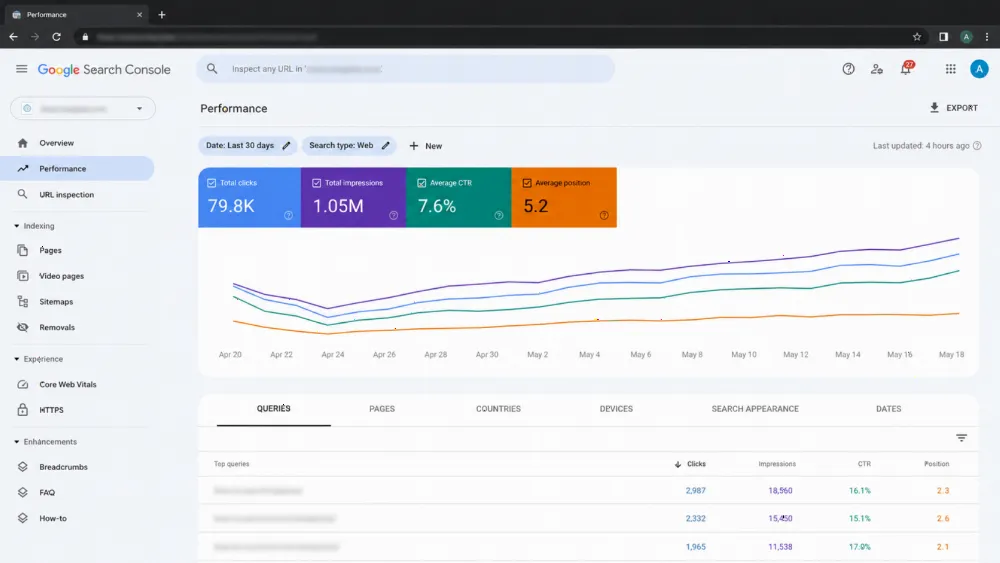
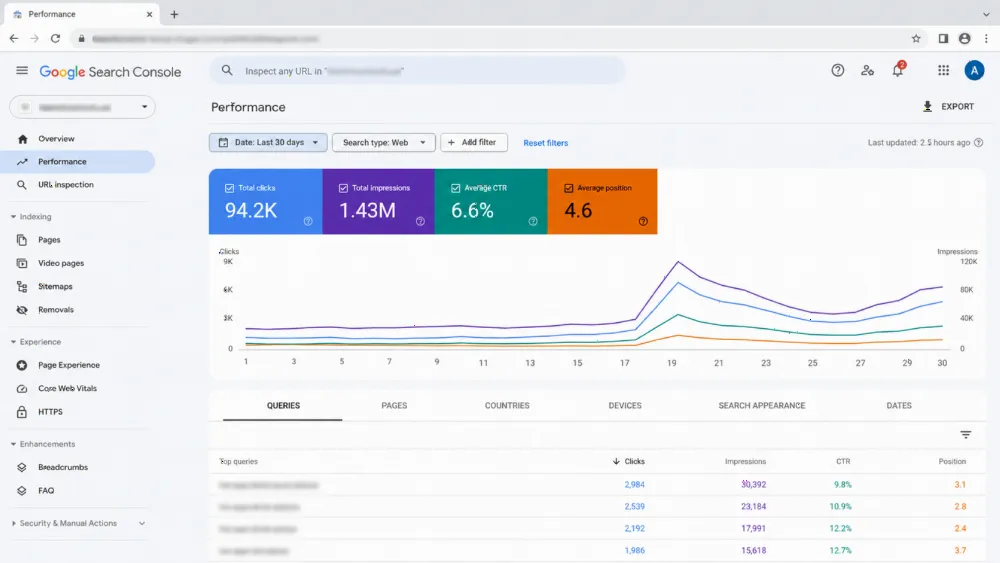
Open the Performance report, add the Country filter, and compare the United Arab Emirates against your top other countries over the last three to six months. Note clicks, impressions and average position for each. Then add a Page filter for your most important service pages and repeat the comparison: a site-wide pattern and a page-level pattern are different problems.
Three readings matter. If UAE impressions are near zero, Google sees little reason to show you here at all. If UAE impressions exist but positions are far worse than elsewhere, you are relevant enough to appear but not competitive in this market. If UAE searchers see a version of the page meant for someone else — the wrong language, the wrong currency — the data will show clicks landing on that version from UAE queries.

The three different problems hiding behind "wrong country" traffic
Almost every case resolves into one of three problems, and each has a different fix. Problem one: the wrong version of a page is being shown to Gulf searchers. Problem two: your site's signals point at another country, or at no country at all. Problem three: nothing is broken — the site has never given Google UAE-specific relevance to rank on.
Problem 1: the wrong version is being shown (symptoms in the data, and where the fix lives)
The symptom is a mismatch: UAE queries returning your English page when an Arabic version exists, a page written for another Gulf market surfacing in the Emirates, or regional variants competing with each other so Google picks one and suppresses the rest. Region-signal confusion is a real GCC pattern — page pairs that declare mismatched regions across different parts of a site are enough to blur which version belongs where.
Where a diagnosis lands here, the cause usually sits in the language and region annotations that tell Google which version is for whom. That mechanics layer — codes, return tags, error patterns — is a specialist fix in its own right, and it is worth auditing properly rather than patching one page at a time. Our guide to SEO for bilingual Arabic–English websites covers the structure those annotations sit on.
Problem 2: your signals point somewhere else (domain, addresses, currency, links)
Audit what your site actually says about location. A generic .com with no local details anywhere is a site Google must guess about — and it will guess using whatever evidence exists, which may be an old directory listing abroad, a backlink profile built in another market, or content written for a different country's audience.
Check the concrete details Google documents: Do contact pages show a real UAE address and a +971 number? Are prices in dirhams where prices appear? Do your pages mention the emirates and neighbourhoods you serve, in the words local customers use? Do UAE directories, partners and publications link to you, or does every link come from somewhere else? Each missing detail is a signal left blank, and blank signals default to wherever your strongest evidence points.

Problem 3: nothing is broken — you have no UAE-specific relevance yet
The hardest reading to accept is also the most common. If your content answers generic questions in generic English, it competes everywhere and belongs nowhere. Traffic from large English-searching markets then arrives simply because those markets search more — while UAE searchers, whose queries mention Dubai, Abu Dhabi, local regulations or local providers, find competitors whose pages actually address the Emirates.
The remedy is relevance work: pages built around the questions UAE customers ask, in both languages where the audience needs it. Our multilingual website architecture guide explains how those versions should be structured so each one can earn its own market.
The .ae question: when a country domain helps, and when it changes nothing
A .ae domain is the clearest country signal available — Google associates country-code domains with their country automatically. If the UAE is your primary market for the long term, .ae removes all ambiguity, and for a new site it is often the cleanest start.
It is not a shortcut, though. Moving an established .com to .ae is a site migration with real risk, and the domain alone adds no relevance: a .ae site with generic content still loses to a .com whose pages, details and links are unmistakably Emirati. Equally, a .com can rank well in the UAE when its other signals are consistent — the domain is one signal among several, not a verdict. Weigh the move as part of the whole signal picture, and get the structure right first with our multilingual website development guide.

A worked diagnosis checklist: symptom → likely cause → fix (table)
| Symptom in the data | Likely cause | First fix |
|---|---|---|
| UAE impressions near zero, strong clicks elsewhere | No UAE signals or relevance | Add local details, UAE-focused pages, local links |
| UAE sees the wrong language or regional version | Version annotations are wrong or incomplete | Audit the annotation layer across the whole site |
| Good UAE impressions, poor UAE positions | Relevant but not competitive locally | Strengthen UAE content and local links |
| Clicks from countries you cannot serve | Generic content ranking where search volume is | Accept it, or localise the pages that matter |
| A rival guide told you to set a country in Search Console | Advice predates the 2022 removal | Ignore it — the setting no longer exists |
What not to do: dead settings, geo meta tags and forced IP redirects
Do not hunt for the retired country setting, or pay anyone who promises to switch it on. Do not add geo meta tags expecting Google to use them — it does not use them for targeting. Do not force visitors to a version by IP address or swap content on one URL by location: Google's crawler will mostly see one version. And do not redirect everything to a new .ae domain overnight without a migration plan — you can trade a targeting problem for an indexing one.
Common mistakes
The most common mistake is treating foreign clicks as the disease rather than a symptom, then changing domains or settings before reading the country data. Close behind is fixing one page's signals while the rest of the site contradicts them, and expecting a domain change to substitute for UAE content that was never written.
Owners also confuse a bilingual site's two audiences: an Arabic page is not automatically a UAE page, and an English page is not automatically an international one.
FAQ
Why is my website ranking in India instead of the UAE?
Usually because nothing on the site tells Google the UAE is the intended market, while the content matches searches made everywhere. Check Performance by country first: near-zero UAE impressions point to missing local signals and relevance, not a penalty.
Can I still set a target country in Search Console?
No. Google removed the International Targeting report and its country-targeting setting in September 2022. Any guide that still tells you to set it — including UAE agency posts — is describing a control that no longer exists.
Does a .ae domain guarantee UAE rankings?
No. A .ae domain sends the clearest country signal, but rankings still depend on content relevance and links. A .ae site with generic pages can lose to a well-localised .com, and migrating domains carries its own risks.
Does hosting in the UAE or a UAE IP address fix wrong-country traffic?
No. Google treats server location as a minor signal at most, and modern hosting and CDNs make it weaker still. Spend the effort on the documented signals: domain, local content details, and local links.
Why does Google show the wrong language version of my page in the UAE?
It happens when the annotations that map each version to its language and region are missing, mismatched or contradicted across the site, so Google guesses. The country data shows the symptom; the fix is a full audit of that annotation layer.
Get your UAE targeting diagnosed properly (CTA)
If your country data shows a pattern you cannot untangle — mixed signals, competing versions, or no UAE relevance to build on — a structured audit separates the fault from the gap before you spend on either. WebStackRank's technical SEO audit service works through exactly these signals, and our SEO services for the UAE team can then fix what the diagnosis finds. Start by bringing your Performance-by-country figures; they are the first thing any honest SEO company in Dubai should ask to see.