Type the same need into Google in Arabic and in English in Saudi Arabia and you will usually get two different winner lists — different companies, different page types, often a different kind of answer altogether. That is not a glitch. Google is running two separate competitions, fed by different demand and different content supply, and a Saudi SEO plan that budgets for only one of them will keep misreading the other.
The short answer: Google is running two competitions, and you are only budgeting for one
Google Search tries to find pages that match the language of the searcher, and the right locale page where one exists — that is how Google Search Central describes multilingual and multi-regional search. In Saudi Arabia, the Arabic competition is judged against a mostly local, often thin shelf of Arabic pages, while the English competition is judged against a deep international shelf. Same intent, different rivals, different winning standard. Your English position therefore tells you almost nothing about your Arabic position.
Run the test yourself: one query pair, two winner lists (worked example)
On 21 October 2026 we ran one everyday pair: "car rental Jeddah" in English and "تأجير سيارات جدة" in Arabic. The English results were led by international booking aggregators — global car-rental platforms comparing suppliers, priced for travellers. The Arabic results looked different in kind: Arabic rental guides, a price-led Arabic article about monthly rental, and the branch page of a Saudi rental operator in Jeddah, with prices discussed in riyals and local rental terms explained.
Neither list is wrong. They answer different searchers: the English query behaves like a traveller comparing platforms, the Arabic query like a resident comparing local companies and monthly deals. Repeat this with five query pairs from your own category before your next budget meeting — the pattern, not any single result, is the evidence.

Driver 1 — Demand differs: what each language is actually used to search for in Saudi Arabia
Saudi search behaviour splits by task. Everyday consumer needs — local services, shopping questions, how-to queries about life in the Kingdom — are commonly searched in Arabic, because that is the language of daily life. English carries a different load: technical and professional terms, international brand and product names, and the searches of expatriate residents and bilingual business teams.
That is why a translated keyword list fails twice. It imports English-shaped demand into Arabic, where the equivalent need may be phrased as a completely different question — and it misses the Arabic-only demand that has no English twin at all, such as monthly-rental or neighbourhood-level queries a resident asks and a traveller never does.
Driver 2 — Supply differs: a deep international shelf in English, a thin local shelf in Arabic
Rankings are relative: you do not beat a standard, you beat the pages that exist. In English, a Saudi company competes with every international publisher, aggregator and global brand that targets the same phrase, many with large sites and long histories. In Arabic, the shelf for many commercial and informational topics is far thinner — fewer dedicated Arabic guides, more marketplace listings, branch pages and translated product pages.
A thinner shelf cuts both ways. A focused, native Arabic page can become the best answer in its niche without outmuscling global domains. But thin also means fragile: one strong local competitor publishing properly in Arabic can reshape the whole winner list, because there was never much depth behind the current winners.
Driver 3 — The Arabic query itself splinters: MSA, dialect and transliteration
An English intent is usually one phrase with spelling variants. The same Arabic intent can arrive as Modern Standard Arabic, as Saudi dialect wording, as an English word typed in Arabic letters, or as a mix inside one query. A car is a different everyday word in dialect than in formal writing; a service can be searched by its Arabic name, its transliterated name, or its English name.
Each variant is, in effect, a small separate competition with its own winners. A page written in only one register can be invisible to the others, which is why Arabic research has to start from real Arabic queries — autocomplete, related searches and your own customer language — rather than from a translated list. Our Arabic keyword research guide covers that research method in depth.

Driver 4 — Signals differ: language, region and authority patterns per result set
Google needs to know which version of your site belongs in which competition. Separate URLs per language, consistent language signals and correct annotations tell it; the annotation layer itself — en-SA and ar-SA done properly — is covered in our guide to fixing en-SA and ar-SA hreflang mistakes. Weak signals produce the classic Saudi symptom: the English page ranking for Arabic queries, or the Arabic page surfacing where the English one should.
Authority patterns differ too. The English SERP rewards the accumulated authority of large international domains. The Arabic SERP gives local relevance — Saudi-focused content, local entities, Arabic internal linking — more room to win, because the authority-heavy global shelf often simply has no Arabic page entered in the race.
What this means for content: two research tracks, two page plans, one site
Run research twice. The Arabic track starts from Arabic queries and Arabic competitors, and commissions native Arabic pages for the demand it finds — including demand with no English equivalent. The English track starts from the English SERP you actually face, which may mean competing on specificity and Saudi expertise rather than volume, because the global shelf is crowded.
One site can hold both tracks. Our multilingual website architecture guide covers the structure, and our guide to SEO for bilingual Arabic and English websites covers the execution layer. What the two tracks must never share is a single keyword list with two fonts.
What this means for budget: where Arabic is the arbitrage and where English is the market
Budget follows the test, not a slogan. Where your category test shows an Arabic SERP of thin listings and translated pages against real resident demand, Arabic content is the arbitrage: a modest native cluster can own the informational shelf. Where the commercial intent in your category genuinely runs in English — much B2B, technical and expatriate-facing buying — English is not the secondary version; it is the market, and it deserves the senior budget.
The honest finding is that some categories barely need one of the tracks. A local consumer service may need Arabic depth and only product-level English. An industrial supplier may find the reverse. Deciding that from evidence is cheaper than funding both tracks equally by habit. WebStackRank's Saudi Arabia hub shows how we scope work market by market.
Measure them separately, or measure nothing: reporting by language
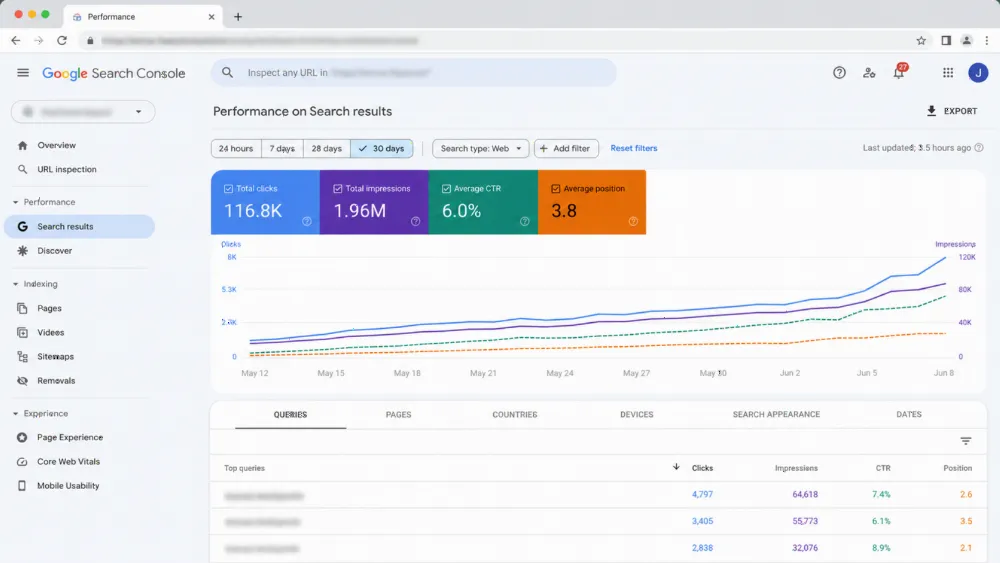
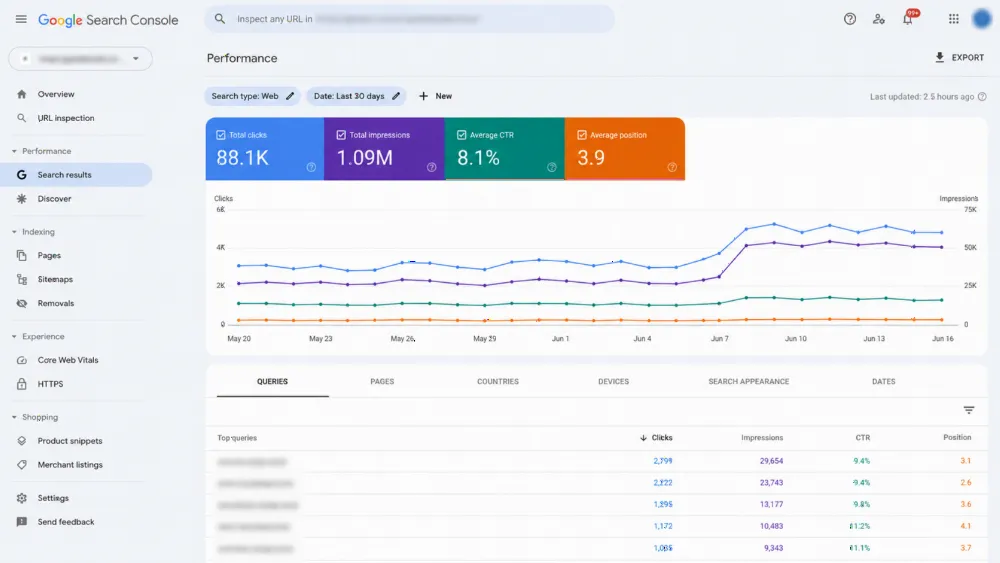
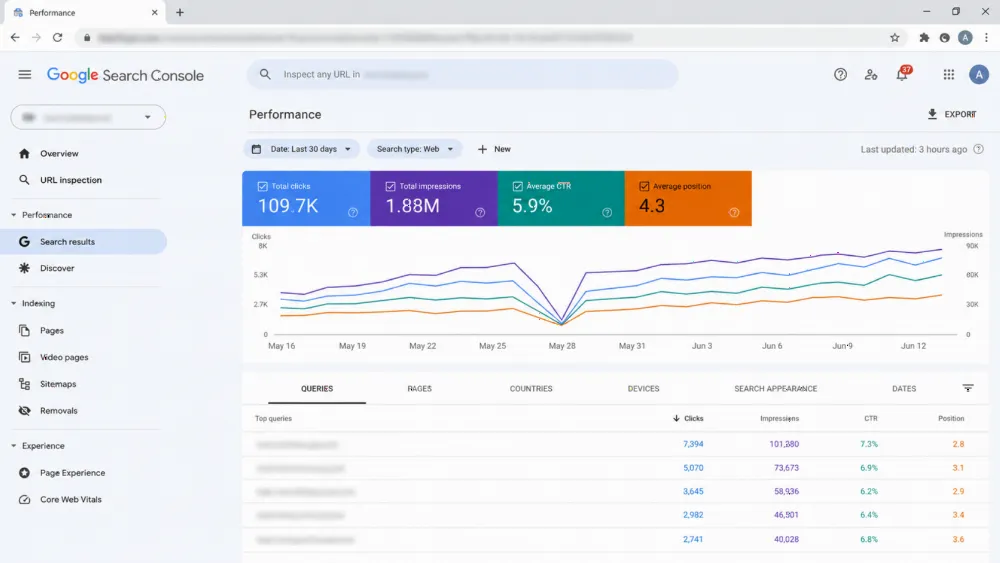
A blended report hides both stories. An average position across languages can improve while your Arabic visibility collapses, because the two competitions move independently. In Search Console, split performance by page — filtering to your Arabic URLs versus your English URLs — and review queries per language version, so each track is judged against its own rivals.
Report the split upward, too. When leadership sees "rankings are flat", they should learn whether that means a crowded English shelf holding firm, an Arabic opportunity nobody has funded yet, or an Arabic position quietly lost. The same split applies to AI answers, which also diverge by language; the Arabic testing method itself is covered in our Arabic guide to testing your company's visibility in Arabic AI answers.

Common mistakes: the translated keyword list and the blended report
The first mistake is the translated keyword list: English research, Arabic translation, and a content plan that answers queries in a phrasing Saudi searchers do not use, while missing the dialect and transliteration variants they do. The second is machine-translated page sets published to "cover" Arabic — thin supply is an opportunity for the best Arabic page, not for a translated copy of an English one.
The third is the blended report described above. The fourth is assuming the winner set is stable: in a thin Arabic SERP, one competitor's new cluster changes the competition, so re-run your query-pair test each quarter rather than treating last year's map as permanent.
FAQ
Why does the same search give different results in Arabic and English in Saudi Arabia?
Because Google matches pages to the searcher's language and locale, and the two languages offer different content supply. Arabic queries are judged against a mostly local Arabic shelf, English queries against a deep international shelf, so different pages win each competition.
Should I translate my English keywords into Arabic?
No. Translation imports English-shaped demand and misses how the same need is phrased in Modern Standard Arabic, Saudi dialect or transliteration. Research Arabic queries directly, then build the Arabic list from the demand you actually find.
Who searches in English in Saudi Arabia?
English is commonly used for technical and professional terms, international brands, and by expatriate residents and bilingual business teams. Everyday local consumer needs are commonly searched in Arabic. Your own category test shows which side carries your buyers.
How do I test which language my category really needs?
Pick five core needs, search each in Arabic and in English, and record who wins each list: international platforms or local Arabic pages, guides or listings. Fund the track where real demand meets weak supply, and repeat the test quarterly.
How should I report Arabic and English SEO performance?
Separately. In Search Console, filter performance by your Arabic URLs and your English URLs, and review the queries behind each. A blended average hides the two competitions moving in opposite directions.
Get both Saudi SERPs mapped for your category (CTA)
If your reporting blends the two languages, you are steering by an average of two different races. WebStackRank's SEO services for Saudi Arabia start with the query-pair test for your category, then build separate Arabic and English tracks — research, pages and reporting — sized by what the evidence shows, not by habit.