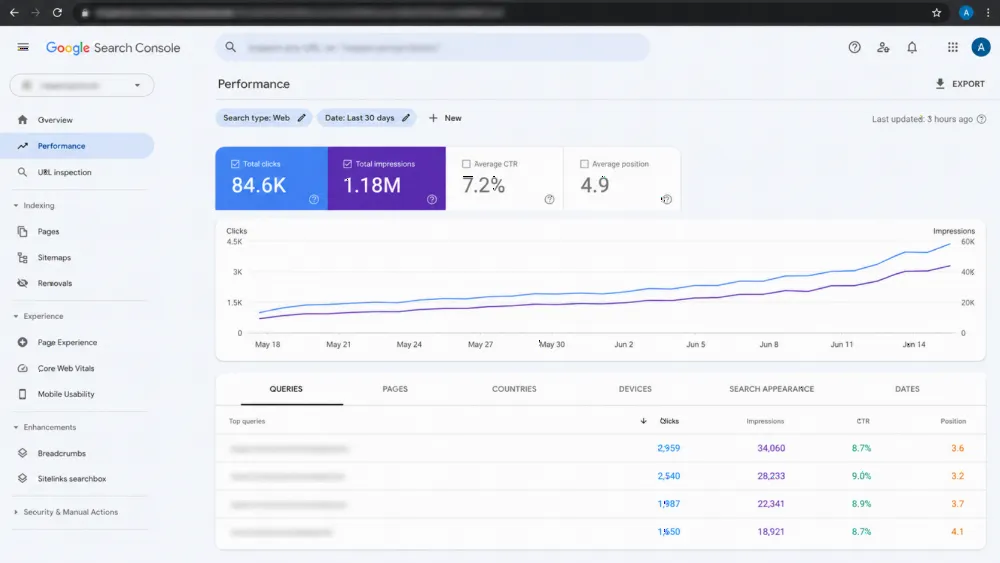
A trades website exists to turn urgent searches into booked jobs. That takes a tap-to-call number on every screen, one page per service and per city, trust signals in the first scroll, and loads under 2.5 seconds. This guide is the practical playbook for plumbers, electricians, HVAC, landscapers, pest control, and the rest of the trades.
Is your site actually booking jobs? Get an instant fixed-price estimate — no sales call needed.
What Makes Home Services Web Design Its Own Category?
Forget the brochure mindset. Your visitor isn't browsing — they're standing in water, smelling gas, or sweating through a dead AC at 2 a.m. They need a contractor who can show up today, and they're deciding in seconds.
So a trades site behaves more like a decision page than a company profile. Plain headlines. Tappable numbers. License numbers, review counts, and insurance badges stated loudly and early. Two screens at most between "I have a problem" and "I'm calling." Bill Gates' old warning still bites: "If your business is not on the Internet, then your business will be out of business." The 2026 version for contractors: if you can't be found and called from a phone at midnight, your competitor can.
This guide speaks to owners, marketing managers at multi-truck companies, and franchisees who want the website to work like a dispatcher instead of a business card. The design foundations are covered in the essential principles of effective web design; vetting builders is covered in how to choose a web development company.
Why Is the Website a Contractor's Best Salesperson?
Customers search on phones, locally. Google has long reported that most searches happen on mobile, and "near me" style queries exploded — up more than 900% across a two-year window (Think with Google). A homeowner typing "plumber near me" at 11 p.m. scans the top three results, taps the most credible-looking one, and calls. There's no round two.
Reviews decide before the click. By the time someone reaches your homepage, your Google rating has already shortlisted you. BrightLocal's consumer survey found 76% of people regularly read reviews before visiting a business (BrightLocal). Your site's job isn't introduction — it's confirmation that you're the safe pick.
Speed of response wins. Research published in the Harvard Business Review found companies that reply within an hour are about seven times more likely to qualify a lead (HBR). In trades the window is minutes. A slow site, a hidden number, or a buried service area is a sales rep who won't pick up the phone.
The conversion system behind this is detailed in our lead-generation web development framework, and AEO for local businesses explains how AI assistants now shape those top-three results.
What 10 Features Do Trades Websites Need?
- A phone number that's always one tap away. Header top-right on desktop; a sticky bottom bar on mobile. A real
tel:link — never an image of a number. - Real service-area pages. One page per town you serve, each genuinely different: landmarks, ZIP codes, a local customer review. Copy-paste doorway pages get filtered; real ones rank.
- One page per service. "Water heater repair," "drain cleaning," "leak detection" each deserve their own URL. That's how you match the exact problem someone just searched.
- An after-hours conversion path. Even phone-first businesses need a short callback form (name, address, problem, time). Three fields is the ceiling before submissions drop.
- A trust strip in the first scroll. Years in business, license number, insurance, BBB rating, Google review count, manufacturer badges. Google reports that a complete Business Profile makes customers 2.7 times more likely to see you as reputable — mirror that completeness on your own pages (Google).
- Live reviews, not screenshots. Real-time Google embeds with dates and first names. A detailed 4.8 beats a suspicious perfect 5.0, and schema-marked reviews can earn star snippets in search.
- Proof photos. Visual trades live on before-and-after galleries with plain captions ("Tankless install, Cary, 4 hours"). Real trucks and crews beat stock technicians every time.
- Price anchors. You don't need fixed quotes — "diagnostics from $89" removes the fear of calling. Silence on price reads as a trap.
- Local SEO baked in. Natural city mentions, LocalBusiness and Service schema, an embedded map, identical NAP everywhere. Google reports 76% of nearby smartphone searchers visit a related business within a day — build pages that catch that wave (Google).
- Sub-2.5-second loads. Compress images, ditch bloated builders, self-host fonts. Test it yourself: open the site on cellular data away from Wi-Fi. If the number takes over three seconds to appear, you're losing emergency calls daily.
Build it all on responsive web design fundamentals and validate with the Core Web Vitals 2026 launch checklist. Our core web development services ship performance-first builds as standard.
How Do the Trades Differ From Each Other?
Plumbers: it's about tonight. "Will you come now?" decides everything. If you're genuinely 24/7, say so in the header. Open with emergency drains, leaks, and water heaters — not the company story.
Electricians: it's about safety. Callers are worried about fire risk and code violations. Master licenses, insurance proof, and permit language belong above the fold, ahead of any service list.
HVAC: it's about seasons and financing. Rotate the site through the year — cooling tune-ups in spring, heating in fall, emergency repair always. Financing lines ("0% APR for 18 months on replacements") routinely beat every other CTA because the ticket is huge.
Landscapers: it's about beauty. The site must look gorgeous before it tries to be useful: galleries, drone footage, seasonal packages, route-mapped coverage areas.
Pest control: it's about speed and discretion. Callers are embarrassed and want it handled quietly and fast. Lead with one-time treatments and plans, name each pest on its own page, and calm nerves with licensing and pet-safe language.
The long tail: garage doors (brand affiliations, same-day installs), locksmiths (visible licensing, honest pricing — this industry has a scam reputation to overcome), pressure washing (before/after sliders, surface-specific pages), window cleaning (residential plans vs commercial contracts), painters (interior/exterior split, finish close-ups), handymen (a bounded list of what you do — and don't), tree services (arborist credentials, storm response).
See also construction company website design and tradesman website design for neighboring playbooks.
Builder, Template, or Custom: What's the Honest Trade-Off?
| DIY builder | Turnkey trades template | Custom agency build | |
|---|---|---|---|
| Upfront | $0–$500 | $1,500–$4,000 | $6,000–$25,000+ |
| Monthly | $15–$50 | $150–$500, usually mandatory | $50–$300 hosting, retainer optional |
| Speed | Frequently poor | Middling, shared servers | Strong when engineered well |
| SEO headroom | Low | Medium — you look like 50 rivals | High — full control |
| Area pages | Slow to add by hand | Often recycled across clients | Written uniquely per town |
| Ownership | Locked to the platform | Usually the vendor's | Yours, code and IP |
| Right for | Solo side work | One truck starting out | Growing multi-truck operations |
The rule of thumb: under ~$250k revenue as a one-person shop, a builder is fine. Past that — crews, multiple territories, paid ads — templates become the ceiling, and a custom site repays itself within a year via better conversion and cheaper ads. Compare stacks in the WordPress vs Webflow vs custom breakdown and current 2026 cost benchmarks; our website cost guide shows transparent project ranges.
How Does a Trades Site Climb Local Rankings?
Profile first. Your Google Business Profile needs a real staffed address, the precise category ("Plumber," not "Contractor"), current hours, services, photos, and posts. This one asset drives more local visibility than anything else on your site.
Pages for every service and every town. "Water heater repair Cary" and "drain cleaning Cary" are different searches with different intent — bundling them caps both. For area pages, apply the doorway test: if the page would still be useful with the city name stripped out, it's legitimate. If not, Google will treat it as spam.
Schema and consistency. LocalBusiness and Service markup, identical name-address-phone across the web, embedded live reviews. Then publish monthly content answering real customer questions. Expect visible movement around day 90 and meaningful traffic by month six. Nobody reaches #1 in 30 days — anyone promising that is lying.
The full method is in our local SEO maps ranking system for US service businesses; AEO for local and national brands covers the answer-engine layer. Prefer to outsource it? Our no-retainer SEO agency runs local SEO without monthly contracts.
What Silently Bleeds Leads?
- A phone number saved as an image. Mobile visitors won't retype it. Use a real link.
- Marathon forms. Keep it to what booking the job actually requires.
- One generic "areas we serve" line instead of real town pages — you'll never outrank rivals who built them.
- Stock technician photos. The same smiling plumber appears on thousands of sites. Yours should show your vans and your crew.
- No price signals at all. Ranges build trust; silence breeds suspicion.
- A six-second mobile load. Google's benchmarks say roughly half of mobile visitors leave before a slow page renders.
- Screenshot testimonials. They can't carry review schema and never refresh.
- A stale footer copyright. "© 2021" whispers that the business might be gone.
- Zero tracking. Without call tracking and conversion goals, marketing spend is guesswork.
Audit against the 50-issue SEO checklist, and protect existing rankings during a rebuild with the redesign SEO migration checklist.
How Does WebStackRank Build Trades Websites?
Like a good general contractor: defined scope, solid materials, predictable schedule, full handover. We build for plumbers, electricians, HVAC, landscapers, pest control, garage doors, and locksmiths across the US, UK, and GCC.
Typical timeline is two to three weeks from approved brief to launch. The stack is chosen for Core Web Vitals — no page-builder bloat — and the local SEO foundation (schema, area pages, on-page work) is done by the same senior team that designs the site. Pricing is project-based, so the total is known before work starts, and code plus IP transfer to you at launch.
Two ways to start: get a number from the quote calculator, or send us your current URL for a blunt audit of what's working and what's leaking leads.
Frequently Asked Questions
What's a fair price for a trades website?
Single-location contractors typically pay $6,000–$15,000 for a quality custom build. Multi-location operators with 5+ territories and dispatch integrations land at $15,000–$30,000. Turnkey templates cost $1,500–$4,000 but their mandatory monthly fees often exceed the build price within two years. See 2026 cost benchmarks.
How fast can it be built?
Two to three weeks once content is finalized. Development is rarely the bottleneck — owner feedback on copy, photos, and territory decisions is. A few focused hours a week keeps the timeline honest.
Does every service really need its own page?
Yes. Different services mean different keywords and different buyer mindsets. One page per service you actually want to grow — no exceptions.
Is WordPress OK for an HVAC or electrical site?
Built lean — fast theme, no page builder, minimal plugins — it's fine. Loaded with Elementor and a dozen plugins, it sinks Core Web Vitals. Bigger operators often get better performance from a modern stack like Next.js at similar cost. Full comparison: WordPress vs Webflow vs custom.
Do I need online booking, or is the phone enough?
Scheduled work (tune-ups, lawn plans, pest contracts, window routes) benefits hugely from booking. Emergency calls still belong to the tap-to-call button. Run both: phone-first CTA, form as the after-hours safety net.
Do town pages still work in 2026?
Yes — when they're real pages. Google penalizes thin doorway pages, not genuinely useful local pages with local references, local reviews, and accurate coverage. Pass the doorway test and you're safe.
How do I start ranking locally?
Complete your Google Business Profile, publish one page per service and per town, embed live reviews, add LocalBusiness/Service schema, and collect citations where competitors are listed. Movement at 90 days, real traffic by month six. Step-by-step: the local SEO maps ranking system.
Sources & Further Reading
- Think with Google: How "Near Me" Redefined Local Search
- Think with Google: Local Mobile Search Statistics
- Harvard Business Review: The Short Life of Online Sales Leads
- BrightLocal: Local Consumer Review Survey
- web.dev: Core Web Vitals
- Google Business Profile Help
- Schema.org: LocalBusiness
Last updated: 11 October 2026 (Asia/Dubai, GMT+4).
Your website should be your hardest-working salesperson. If it isn't booking jobs, the fix isn't a fresh coat of paint — it's a site engineered as a sales tool from the first wireframe. Get a project estimate or request a free candid audit of what you have now.