To hire a technical SEO consultant in the USA, budget $100–$250 per hour for freelance specialists or $1,500–$5,000 for a fixed-price technical audit. Hire one when organic traffic stalls despite good content, after a site migration, or when Core Web Vitals fail. Below: what consultants should deliver, how pricing works, and a vetting checklist.
What Does a Technical SEO Consultant Actually Do?
A technical SEO consultant diagnoses the infrastructure behind your rankings: crawlability, indexation, site speed, Core Web Vitals, mobile rendering, JavaScript execution, canonicalization, structured data, and server-level issues like redirect chains or faulty hreflang. Content tells Google what you offer; technical SEO determines whether Google can access, understand, and trust it.
This is distinct from a general SEO freelancer. A content-focused SEO writes briefs and builds links. A technical SEO consultant reads server logs, interprets crawl data from Screaming Frog or Sitebulb, debugs rendering issues, and hands your developers a prioritized fix list with exact implementation specs.
Method: A competent consultant follows a repeatable diagnostic sequence: crawl the site (Screaming Frog, Sitebulb), cross-reference with Google Search Console coverage and Core Web Vitals reports, audit JavaScript rendering, review XML sitemaps and robots.txt, check canonical and hreflang logic, validate schema, and benchmark against competitors. Our technical SEO playbook for US websites documents this exact sequence.
Example: A mid-size B2B SaaS company in Texas hired a consultant after traffic flatlined for eight months. The audit found 40,000 thin tag pages indexed, a canonical chain looping through three URLs, and JavaScript that blocked the pricing page from rendering for crawlers. Fixing those three issues recovered the site's primary keyword cluster within two quarters.
Pitfall: Many businesses hire a technical SEO consultant to "fix rankings" when the real problem is thin content or zero backlinks. Technical work cannot compensate for a site Google has no reason to rank. A 2020 Ahrefs study found that 90.63% of all pages get zero organic traffic from Google — most fail on relevance and authority, not just technical issues. Run a quick 50-point SEO audit checklist first to confirm the problem is actually technical.
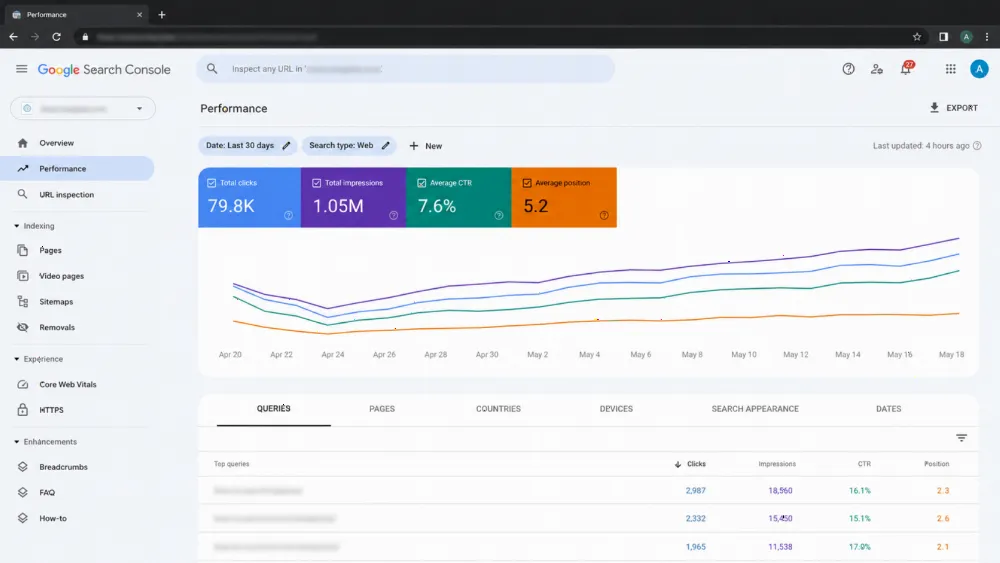
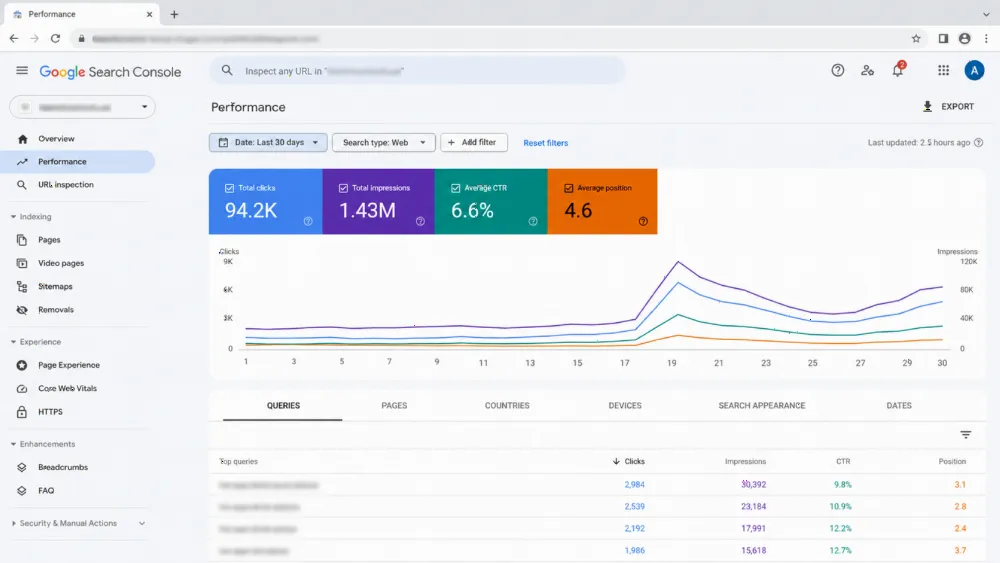
Action: Before reaching out, pull your Core Web Vitals report and Search Console coverage data. If you see "crawled – currently not indexed" or failing LCP/INP scores, you have a legitimate technical case.
How Do Technical SEO Consultants Charge in the USA?
Three pricing models dominate the US market: hourly consulting, fixed-price projects, and monthly retainers. Each suits a different situation.
Hourly consulting ($75–$250/hr). Best for targeted questions, second opinions, migration planning calls, and training your in-house team. Freelance technical SEO consultants in the USA typically charge $75 to $200 per hour, with top specialists reaching $300–$500 per hour, according to AutoWrite's 2025 freelancer pricing guide. One 2026 industry analysis pegs the average independent consultant rate at $171.18 per hour, with roughly 1 in 10 providers charging over $150 per hour (Virtustant).
Fixed-price projects ($1,500–$5,000 typical). Best for one-time technical SEO audits with defined deliverables and timelines. You know the cost upfront, and the consultant owns the diagnostic scope.
Monthly retainers ($1,500–$10,000+/month). Best for large sites, ecommerce catalogs, or post-migration monitoring. Retainers cover ongoing crawl monitoring, new-issue triage, and implementation QA.
Method: Match the model to the job. Need a migration risk review? Buy 5–10 hourly hours. Need a full diagnostic with a prioritized roadmap? Fixed price. Running a 50,000-product ecommerce site? Retainer.
Pitfall: The SE Ranking 2025 salary survey found that 88% of SEO professionals charge $150 or less per hour — only 6% charge more than $200 (Revved Digital). Rock-bottom rates on marketplaces often mean template reports, not real diagnostics. Conversely, a high hourly rate without a defined deliverable is a blank check. Always tie payment to outputs.
Action: For a one-time diagnostic, prefer fixed pricing with a written scope. For ongoing needs, negotiate a 3-month trial retainer before committing annually.
Mid-article CTA: Not sure which model fits your site? Get a fixed-price technical SEO audit with a prioritized fix list your developers can implement — or run the numbers on our quote calculator.
How Much Does It Cost to Hire a Technical SEO Consultant in the USA?
Expect to pay $100–$250 per hour for a freelance technical SEO consultant, $1,500–$5,000 for a fixed-price audit of a small-to-medium site, and $5,000–$25,000+ for enterprise audits, according to NAV43's 2025 audit pricing research.
Price bands by site size (synthesized from multiple 2025–2026 US pricing guides):
| Site size | Typical audit cost | What's usually covered |
|---|---|---|
| Small (<50 pages) | $500–$2,000 | Crawl report, Core Web Vitals, on-page basics, mobile check |
| Medium (50–500 pages) | $2,000–$5,000 | Full technical + content gap review, backlink scan, implementation guidelines |
| Large (500+ pages) | $5,000–$15,000 | Deep crawl analysis, JS rendering audit, log file analysis, competitive gap analysis |
| Enterprise / ecommerce | $10,000–$30,000+ | Multi-market, multi-language, custom stakeholder reporting, implementation support |
Source: pricing bands compiled from HelloRoketto's 2026 SEO pricing guide and NAV43.
Example: A 120-page B2B services site in Chicago paid $3,200 for a fixed-price audit. The deliverable: a 45-page report, a spreadsheet of 180 issues ranked by impact vs. effort, and a 90-minute walkthrough with their developer. That ratio — roughly $25–$30 per page audited — is a useful sanity check for mid-size sites.
Pitfall: Budget for implementation separately. The audit tells you what's broken; fixing it is a second cost. NAV43 notes that technical implementation typically requires developer resources at $100–$200 per hour, and ongoing monitoring often runs $500–$1,500 per month. An audit without an implementation plan is shelfware.
Action: Ask every consultant for a fixed quote that includes: crawl scope (page count), deliverable format, prioritization method, a walkthrough call, and 30 days of follow-up questions. Compare quotes on deliverables, not just price. Our technical SEO audit service page lists exactly what a complete one-time audit includes.

How Do You Vet a Technical SEO Consultant Before Hiring?
Use this six-point vetting checklist before signing anything.
1. Ask for a sample audit (redacted). A real consultant can show you a past deliverable with the client name removed. Look for: prioritized issues with business impact estimates, exact fix instructions (not vague "improve site speed"), and effort ratings. A 10-page PDF of tool screenshots is not an audit.
2. Test their diagnostic thinking. Ask: "Our traffic dropped 30% last month. Walk me through your first 48 hours." Strong answers start with Search Console, analytics segmentation, and update timelines — not "I'd run a full audit." Our 40-fix SEO audit checklist for US sites mirrors the triage sequence good consultants use.
3. Verify tool fluency. They should name specific tools unprompted: Screaming Frog or Sitebulb for crawling, Google Search Console and PageSpeed Insights for validation, and ideally log file analysis. Ask how they'd audit a JavaScript-heavy React or Next.js site — vague answers here are disqualifying. See our guide to Core Web Vitals, crawl budget, and indexing in 2026 for the technical depth to expect.
4. Check implementation realism. Ask who implements the fixes and whether the report includes developer-ready specs. The best consultants write tickets your dev team can execute without translation.
5. Demand references with outcomes. "We improved organic traffic 40%" is a claim; ask for the timeframe, the starting point, and what else changed (content, links, redesigns). Technical fixes rarely act alone.
6. Clarify what's excluded. Content strategy, link building, and ongoing monitoring are usually separate engagements. Get the boundary in writing.
Pitfall: Certifications impress but prove little. Google's own certifications (Analytics, Ads) don't cover technical SEO depth. Weight demonstrated diagnostics — case studies with numbers — over credentials.
Action: Run a paid 2-hour trial engagement: ask the consultant to review your Search Console coverage report and deliver a one-page triage. You'll learn more from those two hours than from any proposal deck.
What Are the Red Flags When Hiring a Technical SEO Consultant?
Watch for these warning signs:
- Guaranteed rankings or traffic. Google explicitly warns against this; no consultant controls the algorithm.
- Audit delivered in 48 hours for a 10,000-page site. Real crawls and analysis take time. Rush delivery means automation-only.
- No questions about your business goals. A consultant who never asks about revenue, leads, or priority pages will optimize for vanity metrics.
- Recommendations without prioritization. A 400-line issue list with no impact/effort ranking dumps the hard work on you.
- Proprietary "secret" methods. Technical SEO is public knowledge applied rigorously. Secrecy usually hides thin work.
- No implementation support. If they vanish after delivering the PDF, budget extra for a developer who can interpret it.
Example: A Florida ecommerce brand paid $900 for a "complete technical audit" and received a 12-page automated report listing the same generic fixes any free tool produces. The real issues — faceted navigation generating 200,000 crawlable URLs and a broken hreflang setup — were never mentioned. The cheap audit cost them six more months of wasted crawl budget.
Action: Build a simple scorecard: sample audit quality (40%), diagnostic interview (30%), references (20%), price realism (10%). Hire the highest scorer, not the lowest bidder. As management thinker Peter Drucker put it: "What gets measured gets managed" — and that applies to your consultant selection as much as to your SEO.
What Should a One-Time Technical SEO Audit Deliver?
A proper one-time audit is a decision-making document, not a data dump. Insist on these deliverables:
- Executive summary — top 5 issues by revenue impact, in plain English.
- Prioritized issue register — every finding ranked by impact × effort, with page counts affected.
- Developer-ready fix specs — exact code/config changes, not "optimize images."
- Crawl budget analysis — where Googlebot spends its time vs. where it should.
- Core Web Vitals remediation plan — field-data based (CrUX), not just lab scores.
- Indexation strategy — what should be indexed, noindexed, or canonicalized, and why.
- Sitemap & robots.txt review — with corrected files provided.
- Structured data validation — schema errors and rich-result opportunities.
- Walkthrough session — 60–90 minutes with your team, recorded.
- 30-day Q&A window — implementation questions answered as your devs work through the list.
Method: Sequence the work: triage (week 1, highest-impact blockers) → deep crawl and analysis (weeks 1–2) → prioritized report (week 2–3) → walkthrough and handoff (week 3–4). For sites under 500 pages, two weeks is realistic; enterprise audits run 4–8 weeks.
Pitfall: Google research shows 53% of mobile site visits are abandoned if the page takes longer than 3 seconds to load. Speed findings should therefore lead every audit report — yet many audits bury them on page 30. Demand impact-first ordering.
Action: Use our technical SEO audit service as a benchmark scope when comparing proposals, and contact us if you want a second opinion on a quote you've received.
Frequently Asked Questions
How much does it cost to hire a technical SEO consultant in the USA?
Freelance technical SEO consultants typically charge $75–$200 per hour, with specialists reaching $250+. Fixed-price audits run $1,500–$5,000 for small-to-medium sites and $5,000–$25,000+ for enterprise sites. Budget separately for implementation, which usually needs developer time at $100–$200 per hour.
Should I hire a technical SEO consultant hourly or on a fixed-price project?
Choose hourly for targeted questions, migration planning, or second opinions (buy 5–10 hours). Choose fixed-price for a full diagnostic audit with defined deliverables. Choose a retainer ($1,500–$10,000+/month) for large ecommerce sites or ongoing post-migration monitoring.
What is the difference between a technical SEO consultant and an SEO agency?
A consultant is typically a senior individual who diagnoses and advises; you or your team implement. An agency provides a team covering strategy, content, links, and reporting. Consultants suit companies with in-house developers who can execute; agencies suit companies that want everything handled externally.
How long does a technical SEO audit take?
Small sites (under 50 pages): 1–2 weeks. Medium sites (50–500 pages): 2–4 weeks. Large and enterprise sites: 4–8 weeks. Anyone promising a "complete" audit of a large site in 48 hours is selling an automated report, not a real diagnostic.
Can a technical SEO consultant guarantee better rankings?
No — and you should walk away from anyone who does. A consultant can guarantee a thorough diagnostic, prioritized fixes, and implementation guidance. Rankings depend on technical health plus content quality, authority, and competition. Guarantees of specific rankings violate Google's own guidance for hiring SEOs.
Do I need a technical SEO consultant if I already have a web developer?
Often yes. Most web developers are not trained in crawl budget management, indexation strategy, log file analysis, or schema implementation. The best results come from a consultant who writes developer-ready specs that your dev team executes — complementary skills, not overlapping ones.
What should I prepare before hiring a technical SEO consultant?
Grant (or prepare to grant) access to Google Search Console, Google Analytics, your CMS, and hosting/server logs. Pull your Core Web Vitals field data and list your top 20 revenue-driving pages. Define success in business terms (leads, revenue) rather than "fix SEO."
Get a Technical Audit Your Developers Can Actually Use
Hiring the right technical SEO consultant comes down to three things: verified diagnostic skill, a fixed scope with developer-ready deliverables, and honest pricing. Skip the cheapest automated report and the most expensive vague retainer — hire the person who shows you their work.
Get a one-time technical SEO audit — a prioritized, developer-ready fix list for your US website, with a walkthrough call and 30 days of follow-up. Or talk to our team for a second opinion on a quote you've already received.
Written by Muhammad Waleed, CEO of Webstackrank — a Dubai-based web development, SEO, and AI automation agency serving clients across the USA, UK, Canada, Europe, and the UAE.