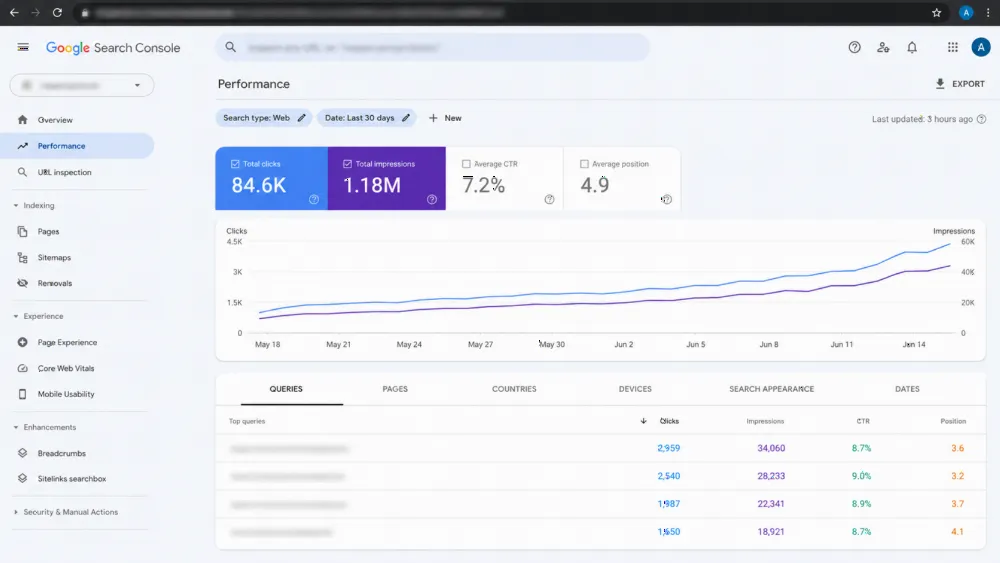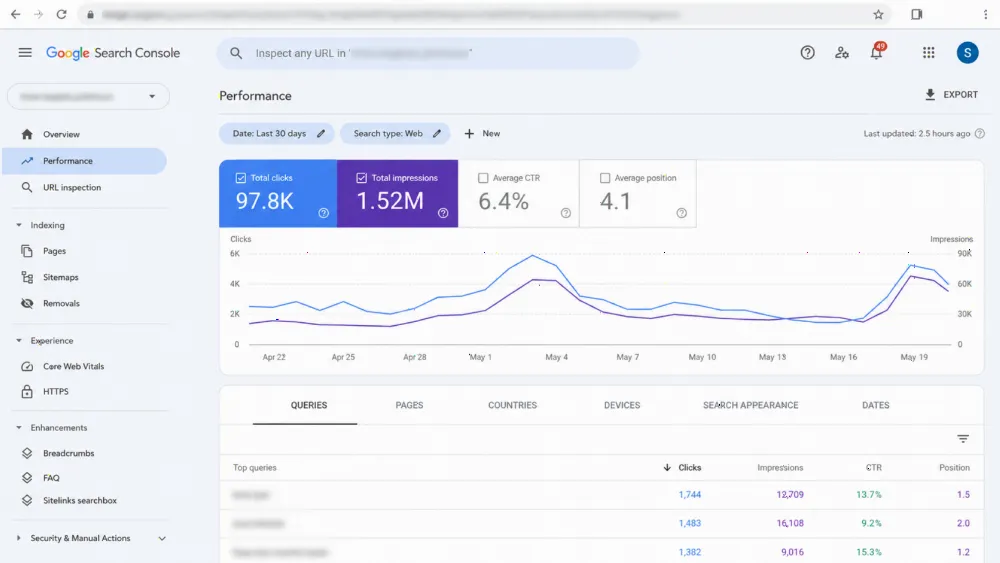
Ask five agencies how long your redesign will take and you may hear two weeks, six weeks, three months and half a year — for what sounds like the same project. The word "redesign" hides different scopes. This guide decomposes it into phases and names the five drivers that set their length.
The short answer: there is no standard redesign timeline — there is a scope, and the scope has drivers
Published market ranges show the spread. Netguru's redesign guide, for example, puts a refresh at 4–6 weeks, a redesign with new structure and design at 8–14 weeks, and a replatform to headless at 16–26 weeks. Phenomenon Studio answers 12–20 weeks for a 10–30-page professional site. The ranges conflict because the scopes differ. A timeline is trustworthy only when derived from page count, content state, languages, integrations and approval structure.
The problem: five quotes, five timelines, one word ("redesign") hiding five different projects
The planning damage starts with anchoring. An owner hears the shortest number, books a campaign against it, and treats the date as committed. Mid-project, the real schedule reveals itself: the copy was never ready, the Arabic version was never in scope, the booking integration needs a third party's access, and approvals travel through four people. None can be fixed by designing faster.
Contrast a genuinely fixed scope. WebStackRank's starter packages can carry fixed timelines — a One-Page Website at AED 990 fixed in about 5–7 working days, or a Small Business Website of up to five pages at AED 2,490 fixed in about 2–3 weeks — because they are new, small sites with a bounded page count and supplied content, as the pricing page sets out. A redesign of an existing site has none of those bounds until someone defines them.

The phases every redesign passes through — and what each phase is really waiting on (table)
| Phase | What happens | What it is usually waiting on |
|---|---|---|
| Discovery and scope | Current-site audit, goals, page and template inventory | Access and analytics |
| Content | Keep, rewrite and create pages; translation where needed | Your writers, your experts, your approvals |
| Design | Wireframes, visual design, template sign-off | Feedback rounds and one clear decision-maker |
| Build | Templates developed, content loaded, integrations connected | Approved designs, final content, third-party access |
| SEO preservation and QA | Redirect mapping, metadata carried over, device and performance testing | The URL inventory and time to fix what testing finds |
| Launch and monitoring | Go-live, sitemap submission, Search Console monitoring | A launch window away from your peak trading days |
Content is usually the longest phase, because writing and approving pages cannot be compressed like build work. SEO preservation is real work: Google's site-moves documentation requires redirect mapping, sitemap submission and post-move monitoring when URLs change — our website redesign SEO migration checklist covers the execution.
Driver 1 — scope type: refresh, redesign or replatform
A visual refresh changes the surface — colours, typography, imagery, headlines — on the existing structure and platform. A redesign reworks structure, templates and journeys, usually on the same platform. A replatform moves the site to a new CMS or stack, adding migration, integration rebuilding and retraining to the same calendar. Most timeline arguments are scope arguments: one quote priced a refresh, another a replatform, and the owner compares them as if they were the same job. Name the scope type before comparing numbers.
Driver 2 — pages, templates and content volume (including who writes and migrates it)
Designers design templates, not pages: a 60-page site built on six templates is very different from 60 individually laid-out pages. But content scales with pages, not templates. Every page needs text that exists, is current and is approved — plus images, metadata and migration into the new templates. The decisive question is who writes. If the agency writes, add drafting and review cycles. If your team writes, a busy month becomes a project delay. Content ready before design starts removes this driver.
Driver 3 — the bilingual layer: Arabic pages, RTL design and translated content
For UAE businesses, the second language is not a final-week task. Arabic pages need translated or originally written copy, reviewed by someone who can judge business Arabic — a production line of its own. The design layer needs genuine right-to-left work: mirrored layouts, navigation that reverses sensibly, typography that renders Arabic as carefully as English. QA then doubles in one specific way: every template must be checked in both directions.

Driver 4 — integrations and third parties: CRM, payments, booking, feeds
Anything the site must talk to adds a dependency you do not control. A CRM connection waits on the CRM's access, fields and testing environment. Payment gateways wait on provider approval and test transactions. Build time is often the smallest part; elapsed time is dominated by waiting — for accounts, sandbox access, a third party's answer.
Driver 5 — approvals: one decision-maker vs a committee, and feedback speed
DigiHotShot's redesign roadmap admits what most agencies avoid: feedback speed is the biggest timeline factor, because delayed client feedback pushes the schedule out equally. One named approver who can decide in a day keeps rounds tight. A weekly committee that reopens settled questions can double the design phase without anyone working slowly. Agree the approval structure first: who reviews, who decides, how many rounds are included.
Worked contrast: a 5-page brochure redesign vs a 60-page bilingual redesign (phase-by-phase)
| Phase | 5-page brochure redesign | 60-page bilingual redesign |
|---|---|---|
| Discovery | Pages and goals reviewed quickly; few unknowns | Full inventory and template audit across two languages |
| Content | Five pages to rewrite or refresh; one reviewer | Sixty pages in English plus Arabic versions; translation pipeline |
| Design | A small template set; short feedback rounds | More templates, full RTL design direction, more stakeholders |
| Build | Templates built and populated in one pass | Build, content loading and migration as parallel workstreams |
| SEO and QA | Redirects only if URLs change; compact testing | Full redirect map, bilingual QA, Core Web Vitals checks (LCP ≤ 2.5s, INP ≤ 200ms, CLS ≤ 0.1) |
| Launch | Single straightforward go-live | Staged checks and monitoring in two languages |
The brochure project is bounded the way a fixed-price website package is bounded: few pages, one language, no integrations, one approver. The bilingual project is not twelve times harder — templates carry across pages — but its content, translation and QA workloads are far larger.
How to get a timeline you can plan around: readiness checklist before you ask for dates
A defensible date is produced before the project, not negotiated during it. Arrive with:
- A page and template inventory of the current site, with URLs you must keep.
- A content decision per page — keep, rewrite, merge or retire — and a named writer for anything new.
- The language scope stated plainly: English only, or English and Arabic, and who translates and reviews.
- A list of integrations, with account access and test credentials available.
- One named approver, a feedback turnaround you commit to, and the number of review rounds agreed.
- Brand assets, photography and logins gathered in one place.
- A launch window that avoids your peak season, plus the campaigns depending on the date.
With those in hand, an agency can scope the actual project — and our guide to how much a website costs shows how the same drivers move the price.

Common mistakes
The commonest mistake is anchoring on the shortest quote and committing campaigns to it before checking its scope. Next: treating content as a during-project task, so the build waits on copy that was never scheduled; adding the Arabic version "at the end", when translation and RTL work needed to run in parallel; and approving by committee without a single decision-maker. Owners compress the wrong phases — cutting SEO preservation and QA to rescue a date. Finally, do not cite a sprint-format or starter-package timeline as evidence for a full redesign: entirely different projects.
FAQ
How long does a website redesign take on average?
There is no meaningful average, because the label covers different scopes. Studios' published ranges run from a few weeks for a small refresh to several months for a replatform — Netguru, for example, publishes 4–6 weeks for a refresh and 16–26 weeks for a headless replatform.
What slows a redesign down the most?
Content readiness and approval speed. Pages cannot be built before their text exists and is approved, and every design round waits on feedback — DigiHotShot's roadmap identifies delayed client feedback as the biggest single factor. Integrations waiting on third parties come next.
Does adding Arabic double the redesign timeline?
No — but it adds three real workloads: translation or original Arabic writing with qualified review, a genuine right-to-left design direction rather than a mirror flip, and a second QA pass over every template in Arabic. Planned from the start, these run partly in parallel with the English work; added at the end, they extend the project by the full length of that work.
Can a redesign be finished in a few weeks?
A small, bounded one can: a visual refresh of a few pages, on the existing platform, with content ready and one approver, is the kind of scope short timelines describe. A multi-template, bilingual redesign with integrations and committee approvals cannot be compressed the same way — its phases contain waiting time no team size removes. Judge any short quote by the scope it assumes.
How can I get a timeline I can actually plan around?
Complete the readiness checklist first — inventory, content decisions, language scope, integration access, one approver — then ask for a timeline derived from that scope, phase by phase, with dependencies named. A date quoted before the scope exists is marketing, not scheduling.
Get an itemised proposal with a timeline derived from your scope (CTA)
If you are planning a launch or campaign around a redesign, get the timeline from the scope, not from a brochure range. WebStackRank provides an itemised proposal within 24 business hours, with the project phased against your actual pages, languages and integrations, on a 50% deposit to begin and 50% at launch basis. Start with our website development company in Dubai page, or talk to our web design team in Dubai.