Run the redesign as two migrations, not one. Benchmark the Arabic estate separately, freeze its URL and hreflang map, and treat every Arabic content edit as a migration event. Planned as its own project, the Arabic estate can survive the new design without quietly losing the rankings that bring Saudi enquiries.
If scope is not yet settled, start with refresh, redesign or rebuild. Writing the redesign brief is a separate document; this is the protection method it must require.
The short answer: protect the Arabic estate as its own migration, not a translation of the English one (checklist)
Before launch is approved, confirm:
- Arabic benchmarks recorded separately for the Arabic estate alone.
- Arabic URL inventory frozen, with a keep, move or retire decision per page.
- Every hreflang pair listed — ar-SA to its English twin, and any ar-AE sibling.
- Arabic titles, headings and ranked phrasing carried over verbatim unless a recorded change is deliberate.
- Bilingual redirect map built and tested on staging; Arabic pages redirect to Arabic pages only.
- RTL templates checked for heading hierarchy and mixed-direction content.
- Launch monitoring set up with Arabic performance on its own line.
If any line is missing, the Arabic estate is not ready, however ready the English site looks. Our website redesign SEO migration checklist covers the shared steps; below is the Arabic layer.
Why Arabic rankings are the fragile half of a Saudi redesign
Arabic pages break in ways English pages do not. The design team usually works in English, so Arabic URLs, titles and labels are rebuilt late, by people who cannot read the phrasing they are changing. A tidied slug or retranslated label is a small design decision — and a changed ranking signal.
Three fragilities compound. Arabic ranking often rests on specific phrasing — the dialect or sector wording searchers actually type — which a polished retranslation erases. The language signals are paired: hreflang, canonicals and internal links connect each Arabic page to its twins, and a new template can drop one side unnoticed. And the damage hides, because total traffic can hold up on English growth while Arabic clicks fall. See our guide to SEO for bilingual Arabic and English websites.

Benchmark the Arabic estate separately before anyone draws a wireframe
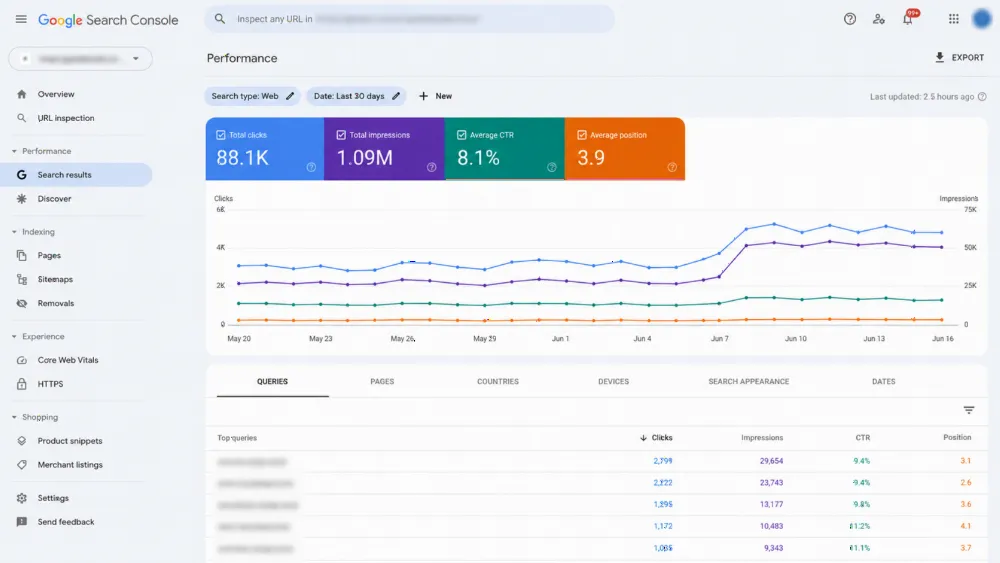
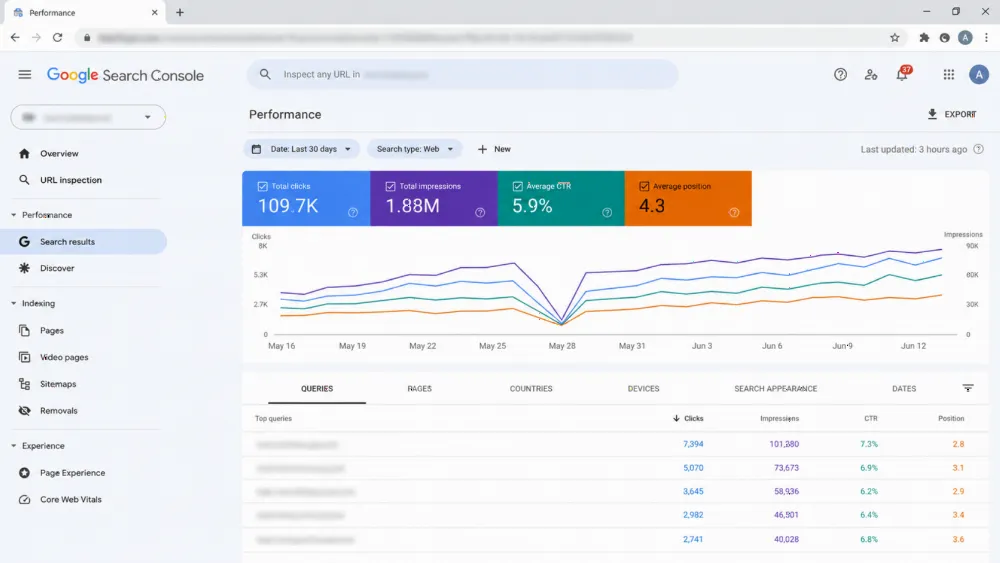
In Google Search Console, filter to the Arabic pages only and record the baseline: clicks, impressions, position, the queries each key page ranks for, and the enquiry pages. Export the full Arabic URL list with its traffic and backlinks — Google Search Central's site-move guidance starts from this discipline: know what you have before mapping where it goes.
Benchmark English separately: if Arabic rankings slip, the Arabic baseline shows which pages and queries moved; a combined baseline shows only that something changed. Date the exports and make the baseline a redesign deliverable. Pages with traffic, links or enquiries are protected — they move only with a redirect and a reason.
Freeze the Arabic URL map: slugs, pairs and the pages you must not move
From the baseline, build the Arabic URL map: every current Arabic URL, its planned new URL (ideally identical), its twin, and its status. The default is no change. Ranking slugs stay exactly as they are, including imperfect ones; a tidier slug is not worth a redirect and a reindexing wait.
Where a URL must move, move the pair together and update the hreflang annotations. Google requires alternate URLs to be fully qualified, each version listing itself and all others, so a half-updated pair silently stops working. Mark pages that must not move: pages with backlinks, pages named in print or tender documents, and URLs your sales team shares. Freeze the map before templates are built.
Content edits are migration events: transcreation, dialect phrasing and the "improved translation" trap
The most dangerous sentence in a bilingual redesign is "while we are at it, let us improve the Arabic." A fresh translation of a ranking page is not an improvement; it is a content replacement. The old page ranked partly for its exact phrasing — words Saudi buyers type, including dialect and sector terms a formal retranslation smooths away. Replace the phrasing and Google re-judges the page from zero.
So Arabic copy moves verbatim by default. Change it only where the offer changed, then by transcreation, reviewed by whoever owns Arabic search performance, not only a translator. Keep a diff of every changed Arabic title, H1 and opening paragraph, with the reason. If a page ranks for a phrase, that phrase survives word for word, even if the English twin is rewritten completely.

hreflang, canonicals and internal links: the language signals a new template drops first
Check each paired signal on staging, on a sample of Arabic pages and their twins:
- Hreflang: every Arabic page still declares its twin and itself, with the correct ar-SA value (and ar-AE where a UAE sibling exists), pointing at the new canonical URLs — never at homepages. See the Arabic guide to hreflang mistakes on Saudi websites.
- Canonicals: each Arabic page canonicalises to itself, not to the English version.
- Internal links: Arabic navigation, footers and body links point directly at the new Arabic URLs.
- Sitemaps: language-specific sitemaps list only live, canonical, indexable new URLs.
Our overview of multilingual website architecture explains how these signals fit together; here, prove none of them broke.
RTL rebuild checks: heading hierarchy, navigation and mixed-direction content
An RTL rebuild is not the LTR template mirrored. Test Arabic templates as their own build: heading hierarchy must survive the flip (one H1, logical H2 order), navigation must order correctly, and breadcrumbs must read in sequence. Mixed-direction content is where corporate pages break — English product names, numbers and dates inside Arabic sentences can reorder visually — so check real pages with real data.
Where performance gates are used, hold Arabic templates to the same published Core Web Vitals thresholds as English ones — LCP at or below 2.5 seconds, INP at or below 200 milliseconds and CLS at or below 0.1 (web.dev) — measured on the Arabic pages themselves.
The bilingual redirect map: build it, test it on staging, freeze it
Build one redirect map for the whole redesign, with Arabic rows reviewed by someone who reads Arabic. Every moved Arabic URL redirects permanently to its closest Arabic equivalent — never to the English twin or the Arabic homepage. Google Search Central's site-move guidance is explicit that annotations and internal links should be updated to the new URLs.
Test it on staging: crawl the old Arabic URL list against staging, confirm each URL resolves live or via one permanent redirect to the right target, and check for chains and loops. Then freeze it — late URL changes are the classic cause of launch-day losses. The checklist on redesigning without losing rankings covers the general discipline.

Launch week and the first 28 days: reading Arabic performance on its own line
At launch, repeat the staging checks live: crawl the old Arabic URLs, confirm redirects fire, remove any staging noindex or robots block, and submit the updated sitemap. Then monitor Arabic performance daily in launch week and weekly to day 28, on its own line: clicks and impressions against the baseline, index coverage, and 404s on old Arabic URLs.
Expect movement while Google reprocesses changed pages; judge against the baseline. One page slipping suggests a page-level cause such as a changed title; the whole estate slipping together suggests a signal-level cause — hreflang, canonicals or a template fault. Log every fix with its date.
If Arabic traffic still falls: the triage order before you panic-edit
Work in this order, one change at a time:
- Indexing: are the affected Arabic pages indexed, canonical as intended, and free of accidental noindex blocks?
- Redirects: does every old Arabic URL reach the right new Arabic page in one hop?
- Signals: hreflang pairs reciprocal and current, canonicals self-referencing, sitemap clean?
- Content: compare live Arabic titles and headings against the baseline diff — was ranked phrasing changed?
- Links: did Arabic internal or key external links end up pointing at retired URLs?
Resist bulk edits: panic-rewriting Arabic pages destroys the evidence and can turn a fixable signal fault into a real content loss. If the fall followed a content update, that is a different incident.
Common mistakes in Saudi corporate redesigns
The recurring mistakes are organisational: benchmarking only total traffic, so Arabic losses stay invisible; rebuilding Arabic URLs without the URL map; retranslating ranking pages to "improve" them; redirecting retired Arabic pages to English pages or the homepage; and freezing the English launch plan while Arabic redirects are finished the night before go-live.
FAQ
Should Arabic URLs stay the same in a redesign?
Yes, by default. Keep every ranking Arabic URL identical unless there is a structural reason to move it. If it must move, redirect it permanently to the closest Arabic equivalent and update its hreflang pair, canonical and internal links at the same time.
What happens if hreflang is dropped during the redesign?
Google may serve the wrong language version in Saudi results, or treat the Arabic page as unconnected to its English twin. Each version must list itself and all others with fully qualified URLs, so restore the pairs and verify them on staging before launch.
Why did total traffic look fine while Arabic enquiries fell?
Because the two estates can move in opposite directions: English growth can mask an Arabic decline in a merged dashboard for weeks. The Arabic baseline, launch checks and first 28 days of monitoring must therefore be reported on their own line.
Can we rewrite the Arabic pages to sound better during the redesign?
Only with the ranked phrasing protected. Move Arabic copy verbatim by default, change it only where the offer changed, and adapt it by transcreation. A full retranslation replaces the content Google ranked — treat it as launching a new page.
How long should we monitor Arabic rankings after launch?
Daily through launch week, then weekly for at least 28 days, comparing Arabic clicks, impressions and index coverage against the pre-redesign baseline. Keep monitoring until the Arabic estate is stable against that baseline, and log every fix with its date.
Redesign with the Arabic rankings owned, not hoped for (CTA)
If your redesign is scoped and the Arabic estate carries real enquiries, plan the protection layer before the build starts. See our web design services for Saudi Arabia and bring your Arabic URL list and Search Console access. If ranking support is the gap, our SEO services for Saudi Arabia team can own the benchmark and gate.