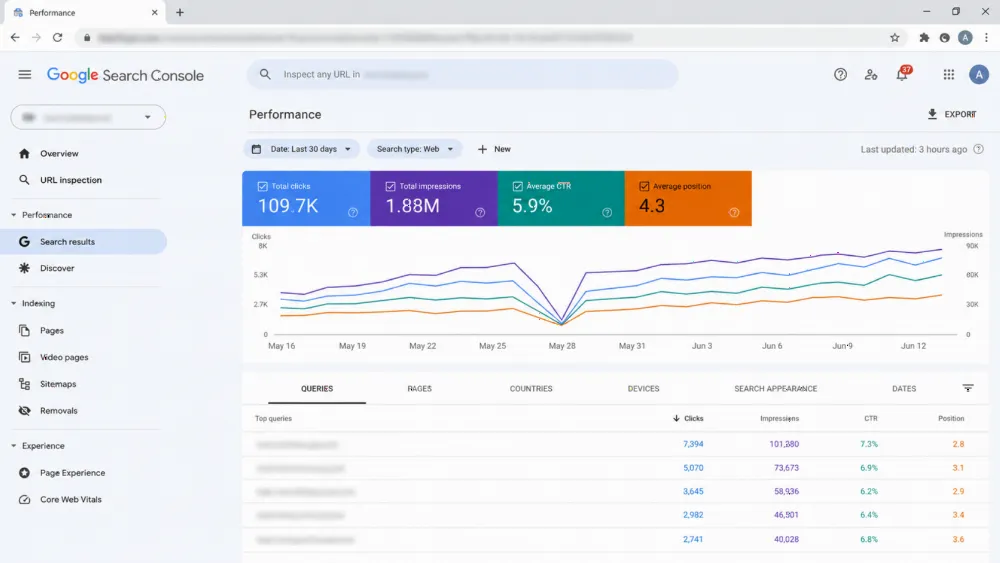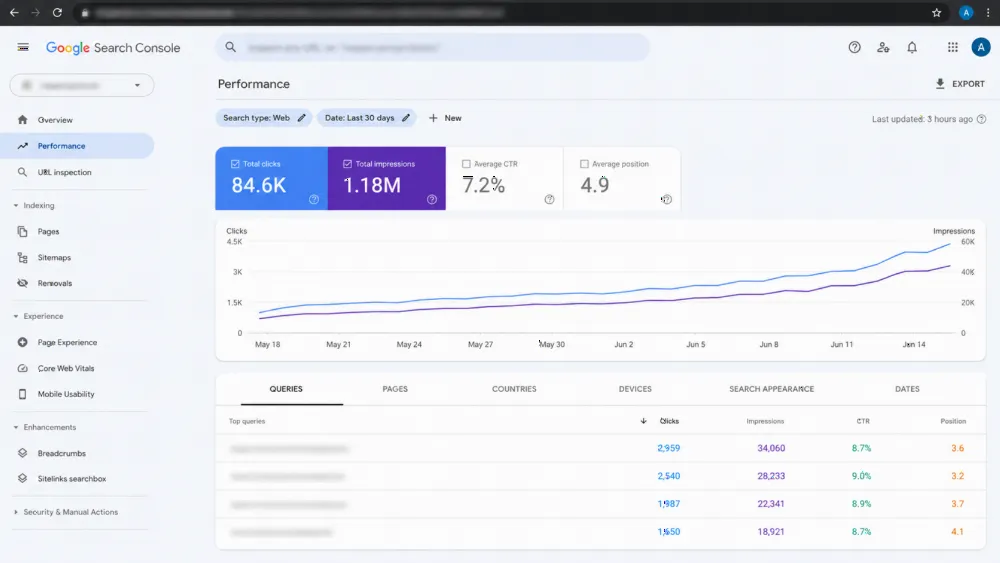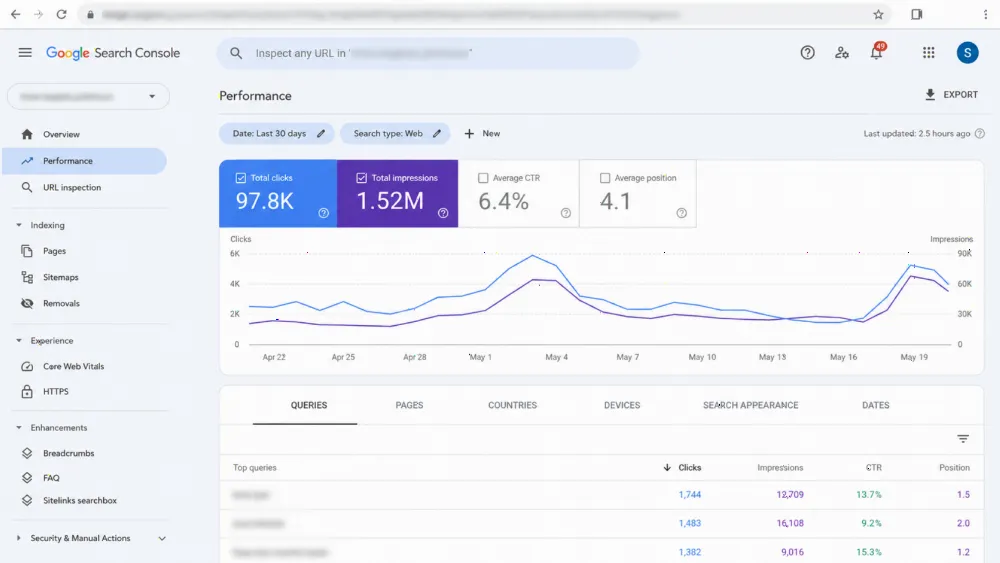
A technical SEO audit in the USA costs $500–$2,000 for small sites, $2,000–$5,000 for medium sites, and $5,000–$30,000+ for large or enterprise sites. Price depends on page count, site complexity, and audit depth. Below: exact price bands, what's legitimately included at each tier, and what's upsell fluff.
How Much Does a Technical SEO Audit Cost in the USA?
Here are the going rates US businesses actually pay in 2026, synthesized from multiple industry pricing guides:
| Audit tier | Price range | Typical site |
|---|---|---|
| Basic / automated-plus-review | $300–$1,500 | Brochure sites, startups, under 50 pages |
| Standard technical audit | $1,500–$5,000 | SMB sites, 50–500 pages, some ecommerce |
| Comprehensive audit | $5,000–$15,000 | Large sites, 500+ pages, multi-location |
| Enterprise audit | $10,000–$30,000+ | Marketplaces, publishers, international SEO |
Sources: NAV43's 2025 audit cost research and HelloRoketto's 2026 SEO pricing guide, which breaks audits down by site size from $500 for small sites to $30,000+ for enterprise.
Definition: A technical SEO audit is a systematic diagnostic of your site's crawlability, indexation, speed, mobile experience, structured data, and server configuration — delivered as a prioritized fix list. It answers one question: what is technically preventing Google from ranking this site?
Example: A 300-page US law firm site paid $2,800 for a standard audit. Findings included 12,000 paginated URLs wasting crawl budget, missing canonical tags on location pages, and a 4.8-second mobile LCP. The fix list had 34 items ranked by impact; the top 8 took their developer three weeks.
Pitfall: The cheapest audits ($200–$500) are usually automated tool exports with a logo slapped on. They list generic issues ("add meta descriptions") but miss the expensive problems: JavaScript rendering failures, crawl budget waste, hreflang errors, and indexation bloat. A bad audit doesn't just waste $500 — it lets real problems compound for months.
Action: Match your spend to your site size using the table above, then read our guide on what to look for when you hire a technical SEO consultant in the USA before requesting quotes. If your site is mid-size, our fixed-price technical SEO audit sits squarely in the standard tier.
What Determines the Price of a Technical SEO Audit?
Five factors move the price more than anything else:
1. Page count and crawl scale. A 40-page site crawls in minutes; a 100,000-URL ecommerce catalog needs staged crawls, log file analysis, and segmented reporting. Auditors price this directly: more URLs, more hours.
2. JavaScript complexity. Sites built on React, Next.js, or heavy client-side rendering need rendering audits — checking what Googlebot actually sees versus what users see. This is specialist work and commands a premium. Our technical SEO playbook for US websites explains why JS rendering audits cost more.
3. Site architecture messiness. Migrations, faceted navigation, multi-language hreflang setups, and legacy CMS platforms multiply diagnostic hours. As one 2026 pricing guide puts it, auditing a 5-page coffee shop site isn't the same beast as auditing a multinational retailer's web empire (HelloRoketto).
4. Deliverable depth. A spreadsheet of issues costs less than developer-ready fix specs, stakeholder presentations, and implementation QA. You're paying for thinking, not just crawling.
5. Turnaround time. Rush audits (under a week for large sites) carry premiums of 25–50%.
Method: When requesting quotes, send every auditor the same brief: URL, approximate page count, platform/CMS, number of markets/languages, and the deliverables you expect. Compare like with like — a $1,500 quote for a crawl report and a $4,000 quote for a full diagnostic with implementation specs are different products.
Pitfall: Don't pay enterprise prices for a template report. The SE Ranking 2025 survey found 88% of SEO professionals charge $150 or less per hour, with only 6% above $200 (Revved Digital). If a quote implies $400+/hour of labor for a standard audit, ask exactly what justifies it.
Action: Get three quotes using the same brief. Discard the cheapest (likely automated) and interrogate the most expensive (likely padded). The middle quote with the clearest deliverable list usually wins.
What's Included at Each Price Tier — and What's Upsell Fluff?
Legitimate inclusions vs. common upsell fluff, tier by tier:
Basic ($300–$1,500) — legitimately includes: automated crawl report, meta tag and heading review, broken link list, page speed snapshot, mobile usability check. Fluff to reject: "competitor backlink analysis" at this tier (too shallow to act on), monthly "rank tracking setup" sold as audit value, and generic PDF reports with no prioritization.
Standard ($1,500–$5,000) — legitimately includes: everything in Basic plus manual review, Core Web Vitals remediation plan, indexation and canonical strategy, XML sitemap/robots.txt fixes, schema validation, content gap notes, and a walkthrough call. Fluff to reject: "free" keyword lists scraped from tools, social media audits bundled to inflate page count, and "priority support" that just means email.
Comprehensive ($5,000–$15,000) — legitimately includes: everything in Standard plus log file analysis, JavaScript rendering audit, crawl budget modeling, international/hreflang review, site architecture redesign recommendations, and implementation QA. Fluff to reject: vague "digital strategy sessions," AI-generated content briefs, and link-building pitches disguised as audit findings.
Enterprise ($10,000–$30,000+) — legitimately includes: multi-stakeholder reporting, custom dashboards, dedicated analyst time, migration risk modeling, and ongoing advisory during implementation. Fluff to reject: anything that can't be tied to a deliverable with a date.
Example: One red flag we see often: audits that list "install Google Analytics" as a finding on a site that already has it — a telltale sign the report was generated without a human ever opening the site. Cross-check any audit against our 50-issue SEO audit checklist to see whether the findings required real expertise.
Pitfall: The most expensive upsell is the audit that recommends the auditor's own monthly retainer for "critical" fixes that are actually one-line changes. Get a second opinion before signing. Our 40-fix audit checklist helps you sanity-check whether findings are genuinely complex.
Action: Before paying, ask for the table of contents of the final report. If it doesn't include prioritization, developer specs, and an indexation strategy, it's not worth standard-tier money. As Warren Buffett said: "Price is what you pay. Value is what you get."

Mid-article CTA: Want a straight answer on what your site needs? Our technical SEO audit is fixed-price, developer-ready, and includes a walkthrough call — no upsell fluff. Or estimate your project on the quote calculator.
Is a One-Time Audit or an Ongoing Retainer Better Value?
It depends on your site's rate of change.
Choose a one-time audit when: your site is stable, you're planning a redesign or migration, traffic dropped and you need a diagnosis, or your in-house team can implement fixes. One-time audits cost $500–$7,000+ depending on size and depth (HelloRoketto), and they're the highest-ROI SEO spend for most SMBs because they convert unknowns into a ranked action list.
Choose a retainer ($1,500–$10,000+/month) when: you run a large ecommerce catalog with daily product changes, publish at high volume, operate in multiple markets, or just completed a migration that needs monitoring. NAV43 notes ongoing technical monitoring typically runs $500–$1,500 per month for the monitoring component alone (NAV43).
Method: Start with a one-time audit, implement the fixes over 60–90 days, then measure. Only move to a retainer if new issues keep appearing — which happens on dynamic sites, not on stable brochure sites. This sequence prevents paying for monitoring you don't need.
Example: A US B2B manufacturer paid $3,500 for a one-time audit, spent $4,000 on developer implementation, and saw organic leads rise 31% over two quarters. Total investment: $7,500. A retainer at $2,500/month would have cost $30,000 over the same year for the same outcome.
Pitfall: Retainers without defined monthly deliverables drift into "reporting theater" — pretty dashboards, no fixes shipped. Insist on a monthly fix quota: e.g., "10 prioritized issues resolved or root-caused per month."
Action: If an agency pushes a retainer before diagnosing, that's a sales motion, not a technical one. Get the audit first. Read how to vet a technical SEO consultant for the questions that expose this.
How Do You Get Maximum ROI From a Technical SEO Audit?
An audit only pays off if the fixes ship. Follow this sequence:
1. Implement in impact order, not page order. Start with indexation blockers (robots.txt errors, noindex mistakes), then Core Web Vitals on top-traffic templates, then crawl waste. Google research shows 53% of mobile visits are abandoned if a page takes over 3 seconds to load — speed fixes on high-traffic pages usually top the ROI list.
2. Budget implementation upfront. Technical fixes typically need developer time at $100–$200 per hour (NAV43). A $3,000 audit often needs $3,000–$8,000 of dev time. Approve both budgets together or the audit becomes shelfware.
3. Re-crawl after every fix batch. Verify with Screaming Frog and Search Console — don't assume the deploy worked. Our guide to Core Web Vitals, crawl budget, and indexing covers the verification loop.
4. Measure business metrics, not just scores. Track organic leads, revenue, and conversion rate alongside Lighthouse scores. A 100/100 PageSpeed score that doesn't move revenue is a vanity metric.
5. Schedule the next audit. Sites change; audits decay. Re-audit annually, or quarterly for large ecommerce sites. If you're planning structural changes, pair the audit with our website redesign SEO migration checklist to protect rankings through the transition.
Pitfall: The biggest ROI killer is partial implementation — fixing 10 of 40 issues, then declaring the audit "done." Technical SEO compounds; half-fixed sites stay half-broken. Commit to the full prioritized list or don't commission the audit.
Action: As Benjamin Franklin put it, "An investment in knowledge pays the best interest." A technical audit is exactly that: knowledge about what's broken, ranked by what it costs you. The interest compounds every month the fixes are live. Start with our technical SEO audit service and a clear 90-day implementation plan.
Frequently Asked Questions
How much does a technical SEO audit cost in the USA?
$500–$2,000 for small sites (under 50 pages), $2,000–$5,000 for medium sites (50–500 pages), $5,000–$15,000 for large sites, and $10,000–$30,000+ for enterprise or complex ecommerce sites. Price scales with page count, JavaScript complexity, and deliverable depth.
What is included in a technical SEO audit?
A proper audit includes a crawl analysis, Core Web Vitals remediation plan, indexation and canonical strategy, XML sitemap and robots.txt review, schema validation, prioritized issue register with developer-ready fix specs, and a walkthrough session. Anything less is a report, not an audit.
How long does a technical SEO audit take?
1–2 weeks for small sites, 2–4 weeks for medium sites, and 4–8 weeks for large or enterprise sites. Rush delivery under a week for a large site usually means an automated report rather than real analysis.
Are cheap $200 SEO audits worth it?
Rarely. Sub-$500 audits are almost always automated tool exports with generic findings. They miss the expensive problems — JavaScript rendering failures, crawl budget waste, hreflang errors — that actually move rankings. They can be a starting point for tiny brochure sites, but not a diagnostic.
Should I get a one-time audit or a monthly SEO retainer?
Start with a one-time audit. Implement the fixes over 60–90 days and measure results. Move to a retainer only if your site changes constantly (large ecommerce, multi-market, high publishing volume) and new issues keep appearing. Most SMBs never need the retainer.
How much does it cost to implement audit fixes?
Budget separately for implementation: developer time typically runs $100–$200 per hour in the USA, and a standard audit often needs $3,000–$8,000 of dev work. Ongoing monitoring runs $500–$1,500 per month. Approve the audit and implementation budgets together.
How often should I run a technical SEO audit?
Annually for stable sites, quarterly for large ecommerce or multi-market sites, and always before and after a redesign or migration. Sites change constantly — new plugins, new templates, new content — and audits decay as the site evolves.
Get a Fixed-Price Audit With Zero Upsell Fluff
You now know the real price bands, what each tier should include, and how to spot padded quotes. The next step is simple: get an audit scoped to your site size, with developer-ready deliverables and a walkthrough — not a 200-page PDF of tool screenshots.
Get a one-time technical SEO audit — fixed price, prioritized fix list, 30 days of follow-up questions. Or contact us for a second opinion on a quote you've received.
Written by Muhammad Waleed, CEO of Webstackrank — a Dubai-based web development, SEO, and AI automation agency serving clients across the USA, UK, Canada, Europe, and the UAE.