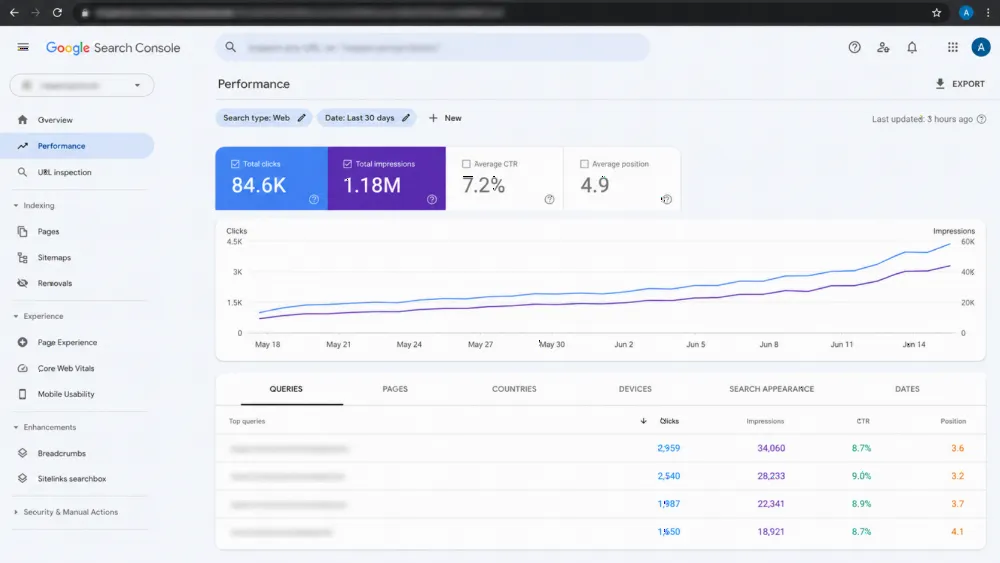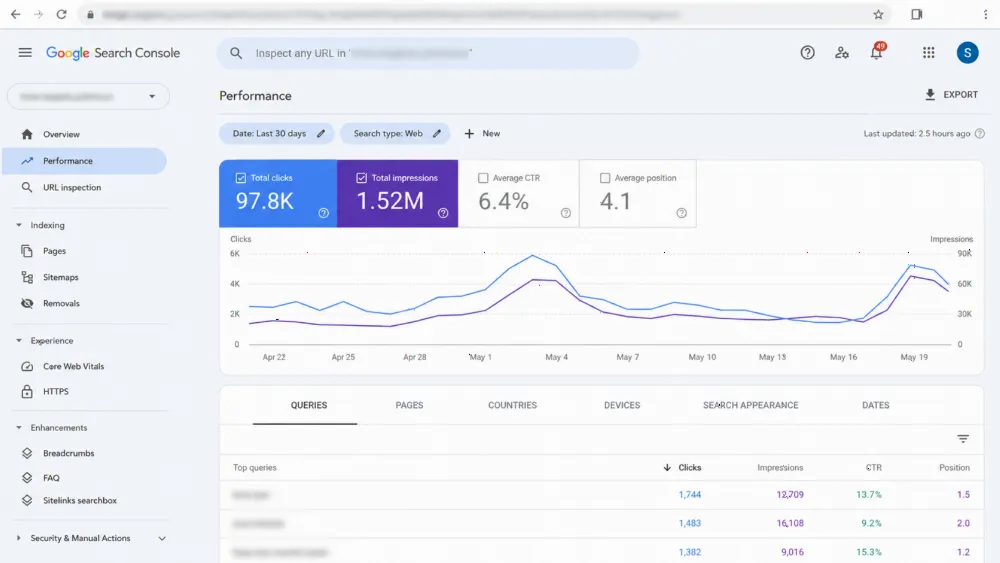
Programmatic SEO (pSEO) is a system for publishing hundreds or thousands of search-targeted pages from a single template fed by structured data — and paired with AI content operations, it becomes the fastest way for a US business to capture long-tail demand. This guide shows the full system: data, templates, AI guardrails, indexing, and ROI measurement.
Here's the uncomfortable math behind it. Ahrefs' large-scale crawl study found 96.55% of pages get zero organic traffic from Google — most of it because businesses publish a handful of generic pages while the long tail goes unanswered. Google processes billions of searches daily, and a huge share are hyper-specific queries like "emergency plumber in Round Rock open Sunday." One brilliant blog post can't cover them. A system can.
Want the system built for you? We pair data-driven SEO with SEO-friendly web development and AI automation to build programmatic engines end to end — talk to our team.
What is programmatic SEO, exactly?
Programmatic SEO means generating large numbers of landing pages from a template + a dataset, where each page targets a distinct long-tail query. You design one excellent page layout, connect it to a structured data source (usually a spreadsheet or database), and the system renders a unique page per row — per city, per service, per product, per comparison.
Think of it as the difference between a craftsman and a factory. A craftsman writes one beautiful city guide at a time; a factory builds one perfect mold and pours a thousand variations. Zillow, TripAdvisor, and Glassdoor didn't hire a writer for every neighborhood in America — they built page-generation systems. The strategy works for small businesses too, because the tooling (Google Sheets → WordPress/Webflow sync, or a headless CMS) has made the factory affordable.
For the focused walkthrough on scaling traffic this way, read our companion guide to programmatic SEO in the USA. The automation layer behind it is covered in our AI automation stack comparison and AI agent development services.
How do templates and data turn one idea into hundreds of pages?
The mechanism is simple — three parts:
- The data. A spreadsheet or database with one row per page: columns for city, service, price, rating, hours, local details. This is your single source of truth.
- The template. A page layout with fixed copy (the "head" — your core offer) and variable slots (the "modifiers" — city, price, local facts).
- The render. The system merges them: "Best [service] in [city]" becomes "Best emergency plumber in Round Rock," with that row's prices, reviews, and hours slotted in.
The URL structure follows the same logic — a head-and-modifier pattern like /services/[service]/[city]/. Predictable URLs help search engines understand the set and help users navigate it. Once the pipeline exists, adding fifty new cities is fifty new spreadsheet rows, not fifty new writing assignments.
This is also where most DIY attempts fail technically: the templating and sync layer needs clean canonicals, noindex rules for thin combinations, and sitemap automation. Our SEO-friendly web development team builds exactly that layer, and a technical SEO audit catches crawl traps before they bury new pages.
Why do long-tail keywords win the "near me" game?
Broad terms like "plumber" or "CRM software" are arenas; long-tail phrases like "tankless water heater installer in Plano with same-day service" are appointments. Fewer people search each exact phrase, but the ones who do are far closer to buying — they specified location, urgency, and need in one query.
The aggregation math is what makes pSEO powerful. Ten visits a month per page sounds trivial; ten visits across a thousand pages is 10,000 monthly visits of high-intent traffic. And competitive reality favors the specific: the average #1 ranking page is roughly five years old, and only about 1.74% of new pages crack the top 10 within a year — head terms are fortified, while long-tail modifiers remain wide open for well-structured new pages.
Targeting modifiers systematically — "under $X," "for beginners," "near [landmark]," "open Sunday" — turns your spreadsheet into a net for buyer-ready searches competitors ignore. Local service businesses should pair this with our local SEO maps ranking system so the programmatic pages and the Google Business Profile reinforce each other. Keyword-cluster prioritization for these templates follows the same method as our 2026 technical SEO playbook.
What data should feed a programmatic system?
Your pages are only as good as your spreadsheet. Strong pSEO datasets come from four sources:
- Public datasets. The US Census, BLS wage data, and state licensing databases provide free, authoritative local statistics.
- Your own records. Service menus, price lists, inventory, and coverage areas — the data competitors can't copy.
- Customer language. Exported reviews and support tickets supply the exact phrases buyers use, which become your modifiers and FAQ content.
- Third-party lists. Industry directories and supplier databases fill gaps, but verify before publishing — stale third-party data is the fastest route to thin, untrustworthy pages.
Before importing a single row, set a quality bar: accurate, current, and genuinely useful per page. A thousand rows of outdated prices is a liability, not an asset. Keeping that data fresh at scale is an automation problem — see our AI marketing-operations workflows and the n8n vs Zapier vs Make comparison.
Is AI-generated programmatic content safe for Google?
Yes — if it helps the reader. Google's position is consistent: it rewards helpful content regardless of production method, and its spam policies target scaled low-value content, not automation itself. The search engine is a librarian that wants the best book for the patron; it doesn't audit the printing press.
The failure mode is real but specific: pages that swap one city name into identical boilerplate with no unique facts. That's not a "Google hates AI" problem — it's a thin-content problem, and it fails whether a human or a model wrote it. The pages that win show accurate local pricing, real availability, genuine reviews, and specific answers — information density, not word count. For the citation side of AI content, our AI visibility audit checklist and generative engine optimization guide cover what makes AI-facing content trustworthy.
How do you keep hundreds of pages unique?
The "no-duplicate" rule is the difference between a pSEO asset and a spam footprint. Beyond the core variables, build uniqueness into the data model:
- Unique media per page. A real photo of the city, neighborhood, or storefront — not the same stock hero everywhere.
- Dynamic local facts. Population, landmarks, commute notes, local regulations pulled from your dataset.
- Localized proof. City-specific testimonials, case results, and review snippets.
- AI-written sections with guardrails. Let the model write one section per page from your approved spreadsheet facts — never free-form, never unsupervised. Constrain it to the data, forbid invention, and spot-check outputs.
This is the "AI content ops" half of the system: prompts, validation rules, and data pipelines that produce distinct, factual sections at scale. Our AI automation team builds these pipelines with guardrails so quality control is structural, not manual. The workflow automation behind these pipelines is detailed in AI automation for marketing operations.
How do you get 1,000 new pages crawled and indexed?
Publishing isn't indexing. Googlebot works on a crawl budget, and a thousand new URLs compete for it. Treat discovery like a launch:
- Automated XML sitemaps split by template, submitted in Search Console.
- Internal link pathways so every new page is reachable within a few clicks — "nearby cities" and "related services" modules baked into the template do this automatically.
- Speed. A fast site lets crawlers cover more URLs per visit; our Core Web Vitals launch checklist is the performance companion to this guide.
- Indexation monitoring. Segment Search Console coverage by sitemap and request indexing for priority clusters; prune or noindex combinations that stay thin.
For the broader crawl-budget picture, our Core Web Vitals and crawl-budget guide covers the technical mechanics in depth.
How do you link a massive site together?
Orphan pages — published but unlinked — effectively don't exist for search engines. Programmatic sites solve this structurally: the template itself generates the connective tissue. "Nearby cities" sidebars, breadcrumb trails reflecting the head-modifier hierarchy, and hub pages per service that link to every city variant create a self-linking web from day one.
Authority flows through those links, so design the hierarchy deliberately: homepage → service hubs → city pages, with contextual cross-links between related variants. Audit quarterly with a crawler for orphans and click-depth creep — at a thousand pages, entropy is the enemy. This architecture work is part of every technical SEO audit we run on scaled sites; the crawl mechanics are covered in our Core Web Vitals and crawl-budget guide.
How do you measure programmatic SEO ROI?
Don't track a thousand pages individually — track template cohorts. Group URLs by template ("all city pages," "all salary pages") and measure each cohort's sessions, rankings, and conversions as one unit. You'll quickly see which modifiers pull traffic and which templates deserve more data investment.
Then measure the labor arbitrage honestly. If fifty city pages at $100 each would cost $5,000 and two months of freelancer management, and your system produced them in an afternoon after a week of setup, the ROI is the delta — plus the compounding traffic. Keep a simple dashboard: pages published, % indexed, cohort sessions, cohort conversions, cost per page. Review monthly; double down on winning templates, prune losing ones. Scope the build with our no-retainer SEO service — pricing is transparent and project-based.
E-commerce teams can extend the same measurement discipline to feeds and product pages — our guide to e-commerce SEO automation covers schema, feeds, and flows at scale.
What does a 30-day launch plan look like?
Stop staring at the blank page. Work in four weekly sprints:
- Week 1 — Data. Assemble your spreadsheet: services, locations, prices, local facts. Quality-check every column.
- Week 2 — Template. Design the one master layout with head-modifier slots, uniqueness modules, and internal-link blocks.
- Week 3 — Connection. Wire the data to the CMS, set canonicals and noindex rules for thin combinations, and generate the sitemaps.
- Week 4 — Indexing. Publish, submit sitemaps, request indexing for priority clusters, and start the cohort dashboard.
One spreadsheet, one template, one pipeline — then scale to every modifier your buyers actually search. Businesses that build the system stop competing page-by-page and start competing on coverage. Get a fixed quote with our quote calculator, or start with a technical SEO audit to de-risk the data layer before you scale.
Frequently asked questions
Will Google penalize my site for publishing hundreds of AI-assisted pages?
No — Google penalizes unhelpful scaled content, not automation. Pages with accurate local data, unique facts, and genuine answers rank fine; pages that swap one city name into identical boilerplate get filtered as thin content. The method isn't the risk; the data quality is.
How many pages should I launch with?
Start with 50–100 pages in one well-understood template, prove indexation and traffic, then scale. Launching 10,000 untested pages risks crawl-budget chaos and makes quality control impossible. Cohort measurement tells you when to pour fuel on.
What's the real cost of building a programmatic SEO system?
A DIY build runs one to three weeks of focused work: data assembly, template design, CMS wiring, and QA. Against the alternative — hundreds of pages at $75–150 each from freelancers — the payback typically lands in the first quarter for businesses with real location or catalog breadth.
Can programmatic SEO work for a small local business?
It's often best for them. A 3-location plumber can generate service × city × modifier pages that national competitors won't bother with, capturing "near me" demand block by block. Pair it with local SEO fundamentals for the full effect.
How is programmatic SEO different from doorway pages?
Doorways are thin pages built solely to rank and funnel users elsewhere; they offer no standalone value. Programmatic pages that answer the query completely — real prices, real availability, real local detail — are legitimate landing pages. Intent and information density draw the line.
Should AI write the whole page or just sections?
Sections — with strict guardrails. Give the model your approved spreadsheet facts, constrain it to those facts, forbid invention, and spot-check. Full-page unsupervised generation drifts into hallucination and generic filler, which is exactly what gets filtered.
How long until programmatic pages rank?
Indexation typically takes 1–4 weeks for a clean, well-linked launch. Rankings compound over 3–6 months as cohorts earn links and engagement signals. The 30-day plan gets you live and measurable; the next two quarters get you dominant.
Stop writing pages one at a time. Build the system once, then let data and templates do the scaling. We design the data model, build the templates, wire the AI content ops, and monitor indexation — talk to our team to scope your programmatic engine.