Google's AI Overviews cite the pages whose specific passages best answer the question — not necessarily the pages that rank highest. To be eligible, Google confirms, a page only needs to be indexed and eligible to appear in Google Search with a snippet; there are no additional technical requirements and no special schema. The practical difference between cited and ignored pages comes down to direct, extractable answers, question-shaped headings, and trust signals — which is why a clear page at position 25 can be cited over a vague page at position 2.
What AI Overviews are, and why citations became the prize
AI Overviews are AI-generated summaries that appear at or near the top of Google's results for some queries, linking to the pages they drew from. They grew out of Google's Search Generative Experience experiment and became a default part of Search in May 2024. Google's newer AI Mode works on similar principles in a more conversational form.
They don't appear for every search. Google shows them when a summary adds something beyond the standard results — most often for "how," "why," "what is," and comparison questions, which happen to be the questions people ask before choosing a supplier. One analysis put Overviews on nearly half of tracked queries as of February 2026 (BrightEdge data, via Search Engine Journal).
The stakes changed when the summary started sitting above the blue links. Seer Interactive's November 2025 analysis found that when an AI Overview appears, overall organic click-through drops about 61% — but brands cited inside the Overview earn roughly 35% higher organic click-through than brands that aren't cited. Google itself notes that clicks from result pages with AI Overviews tend to be higher quality, with users spending more time on the site. The query is no longer won by ranking alone; it's won by being cited.
The selection mechanics Google has actually confirmed
Google publishes a page for site owners on AI features in Search, and it is surprisingly direct. Three points from that documentation shape everything else:
Eligibility is ordinary Search eligibility. "To be eligible to be shown as a supporting link in AI Overviews or AI Mode, a page must be indexed and eligible to be shown in Google Search with a snippet." Full stop. Google states explicitly: there are no additional technical requirements.
There is no special markup or file. Google says you do not need new machine-readable files, AI text files, or special schema.org structured data to appear in AI features. A file like llms.txt may help other AI systems; it is not a Google requirement. Structured data is still worth having — Google asks that it match the visible text on the page — because it helps Google parse your answers cleanly.
Answers are assembled from several searches. AI Overviews and AI Mode can use "query fan-out," issuing multiple related searches across subtopics and data sources while generating a response. That is why a page that answers the main question and the decision-critical sub-questions has more chances to be selected: it can enter the candidate pool through several doors at once.
Two more confirmed points matter for planning. First, AI Overviews only appear when Google's systems judge them additive — they often don't trigger, so you cannot earn a citation on a query type that has none. Second, the same SEO fundamentals keep deciding eligibility: crawlable robots.txt, internal links, good page experience, important content in textual form, high-quality images, and up-to-date Merchant Center and Business Profile information. Google's words, not ours: "all existing SEO fundamentals continue to be worthwhile."

What Google hasn't said — and where the studies disagree
Google does not publish how it weights candidate pages, so the rest comes from independent research. Be skeptical of any guide that presents internal mechanics as settled fact; Google keeps that part private.
What the research consistently finds:
Ranking helps, but it is not the deciding factor. Ahrefs analyzed 863,000 search results and 4 million AI Overview URLs in March 2026 and found that only about 38% of AI Overview citations came from pages in Google's top 10 organic results; the rest were drawn from positions 11–100 and beyond. An earlier, more loosely measured Ahrefs study had put the overlap near 76% in mid-2025. Other studies land in between. The exact share is disputed; the direction is not: a page-one ranking is no longer a prerequisite for being cited.
Selection happens at the passage level. AI Overviews don't quote pages — they quote paragraphs, table rows, and list items. A page that ranks for a broad keyword but contains no clear, extractable answer gets skipped; a lower-ranked page with a precise, well-formatted answer gets chosen. That passage gap between ranking and being cited is the core of generative engine optimization as a discipline distinct from traditional SEO — and it is exactly where AEO and traditional SEO differ.
Freshness and authority tilt close calls. Cited sources skew fresher than standard results, and pages with named authors, publication dates, outbound citations to primary sources, and original data get chosen more often. None of this is a Google-published ranking factor for AI features — treat it as well-evidenced practice, not official doctrine.
Confirmed facts vs. common myths
| Claim | Verdict |
|---|---|
| "You need special AI schema or a special file to appear." | Myth. Google: no additional technical requirements, no special schema. |
| "Only top-3 pages get cited." | Myth. Most citations in recent studies come from outside the top 10. |
| "Being indexed is enough." | Confirmed requirement, not sufficient. Indexing plus snippet eligibility is the gate; selection is a separate contest. |
| "Fresh content always wins." | Partially true. Freshness helps time-sensitive queries; evergreen depth wins stable ones. |
| "You can pay Google or submit your site for citation." | Myth. There is no submission process and no ads product for citations. |
| "AI Mode cites the same pages as AI Overviews." | Unconfirmed. Google says they may use different models and techniques, so cited sets vary. |
| "Opting out of AI training removes you from AI Overviews." | Myth. The Google-Extended control limits training and grounding in Google's other systems. For Search features, the controls are nosnippet, data-nosnippet, max-snippet, and noindex. |
| "A higher ad spend improves your citation chances." | Myth. No evidence and no mechanism; selection is organic. |
The 7-step playbook: make your business citable
Everything below follows from the confirmed mechanics plus the research. Work through it in order — each step builds on the last.
Step 1 — Make the page crawlable and indexed. Check robots.txt allows crawling, the page is in your sitemap, and Search Console shows it indexed. A page Google can't crawl is invisible to AI Overviews by definition.
Step 2 — Lead with the direct answer. Open each section with a concise 2–4 sentence answer, then support it. AI systems lift self-contained answers; an answer buried in paragraph six won't be extracted. Aim for the answer-first style used throughout this article.
Step 3 — Use question-shaped headings. Format H2s as the actual questions people ask, covering the main query and the follow-up sub-questions (cost, timeline, risks, comparisons). This mirrors how our guide to llms.txt structures machine-readable Q&A — and it gives query fan-out more of your passages to find.
Step 4 — Keep key content in crawlable HTML text. If your answer only exists inside images, videos without transcripts, or JavaScript that renders late, it may be missed. Server-rendered text is the safest format.
Step 5 — Add structured data that matches the visible page. FAQ and Article markup won't force inclusion — Google says no special schema is required — but accurate markup that mirrors your visible content helps Google parse and extract your answers without ambiguity.
Step 6 — Show real E-E-A-T. Use a named author with a real bio, visible publication and update dates, outbound links to primary sources, and original data or frameworks where you can. AI Overviews favor sources that demonstrate genuine expertise over pages that merely summarize others.
Step 7 — Build entity consistency off your site. Keep your business name, description, and details identical across your website, Google Business Profile, and directories. Earn mentions in the sources Google already trusts — trade press, review sites, industry roundups. Independent testing finds brand mentions elsewhere matter as much as on-page work; a full AI visibility audit checklist is the systematic way to close these gaps.
One more business-specific note: for "near me" queries, AI Overviews rarely appear — the map pack still dominates. Pursue both: local SEO for the map pack, citation-readiness for the informational queries where buyers do their research.

What Google won't cite
There is no published exclusion list, but the eligibility rules imply one:
- Pages blocked from crawling — noindex tags, robots.txt disallows, or login walls.
- Content hidden from Googlebot — key text that only renders after JavaScript executes, or answers trapped inside images.
- Paywalled content — rarely cited; if your best research is gated, it won't appear.
- Purely promotional pages — AI Overviews avoid content that reads as advertising. Informational depth gets cited; product pitches don't.
- Thin or duplicated content — pages that only restate what stronger sources already say add nothing for the model to quote.
How to measure whether it's working
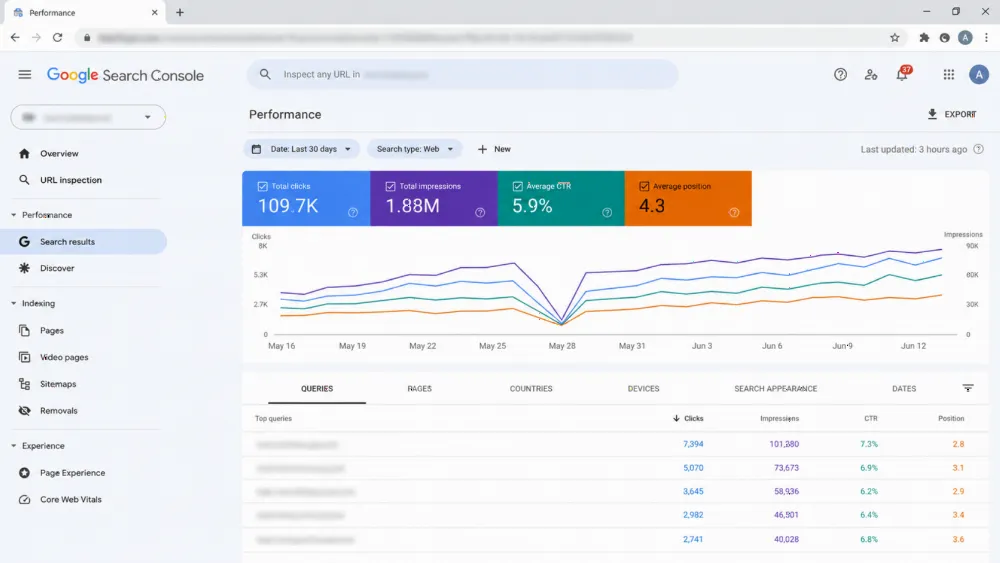
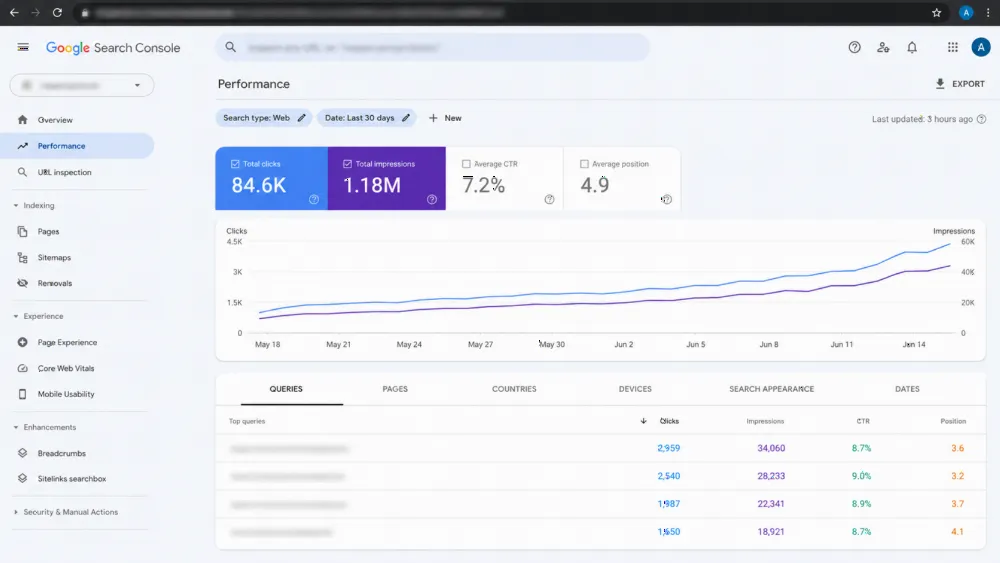
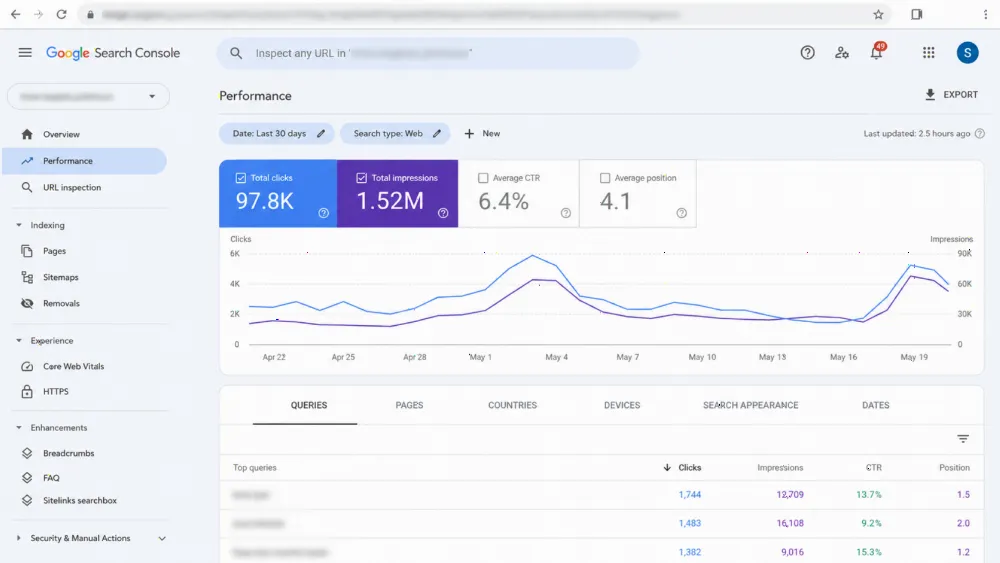
AI feature appearances are counted in Search Console's Performance report under the "Web" search type, alongside the rest of your search traffic — AI-specific reporting has been expanding, so check what your property shows. In practice:
- Track impressions vs. clicks on informational queries. If impressions hold or rise while clicks fall on "how to" and "what is" queries, an Overview may be intercepting your traffic.
- Manually check your money queries. Search your top 20–30 customer questions signed out, note whether an Overview appears and which businesses it cites. Re-check monthly — citation sets shift as content and rankings change.
- Compare cited vs. non-cited pages. Pages that earn citations show you what's working; pages that rank but never get cited show you where format, not ranking, is the problem. And before investing heavily, run a free AI visibility check to see where your brand currently appears across Google, ChatGPT, Gemini, and Claude — because Google is only one of the answer engines that now shape buying decisions. Our guide to getting ChatGPT to recommend your business covers the other side of that coin.

Frequently asked questions
Do I need to rank #1 to be cited in an AI Overview?
No. Ranking helps — most studies still find a strong correlation — but it is neither required nor sufficient. Ahrefs' March 2026 analysis of 4 million AI Overview URLs found only about 38% of citations came from top-10 pages. A page that answers the specific question directly, in extractable form, regularly beats higher-ranked pages that don't.
Is there a special schema, tag, or file that gets you into AI Overviews?
No. Google states there are no additional technical requirements beyond being indexed and snippet-eligible, and no special schema.org markup is needed. Accurate FAQ and Article markup that matches your visible content helps Google parse your answers, but markup alone is not a shortcut. Files like llms.txt serve other AI systems, not Google's requirement.
Can I pay Google to cite my business?
No. There is no submission process, no application, and no advertising product that buys AI Overview citations. Selection is organic, driven by the indexed content Google's systems can retrieve and quote.
Will being cited steal my website traffic?
It's mixed, and honesty matters here. When an AI Overview appears, overall organic click-through drops roughly 61% (Seer Interactive, November 2025) — uncited pages lose. But brands cited inside the Overview earn about 35% higher organic click-through than non-cited competitors, and Google reports that clicks from these result pages are higher quality. For complex buying questions, a citation is often worth more than the ranking it sits above.
How long does it take to start appearing in AI Overviews?
There is no fixed timeline, and anyone promising one is guessing. If your pages already rank, reformatting them around direct answers can be picked up as soon as Google recrawls. Building rankings from zero takes longer. The fastest honest wins come from tightening answer formatting and structured data on pages that already perform.
The bottom line
AI Overviews didn't change what Google wants from your pages — they changed which parts of your pages matter. The same fundamentals still decide eligibility, but citations are won passage by passage: direct answers up front, question-shaped headings, sub-question coverage, and visible expertise.
Start with one page: pick the customer question you most want to own, rewrite it answer-first using the playbook above, and check it in Search Console a few weeks later. Then repeat across the questions your buyers actually ask. If you want a structured baseline first, our AI visibility check shows exactly where your brand stands across today's answer engines — and the audit checklist turns the gaps into a work plan.