Use Modern Standard Arabic (MSA) as the voice of your corporate website, and give Saudi dialect defined, deliberate places — support replies, campaign lines, chat openings — under native Saudi review. Neither extreme works: an all-MSA site sounds distant to customers, and an all-dialect site sounds unserious to executives and regulators. Your firm needs not a preference but a rule, set page type by page type.
This article assumes your site architecture already exists. If that choice is still open, settle it first with our guide to Arabic-first or Arabic-added website design. Voice comes after architecture.
The short answer: MSA carries the corporate site — dialect earns defined places (matrix)
The two registers do two jobs. MSA is the written, formal register every educated Saudi reader shares: it carries contracts, tenders, investor information and service descriptions. Saudi dialect is the spoken register of daily life: it carries warmth and immediacy, and belongs where the page is having a conversation rather than making a statement.
| Page type | Default voice | Where dialect may appear |
|---|---|---|
| Corporate (About, leadership, investor, careers) | MSA | A welcome line or employee quote, reviewed |
| Product and service pages | MSA | Headline warmth in consumer offers only |
| Support and help content | Clear, plain MSA | Greetings, chat openings, worked examples |
| Campaign and landing pages | MSA base | Saudi dialect headlines and calls to action |
| Legal, terms and compliance | MSA only | Nowhere |
Diglossia in one page: why Saudi readers expect two registers, not one
Arabic lives in two registers at once — the pattern linguists call diglossia. MSA is the language of news broadcasts, official documents, contracts and formal writing; no one uses it as their everyday conversational language. Spoken life runs in regional dialect: at work, in shops, in WhatsApp messages and across social media. A Saudi learner guide makes the same split: MSA for newspapers, documents and contracts; Saudi Arabic for colleagues, customers and friends.
Your readers therefore do not expect one voice everywhere. They switch registers themselves and expect the page to match. A tender in chatty dialect would alarm them; a support reply written like a decree frustrates them. The site fails when it uses the wrong register for the page — or mixes them at random because three translators made three different calls.
The page-type matrix: corporate, product, support, campaign and legal, page by page
Corporate pages — About, leadership, governance, investor relations, careers — address peers, partners and officials. Keep them in MSA throughout: it signals stability and favours no Saudi region over another.
Product and service pages also default to MSA, because precision matters more than familiarity. The exception is consumer-facing offers, where a headline may borrow everyday Saudi phrasing — while details, conditions and calls to action stay in clear MSA beneath it.
Support content is the hybrid zone. Write instructions, steps and policies in plain MSA any reader can follow, then let greetings and chat openings sound like a helpful Saudi colleague. As an Arabic customer-experience analysis notes, written channels standardise on MSA while conversational channels succeed in the customer's own dialect — and a Saudi customer handled in a Levantine register experiences the interaction as foreign.
Campaign pages earn the widest dialect licence. Dialect headlines, hooks and calls to action are appropriate here, provided the legal footnotes stay in MSA. Legal, terms, privacy and compliance pages admit no dialect at all: they must align with the formal Arabic of the underlying documents and read identically for every reader. Warmth there is not friendliness; it is risk.

Where dialect helps on a corporate site — and the exact lines it should not cross
Dialect helps where the page is conversational, time-bound or emotional: campaign headlines, social posts that feed the site, chat and WhatsApp opening lines, support greetings and event invitations. There, a well-judged Saudi phrase tells the reader the firm is present in their daily life, not broadcasting at it.
Draw the line at anything that creates an obligation or a record. Dialect should not carry prices, specifications, contractual terms, safety instructions or regulatory statements, and should never be improvised by a non-native writer: a dialect line that is slightly wrong reads worse than clean MSA. If no native Saudi reviewer can check it, publish in MSA.
Saudi is not one dialect: Najdi, Hijazi and the risk of borrowing another country's voice
Inside Saudi Arabia, "dialect" is plural. Najdi Arabic is associated with Riyadh and the central region; Hijazi varieties are heard across Jeddah, Makkah and Madinah. They differ in vocabulary and pronunciation. For a national corporate site, that is another argument for the MSA base: it belongs to no region, so it favours none. Use regional dialect deliberately — a Jeddah event page may sound Hijazi, a Riyadh campaign Najdi — and a light, widely understood Saudi register when one piece serves the whole Kingdom.
The larger risk is borrowing another country's voice entirely. Egyptian and Levantine Arabic dominate regional advertising production, so creative often arrives in Riyadh already voiced elsewhere. Saudi readers recognise it instantly, and the mismatch reads as distance. Treat voice as part of your branding for Saudi Arabia, not as a translation afterthought.

The search dimension: queries arrive in dialect even when pages answer in MSA
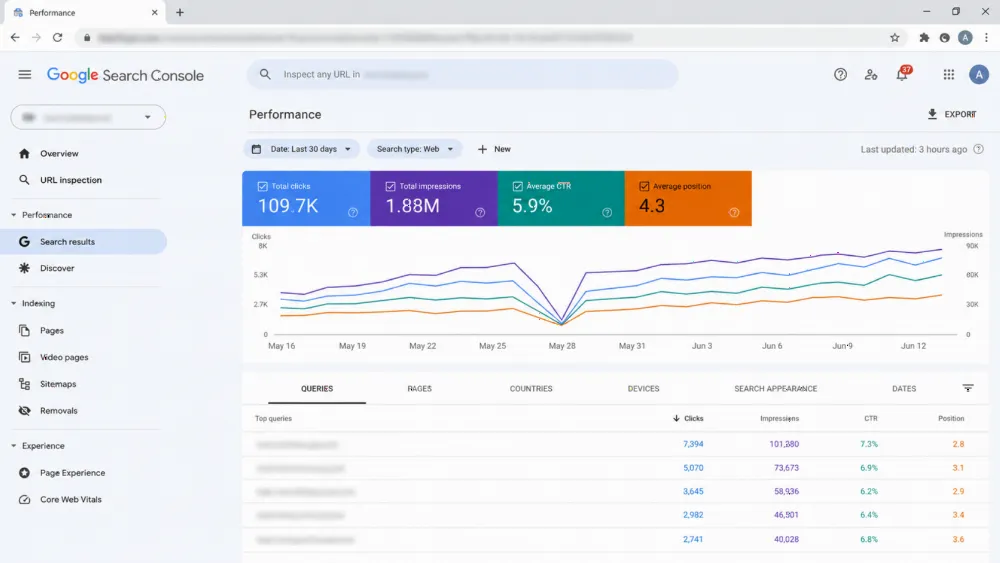
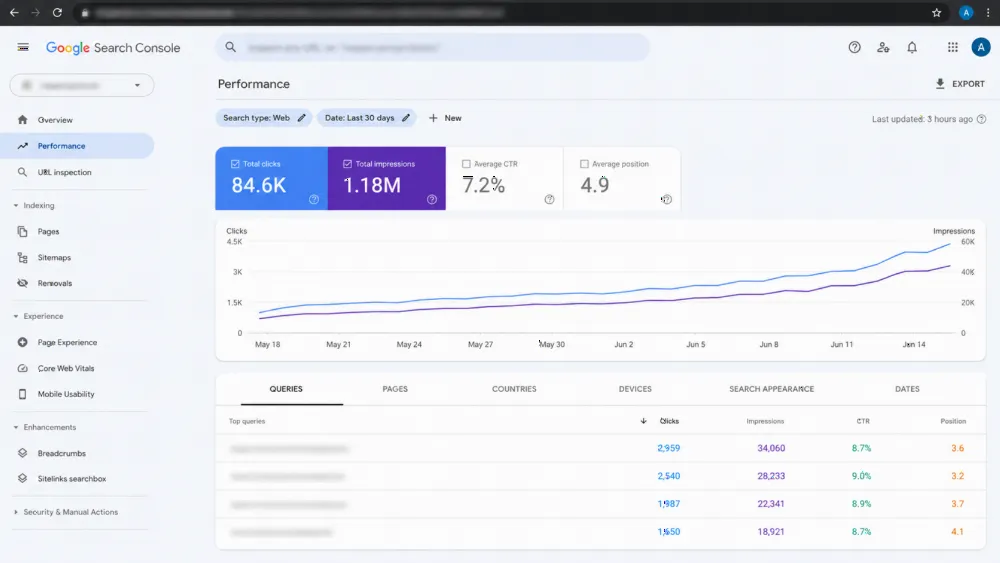
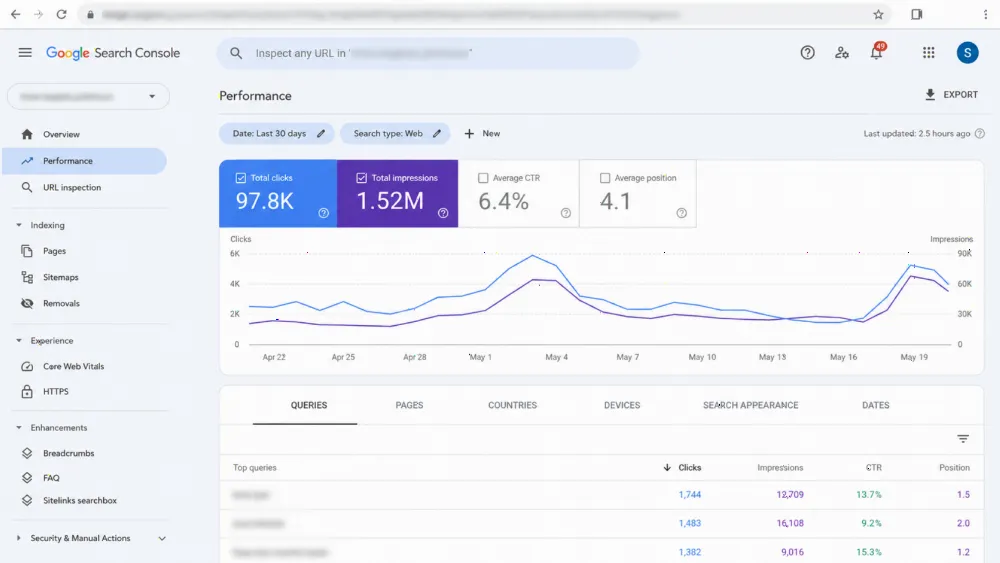
Voice is a copy decision, but it has a search shadow. Saudis often type and speak queries in everyday words — the phrasing they would use with a colleague — even though the page that best answers them is written in MSA. Do not rewrite corporate pages in dialect to chase those queries. Instead, review the Arabic queries already bringing visitors to your site, note the everyday terms that recur, and make sure they appear naturally in headings, FAQs, examples and support content — while the answer stays in clear MSA.
Our Arabic keyword research guide covers collecting and mapping those queries; this article owns the copy decision once they are known. Paired with sound SEO for a bilingual Arabic-English website, the site is found in the language people search in and trusted in the register each page demands.
Govern it: terminology list, voice guide and native Saudi review before launch
A matrix works only if it is written down and enforced. Three artefacts do the governing. First, a terminology list: the approved Arabic rendering of your company name, products, services and recurring concepts. Second, a short voice guide: the matrix, approved examples per page type, the lines dialect must not cross, and who may approve exceptions. Third, a review rule: no Arabic page ships without a native Saudi reviewer checking register as well as accuracy.
Keep the guide short: a page or two, stored where writers and translators actually work. The goal: every writer makes the same voice call on the same page type without a meeting. That consistency is what makes a corporate site sound like one Saudi company.

Common mistakes: the campaign dialect that embarrassed the corporate brand
The classic failure runs like this: an agency produces a lively campaign in a non-Saudi dialect, it performs on social media, and the lines migrate onto the corporate homepage — where procurement managers read a national firm performing someone else's accent. The reverse failure is just as common: legal reviews every page into stiff MSA, support replies read like circulars, and customers conclude the company does not want to talk to them.
Other recurring mistakes: mixing registers inside one page because sections had different translators; untranslated English legal leftovers; dialect copy approved with no native reviewer; and the voice decision re-argued on every new page. Each is a governance failure, not a talent failure — fixed by the matrix, the terminology list and the review rule above.
FAQ
Should our main corporate website be in MSA or Saudi dialect?
In MSA, as the base voice. It carries corporate, product and legal pages credibly for every region, while dialect earns defined places in campaign and support content under native review. A dialect-only site risks sounding unserious to decision-makers.
Can dialect copy sit on the same page as MSA?
Yes, if the split follows the page's job: a dialect greeting or headline above MSA instructions and terms. What fails is random mixing, where sections switch register by accident. Set the split in your voice guide.
Which Saudi dialect should a national company use?
Neither as the base — MSA is region-neutral. Reserve Najdi colouring for Riyadh and the central region, Hijazi colouring for Jeddah, Makkah and Madinah, and a light, widely understood Saudi register for national conversational content.
Will writing pages in MSA hurt our Arabic search visibility?
Not if you handle queries deliberately. Reflect the everyday dialect terms from your own query data in headings, FAQs and examples, and keep the answer in clear MSA. Check Search Console rather than assuming dialect pages rank better or worse.
Who should approve Arabic website copy before launch?
A native Saudi reviewer who understands register, not only grammar — ideally able to judge both Najdi and Hijazi usage. They check each page against your terminology list and voice guide before it ships.
Get your Saudi website's Arabic voice set as part of the build (CTA)
If your Arabic pages currently sound like three different companies, the fix is a voice decision made once, properly, rather than another round of retranslation. We set the Arabic voice as part of designing and building the site, so every page type ships in the right register from day one. Start with our web design for Saudi Arabia team, and explore our wider work in Saudi Arabia.