Industrial enquiries are decided earlier than most suppliers realise. Before any relationship is used, an engineer or procurement officer searches for a grade, a standard, a capacity or a part description, and shortlists from what search returns and what the supplier's pages can prove. If your specifications are not findable as web pages, you are not on that shortlist — and no one tells you.
The short answer: how procurement actually searches, and what your site must expose
Procurement search is specification-led. Buyers rarely search a company name first; they search the thing they must buy, described precisely — a material grade, a pressure rating, a standard, a capacity, a part number or its cross-reference — then verify the suppliers who surface. The searches run in English for technical terms and in Arabic for category and procurement language, often from the same team in the same week. So B2B SEO for a Saudi industrial supplier means one thing: every specification, certification and capability you want to be shortlisted for must exist as an indexable, readable page, in the language the buyer used. The general pipeline frame sits in our guide to B2B SEO strategy from keywords to pipeline; this article covers its industrial layer.

The invisible shortlist: why relationship-only suppliers never see the enquiries they lose
Relationships still close industrial deals in Saudi Arabia, but they increasingly do not start them. An engineer in Jubail, a maintenance lead in Yanbu or a procurement officer in Riyadh begins with a search, assembles a shortlist, and only then do relationships decide between the firms on it. The supplier who was never found experiences this as silence: no enquiry, no rejection, no signal a search happened. Tender portals such as Etimad have their own role in formal procurement, but they do not replace the open web search a buyer runs beforehand — and portal registration is a procurement step, not a visibility strategy. Your real competitor set is the firms a search returns for the specifications you supply.
Mine the real queries: RFQs, tender documents, site search and sales-team language
Forget brainstorming keywords from a tool. The highest-intent queries in industrial supply already exist inside your business, unmined. Start with RFQs and enquiry emails from the last two years: the exact wording buyers used — grades, standards, sizes, quantities, delivery locations — is your first query list. Add tender documents, which reveal the formal vocabulary procurement writes specifications in. Then read your site-search logs: every zero-result search is a buyer telling you what they expected to find. Finally, record the phrases customers use on sales calls, in both languages. Tools can organise this list afterwards, but they report industry averages; your documents contain the language of buyers who already pay you. A bought list describes an industry. An RFQ describes a purchase.
Two languages, one shortlist: English specification searches and their Arabic equivalents
Saudi industrial search is bilingual in a specific pattern. Technical specification terms — grades, standards, part references — are usually searched in English, the language of datasheets and standards. Category, capability and procurement searches — who supplies this, who fabricates that, companies in a named industrial city — are frequently searched in Arabic, by the same organisations, sometimes by the same person at a different stage. Treat these as one shortlist, not two markets. Each core product needs a page that answers the specification query in English and is discoverable for its Arabic equivalent, through a properly built bilingual structure — deliberate, not machine-translated, because procurement readers test credibility in whichever language they land in. Keep one canonical page per intent per language.

Free the specifications: catalogue and datasheet content in HTML, not PDF-only
The most common failure on Saudi supplier sites is the PDF-only datasheet. A PDF catalogue feels complete to the company that published it, but to a searching buyer it is a brick wall: search engines index PDFs weakly, the specifications are not structured as readable product information, and a buyer on a phone at a plant cannot scan one specification inside a two-hundred-page file. Free the specifications instead. Give each product family — and each significant product — an HTML page carrying the full specification in text and tables: grades, dimensions, tolerances, standards, capacities, materials, compatibility. Keep the PDF as a download on that page. The page is the asset that gets found and shortlisted. For fabrication businesses, the same applies per capability: a page per process, material and capacity range, instead of one generic "services" page. Our guide to manufacturing and industrial website design covers the site foundation these pages need.
Proof that can be found: certifications, capacities and reference projects as pages
Procurement shortlists on proof, and proof only works if it can be found and read. A certification logo in a footer proves nothing to a search engine and little to a careful buyer. Give each significant certification its own page or structured section: the certifying body, the scope — which products, processes or sites it covers — and the certificate detail as readable text, not only a scanned image. Do the same for capacity: production capacity and equipment ranges in the plain terms a buyer searches. Reference projects deserve the same treatment: a page per significant project or sector — scope, specifications supplied, location — without claims you cannot support. A claim that exists only as an image does not exist for shortlisting.

Catalogue mechanics: faceted navigation, variants and crawl waste, kept under control
Once specifications live on pages, catalogue mechanics decide whether search engines can use them. Google Search Central's guidance on faceted navigation makes the problem plain: filter combinations — by grade, size, standard, material — can generate near-endless URL variations, wasting crawl attention and diluting the pages that matter. Decide which combinations deserve an indexable page — usually those matching real, repeated buyer searches — and keep the rest out of the index through canonicalisation and crawl controls. For variants: sizes or grades buyers search for individually may each merit a page; trivial variants belong on one strong page. Structured data in the schema.org Product and Organization vocabulary helps search engines read specifications consistently — see our guide to structured data for Arabic websites. If your catalogue has grown organically, a technical SEO audit shows what is indexed and what is waste.
Be citable: entity and product data for AI-assisted shortlisting
Buyers increasingly ask AI assistants for supplier suggestions before they search at all, and those answers are assembled from the same findable, structured evidence described above. There is no separate trick. An assistant can only cite a supplier whose identity, products and proof are published clearly and consistently: legal and trading names used the same way everywhere, locations stated plainly, capabilities in readable text with structured data behind them. Keep claims specific and verifiable, and pages current — stale capacity pages get repeated as confidently as fresh ones. No one can promise a citation; you control whether your firm is legible to the systems shortlisting.
Measure what matters: RFQs and qualified enquiries by landing page
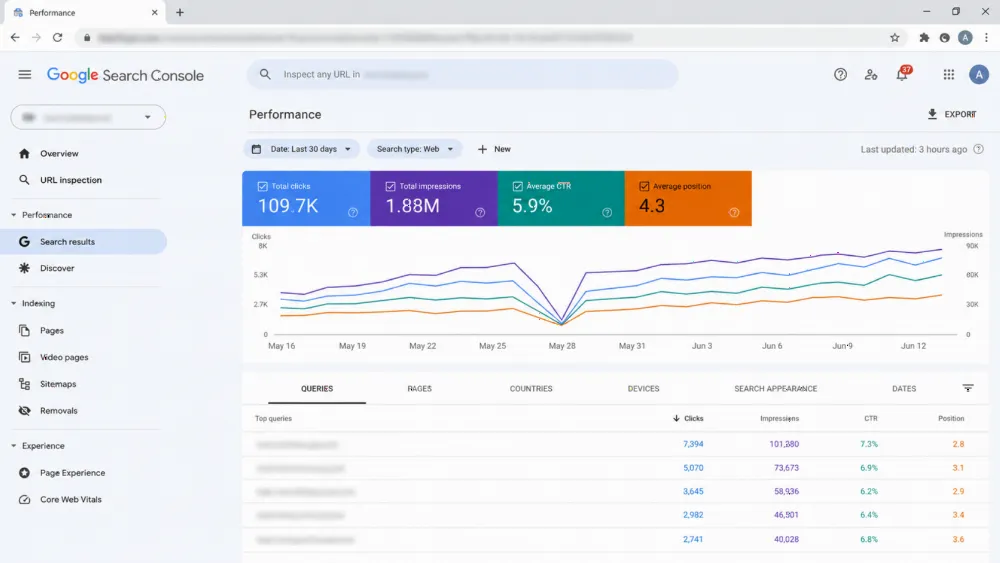
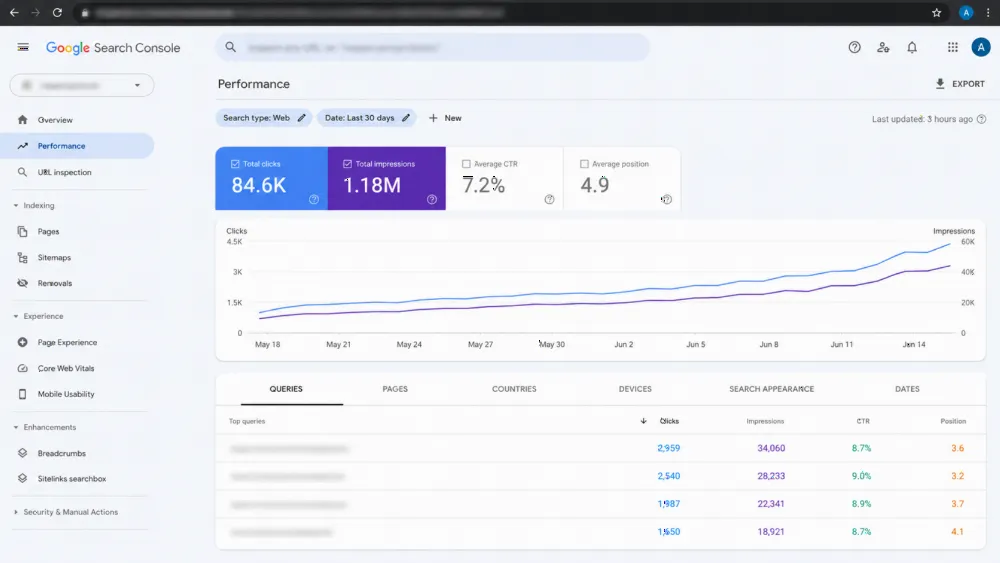
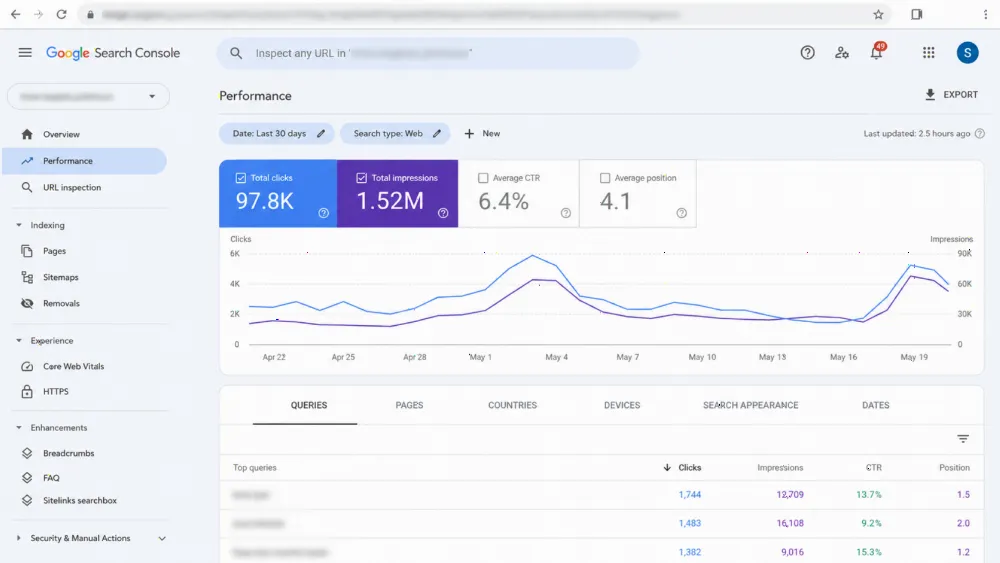
Industrial SEO fails quietly when measured like consumer marketing. Sessions and traffic can rise while enquiries stay flat, because a handful of specification searches from real buyers outweighs thousands of casual visits. Measure the programme by RFQs and qualified enquiries, attributed to the landing page that produced them: which specification pages generate enquiries, which sales judges qualified, and which reach quotation. Track site search the same way — successful internal searches for a specification usually precede its enquiries. Review the numbers with sales, not only marketing, and let the results direct the next pages: specification families that already produce enquiries deserve depth first. It is slower feedback than a traffic dashboard, and the only feedback that pays. Wider context sits in our guide to web development in Saudi Arabia.
Common mistakes: the brochure site and the keyword list bought from a tool
The brochure site is the root mistake: home, about, a products page of photographs, and a contact form — giving search nothing to find and buyers nothing to verify. Behind it sit the supporting errors. Specifications only as PDF catalogues or scanned images. A keyword list bought from a tool, full of generic terms nobody buys on, while the firm's real RFQ language goes unmined. One "products" page carrying fifty specification intents at once. Certifications as footer logos. Reporting built on sessions, which lets a programme look healthy while the shortlist forms elsewhere. Each is fixable with the method above, in order: mine, publish, prove, then measure.
FAQ
Do PDF datasheets hurt our search visibility?
They limit it. A datasheet inside a large PDF is far weaker than the same specification on a dedicated HTML page, which can be structured as product information and landed on directly from a specification search. Keep the PDF as a download; let the page carry the specifications in readable text.
Should our product pages be in English or Arabic?
Both, deliberately. Specification terms are usually searched in English, while category and procurement searches are often in Arabic. Publish core products so each intent is answered in the language it is searched in, one canonical page per intent per language — never a machine-translated copy.
How do we find the keywords our buyers actually use?
Mine your own documents first. RFQs and enquiry emails show the exact specification wording buyers used; tender documents show formal procurement vocabulary; site-search logs show what visitors expected to find; your sales team knows the spoken terms in both languages. Tools can organise that list afterwards — the list itself should come from real purchases.
Does registering on Etimad replace SEO for government work?
No. Etimad is the official platform for government procurement; registration belongs to your tendering operation. It does not make products findable in open searches, nor cover private-sector procurement. Portal registration and search visibility are two separate jobs.
How should we judge whether industrial SEO is working?
By RFQs and qualified enquiries, attributed to the landing pages that produced them — not sessions or rankings alone. Review quality with sales, watch which specification pages generate quotation-stage conversations, and build depth there first.
Get found at specification stage, not after the shortlist closes (CTA)
If your specifications still live in PDFs and your enquiries depend on who already knows your name, the shortlist is forming without you. Start with the method above — mine your RFQs, free the specifications, publish the proof — or have it run for you through our SEO services for Saudi Arabia. See also our work across the Kingdom on our Saudi Arabia page.