Yes — you can get ChatGPT to recommend your business, but not by gaming it. ChatGPT names businesses it can verify across trusted, independent sources, so the winning strategy is building consistent, verifiable evidence of credibility across the web: Bing indexing, unblocked AI crawlers, consistent business details, human-validated mentions, and answer-first content.
Want to know where you stand today? Run WebstackRank's free AI visibility check — it flags blocked AI crawlers, indexing gaps, and missing trust signals in under a minute.
How does ChatGPT decide which businesses to recommend?
ChatGPT doesn't browse your ads or admire your homepage design. It synthesizes an answer from sources it trusts, and it leans toward claims repeated across independent, credible places rather than anything you've said about yourself. Understanding that synthesis is the whole game — every tactic below traces back to one of these signals.
Consensus across independent sources. AI models are designed to avoid hallucinating, so they favor facts stated consistently in multiple places. One brilliant "About us" page loses to five independent sources saying the same thing about you.
Branded mentions, linked or not. A study of 75,000 brands found that branded web mentions correlate at roughly 0.67 with AI-search visibility — the strongest factor the researchers measured. Brands in the top quartile of mention volume appeared in AI answers about 10x more often. Critically, ChatGPT counts unlinked brand mentions; most classic SEO tools don't, which is exactly why so many businesses miss this lever (Ahrefs, via secondary reporting, 2026).
Bing index coverage. ChatGPT's live-search layer leans heavily on Bing. If your key pages aren't indexed in Bing, a big chunk of ChatGPT's retrieval simply can't see you — and most agencies never check this.
Human-validated sources. Reddit, review platforms, YouTube, and reputable "best of" roundups carry disproportionate weight because real people vouch there. Wikipedia and Reddit together account for more than 25% of ChatGPT citations in cross-engine studies. YouTube brand mentions were the single strongest platform-level correlate with AI visibility (Ahrefs).
Your own site as the reconciliation source. Your website is the primary source ChatGPT cross-checks everything else against. Clean, answer-first pages with entity schema form the foundation; off-site signals stack on top of it.
That's also why this matters beyond ChatGPT: Google AI Overviews now trigger on roughly 48% of queries, and being cited there delivers about 120% more organic clicks per impression than appearing uncited (Seer Interactive) on the same results page (Seer Interactive, 2026). The same trust work feeds every answer engine — which is the subject of our AEO vs SEO breakdown and our AI visibility audit checklist.
Why can't you just pay ChatGPT for placement?
Because ChatGPT recommendations are organic, earned through trust and consensus signals — not sold. There is no ads program inside ChatGPT answers, and anyone selling "guaranteed ChatGPT placement" is misleading you. The research backs this up: ChatGPT produces answers with the longest citation lists of any engine (about 10.4 citations per response on average) yet names brands only about 20.7% of the time (Semrush with Kevin Indig / Growth Memo). It will happily use your content and never say your name unless the mention signals are strong enough.
The absence of a pay-to-play lever is actually good news for smaller businesses. It means the playing field is evidence, not budget — and evidence can be built systematically. Local businesses face exactly the same rules; see our AEO guide for US local businesses for how neighborhood-level trust signals work.
What are the 7 steps to earn ChatGPT recommendations?
Here is the practical sequence, ordered by leverage: fix the gates first (steps 1–2), then build the evidence (steps 3–7).
Step 1: Fix your Bing presence first
Since ChatGPT search relies heavily on Bing, submit your site to Bing Webmaster Tools and confirm your key pages are actually indexed there — a step most agencies skip entirely. Check that your sitemap is submitted, your robots directives don't accidentally block Bingbot, and your most important pages appear in Bing's index (search site:yourdomain.com in Bing). This is the single most-skipped fix in AI visibility, which is precisely why it's first.
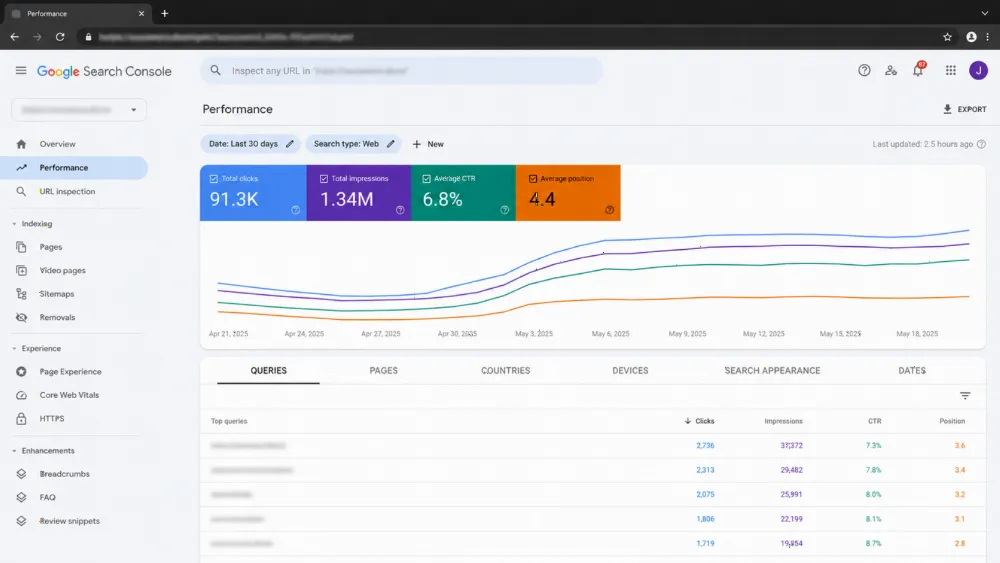
Pitfall: Optimizing only for Google Search Console and assuming Bing follows. It doesn't always — Bing has its own crawl, its own index, and its own Webmaster Tools. Treat it as a separate search engine, because for ChatGPT it effectively is.
Step 2: Unblock the AI crawlers
Check your robots.txt — if it's blocking GPTBot or OAI-SearchBot, you're invisible to ChatGPT no matter what else you do. This is a surprisingly common mistake, often inherited from a template that blocked "all bots" during staging and never got cleaned up. Our free AI visibility check flags this in seconds, and the full AI visibility audit checklist walks through the other crawler directives worth reviewing.
Method: Serve a clean robots.txt that allows the AI crawlers you want, plus a server-side-rendered or static version of key pages so non-JS crawlers can actually read them. Don't forget llms.txt — a cheap, low-effort file that disambiguates your brand and points AI systems at your most authoritative pages.
Step 3: Make your details identical everywhere
Your name, services, and location must read identically across your website, Google Business Profile, directories, and listings. Contradictions make AI uncertain about which entity you are — and uncertain means unmentioned. Pick one canonical business name, one address format, and one service vocabulary, then audit the top 20 directories and your social profiles against it.
Pitfall: Slight variations ("WebStackRank" vs. "Web Stack Rank" vs. "webstackrank.com") split your entity in the eyes of retrieval systems. Consistency is how scattered mentions consolidate into one recognizable brand.
Step 4: Earn mentions — especially human ones
Get named in "best [service] in [city]" roundups, answer real questions on Reddit and Quora, and build reviews on third-party sites. This is the highest-effort, highest-return layer: the 75,000-brand analysis put branded-mention volume at a ~0.67 correlation with AI visibility — the strongest measured factor. YouTube mentions correlate especially strongly, so video content and podcast appearances punch above their weight.
What actually works: Participate genuinely where buyers talk (Reddit threads, industry forums, LinkedIn long-form), pitch data-led stories to journalists, and sponsor or speak at events that get covered. For niche tactics by industry, see our guides on generative engine optimization for SaaS and GEO for Dubai businesses. Never buy fake reviews or mentions — AI spam systems and buyers both catch it, and one exposure undoes months of work.
Step 5: Write answer-first content
Put the exact question a buyer would ask in the heading, then answer it in the first two sentences beneath — self-contained, fact-dense, and quotable. That is the precise format AI lifts and cites. Then expand with method, example, and pitfalls for human readers.
Why this format wins: Peer-reviewed research (the Princeton-lineage GEO studies presented at KDD '24) found that adding statistics lifted generative-engine visibility by 32–41%, and adding direct quotations plus authoritative citations lifted it 30–41%. Almost no other content tactic has comparable academic evidence behind it. If you do one optimization pass this quarter, add real statistics, source citations, and quotable expert lines to your key pages.
Step 6: Collect real reviews everywhere buyers look
Reviews on Google and third-party sites are consensus signals AI reads directly. Prioritize the review platforms your category actually uses (not just Google), respond to every review, and make leaving one frictionless — a post-purchase email with a direct link beats a passive "review us" page. Volume and recency both matter; a trickle of recent reviews beats a burst from 2023.
Step 7: Publish original, first-hand data
The cheapest moat in 2026 is being the only source of a specific fact: a real client result, a price benchmark, a short survey, a dataset nobody else has. AI quotes specifics and skips fluff — and original data earns the editorial links and mentions that feed steps 4 and 6. One genuine study per quarter outperforms twelve generic listicles.
How long does it take to get recommended by ChatGPT?
It varies by engine. Perplexity reflects changes within weeks; ChatGPT moves as its underlying sources (Bing's index, Reddit, reviews) update, so most businesses see movement within 6–8 weeks of consistent work. Wikipedia, once earned, is sticky; review platforms update fastest; Bing indexing can shift in days. Set expectations accordingly: this is a compounding asset, not a campaign — and our services overview shows how measurement, content, and authority building combine into one system.
How do you measure whether it's working?
Pick 20–30 real prompts your buyers would actually ask — "best [category] in [city]", "[competitor] alternatives", "[your category] for [use case]" — and run them on a fixed schedule across ChatGPT, Perplexity, and Gemini. For each prompt, record three things: whether you were mentioned at all, roughly where you appeared in the answer (first name vs. buried in a list), and which sources the answer cited.
Run this monthly, not weekly — answers shift as models and indexes update, but not fast enough to reward weekly checking. That share-of-answer is your scoreboard, not keyword rank. At small scale a spreadsheet works fine; once you're tracking dozens of prompts and competitors, dedicated monitoring tools automate the panel. This measurement method is the core of our AI Visibility service, and the same approach powers our no-retainer SEO agency engagements.
Frequently asked questions
Can I pay to appear in ChatGPT answers?
No. ChatGPT recommendations are organic — earned through the trust and consensus signals above, not ads. There is no paid placement inside ChatGPT answers, and anyone selling "guaranteed ChatGPT placement" is misleading you. Invest that budget in reviews, mentions, and answer-first content instead.
How long does it take to get recommended?
Most businesses see movement within 6–8 weeks of consistent work. Perplexity reflects changes within weeks, while ChatGPT moves as its underlying sources — Bing's index, Reddit, and review platforms — update. Compounding matters more than speed: early gains in indexing and crawler access unlock everything else.
Does my website even matter if ChatGPT uses other sources?
Yes — your site is the primary source AI reconciles everything else against. Clean, answer-first, well-structured pages with entity schema are the foundation that all the off-site signals build on. A business with great reviews but a thin, outdated website gets cited less than one whose site corroborates every claim.
What's the single highest-impact thing to do first?
Make sure AI crawlers aren't blocked and your Bing presence is solid — without those, nothing else can help. Run a free AI visibility check to see where you stand, then work through the audit checklist in order.
Do unlinked brand mentions really count?
Yes. ChatGPT counts unlinked brand mentions — this is one of the biggest differences from classic SEO, where unlinked mentions barely register. The 75,000-brand analysis found mention volume correlated at ~0.67 with AI visibility, the strongest factor measured. That gap between what SEO tools track and what AI engines reward is your opportunity.
Should I optimize for ChatGPT, Perplexity, or Gemini?
All three, with the same foundation. Each engine has a distinct citation architecture — ChatGPT averages ~10.4 citations per response and leans on Reddit and Wikipedia, Perplexity names brands near the top of tighter lists, and Gemini works from only ~3 sources per response (Yotpo) — but the underlying evidence (indexing, mentions, reviews, answer-first content) feeds all of them. Notably, Claude-referred traffic converts at 16.8%, the highest of any AI platform, so don't ignore it in B2B.
What if a competitor is already the default recommendation?
Displace them with evidence density, not tricks. Audit which sources the engines cite for them (Reddit threads, roundups, reviews), then out-build them on the gaps: more recent reviews, original data they don't have, and answer-first pages for the specific prompts where they win. The window narrows as recommendation patterns solidify, so starting now is the advantage.
Make your business the obvious answer
ChatGPT recommends businesses it can verify. Build the verification — Bing indexing, open AI crawlers, consistent details, human mentions, reviews, and answer-first content — and the recommendations follow. Start with a free AI visibility check to find your biggest gaps, then work the 7 steps above in order. And if you want the whole system run for you — measurement, content, and authority building without a long-term contract — talk to our no-retainer SEO agency.