
The design
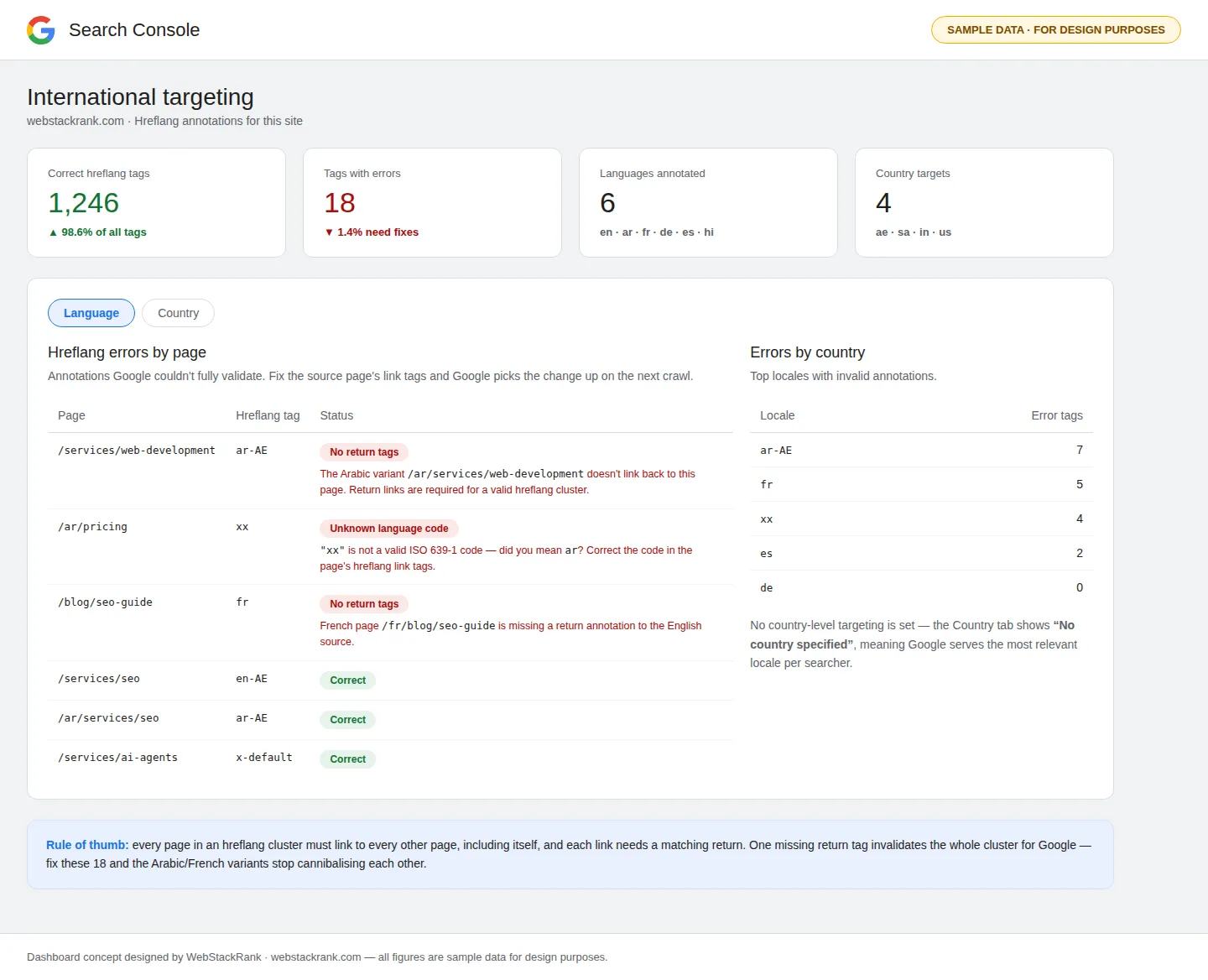
Hreflang is where multilingual SEO goes to die: one missing return tag silently invalidates a whole language cluster, and the raw console table buries the diagnosis. This dashboard concept makes the failure obvious. The headline KPI row separates the signal from the noise — 1,246 correct tags versus just 18 with errors — so the fix list feels like a punch list, not a catastrophe. Below, a Language/Country tab pair mirrors the real report, with the main panel showing page-level hreflang errors and a side panel breaking errors down by locale.
Design decisions center on making each error self-diagnosing. Every failing row carries its error detail inline: the ar-AE row explains that the Arabic variant doesn't link back and that return links are required; the "xx" row flags the unknown language code and suggests the likely intended code. Valid rows keep a simple green "Correct" pill so the fixed state has a visual target. Monospace treatment on pages and codes keeps technical tokens scannable, and the country-side note — "No country specified" — teaches the client that Google will pick the most relevant locale per searcher when no country target is set.
The reading rule is one sentence, reinforced by the closing tip card: every page in an hreflang cluster must link to every other page, including itself, and each link needs a matching return. Fix the 18, and the Arabic and French variants stop cannibalising each other in search.