
Your Doha rankings do not travel because they were never built to. Google ranked your pages for Qatar using Qatari signals — a .qa domain or Qatar-focused content, Qatari phone numbers, Qatari examples, links from Qatari sites. Saudi Arabia and the UAE are separate search markets with their own signals, phrasing and proof. Fix it in this order: prove demand per market, decide whether one site is genuinely enough, set the country signals Google reads now, write for each market separately, earn local proof and links, then expand one market at a time.
The short answer: why your Doha rankings do not travel — and the order to fix it in
Rankings are awarded per market, not per website. A page wins in Doha because everything about it — domain, content, links, contact details — tells Google it belongs in Qatar. Carried unchanged into Riyadh or Dubai searches, those same signals argue against you: a foreign result with a foreign phone number and no local proof.
So the work is not "translate the site and wait". It is a sequence: measure your current visibility per market, decide the structure, set the signals, write market-specific content, then earn local proof and links. Skipping to content is how firms end up with thin translated pages ranking nowhere.
First, prove the demand: reading your current Saudi and UAE visibility honestly
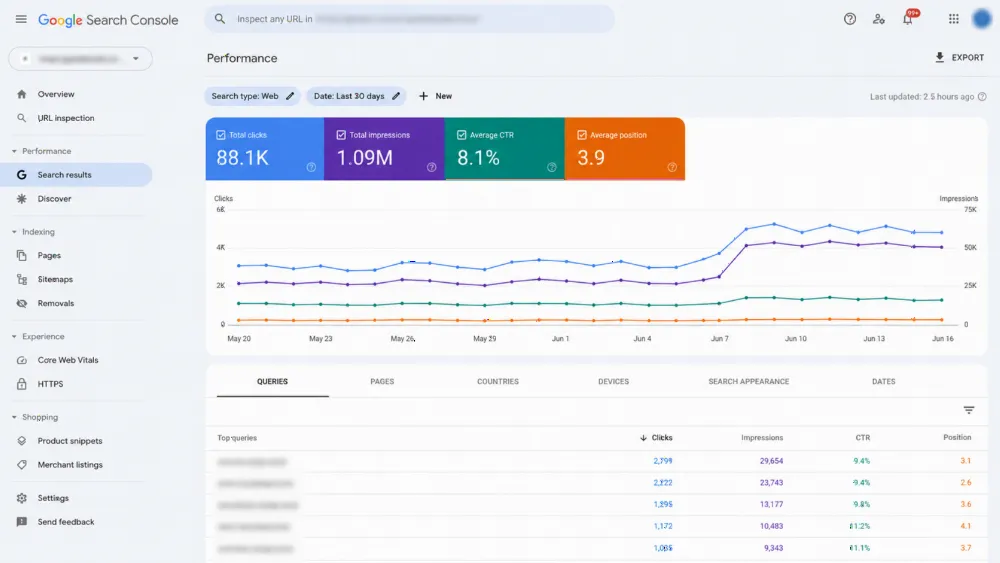
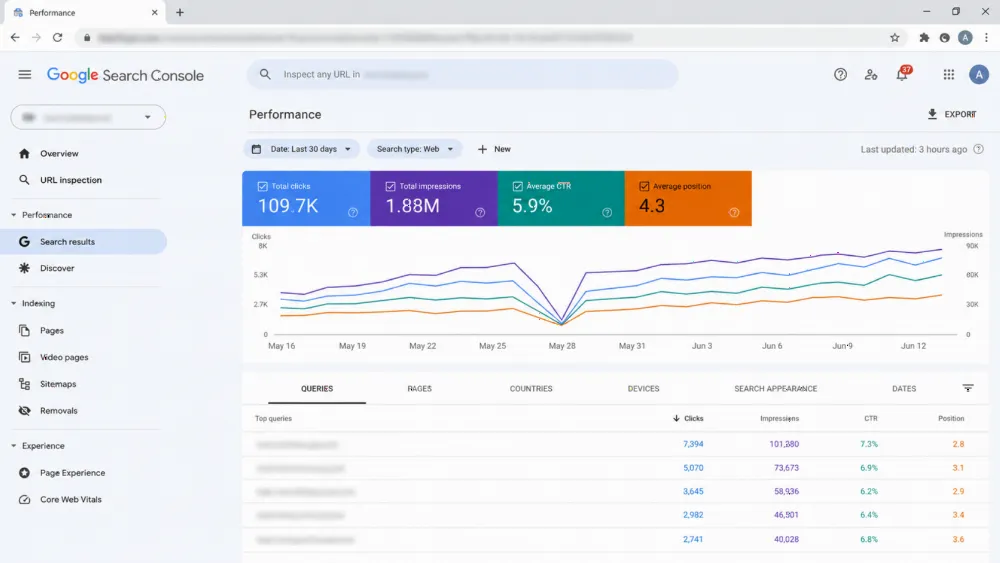
In Search Console, filter performance by country and read Saudi Arabia and the UAE separately from Qatar. Three patterns cover most Doha firms: impressions but almost no clicks, meaning searchers choose local results; clicks on your brand name only, meaning the demand is people who already know you; or nothing at all, meaning the market starts from zero.
Then check the demand side. Search your core services as a buyer in Riyadh or Dubai would, and read who ranks — local firms, regional players, directories. That set is your real competition and content benchmark. Research each market fresh rather than assuming Qatari phrasing transfers; our Qatar country guide covers the home-market base. If enquiries from a market are occasional and low-value, stop there: visibility work is only worth funding where demand and your ability to serve it meet.
One site or country versions? The structure decision for a Qatar firm
Google's comparison for multi-regional sites (checked October 2026) is blunt about the trade: Country domains give the clearest signal but cost the most to run and split your authority. Subdomains separate markets cleanly but users may not read the targeting from the URL. Subdirectories keep everything on one host at the lowest maintenance, but the signal is weaker.
Apply that to a Doha base. A .qa domain is itself a strong Qatar signal — an anchor at home, an argument against you abroad. The registry position underlines it: the Communications Regulatory Authority's domain FAQs state that .qa carries no registration requirement, while .com.qa requires a valid Qatar trade licence or a trademark registered in Qatar (checked October 2026).
The practical verdicts. One site is enough when the offer, pricing and delivery are identical across the Gulf and demand is still being tested. Country versions are justified when something material differs per market: pricing, coverage, partners, regulation, or the Arabic terminology itself. Separate domains only when a market will carry its own content and link-earning for years. Our multilingual website architecture guide covers the generic choices in full.
The country signals Google actually reads now
There is no longer a country-targeting switch to set. Google deprecated Search Console's International Targeting report in August 2022 and removed it that September, retiring its manual country target and hreflang error reporting. What remains is on your site. Google's multi-regional documentation (checked October 2026) lists the signals used to work out a page's audience:
- A country-code domain, tying a site to one country — a strong signal to search engines and users.
- Hreflang statements, telling Google which pages apply to which languages and locations — one signal among several; our companion guide to hreflang for Qatar treats the en-QA and ar-QA mechanics in full.
- Server location — weak, and unreliable where CDNs are used.
- Local addresses and phone numbers on the page, local language and currency, and links from other local sites.
Read that list as a checklist per market. A Saudi-facing page with a +974 number, Qatari pricing and links only from Doha directories fails most of it — yet these signals decide which country's results your page belongs in.
Saudi search is not UAE search: keywords, Arabic and intent per market
The Gulf is not one Arabic market. The same service is phrased differently in Riyadh, Jeddah, Dubai and Abu Dhabi — in Arabic, where register and terminology differ between Saudi and Emirati usage, and in English, where the two business communities search differently. A Qatari Arabic page re-labelled as a "Saudi version" still reads as Qatari to its readers.
So research each market separately: the queries buyers use there, the Arabic terms they choose over formal equivalents, the English phrasing of the same need, and the pages winning those searches. Then write to that research. Our guide to SEO for bilingual Arabic-English websites covers the mechanics underneath; the cross-border point is that "bilingual" is per market, not per company. Two markets means two keyword sets — or one market done properly.
Local proof: the content Saudi and Emirati buyers check before enquiring
Even when a page ranks, a Saudi or Emirati buyer checks one thing before enquiring: is this firm set up for us? The proof is concrete. Where you deliver or serve — named cities and real coverage, not "across the GCC". Who your partners or clients in their market are. What they will pay in — Saudi riyals or dirhams as their pricing, not a Qatari price list with a conversion note — and a contact route that does not start with a Qatari number.
Build that proof per market, on the market's pages. Never invent local presence: a claimed Riyadh office that does not exist will be found out on the first call, at a reputational cost in both markets. An honest "we serve Saudi clients from Doha, with delivery partners in Riyadh and Jeddah" — where true — converts better than a fictional address.
Links and listings: earning relevance inside each target market
Google counts links from other local sites among its country signals, and buyers count them too. A Doha firm whose link profile sits entirely in Qatar looks Qatari to both audiences. Earning relevance in a target market means unglamorous work: accurate listings in the directories and industry bodies that market uses, links from local partners, suppliers and clients you genuinely work with, and local coverage worth covering.
It is slow work — relationships precede links. Buying batches of low-quality "GCC links" adds no proof a buyer would trust and reads as manipulation. Firms that rank in a second market are usually visibly doing business there; our web development work in Qatar shows the home base those links should support.
Sequencing: win one market first, then the second
Enter one market properly before touching the second. Choose it by the demand proof in your own data — where impressions, enquiries or existing clients point — weighed against your readiness to deliver, invoice and support there.
Then build that market's cluster completely: structure decided, signals set, genuinely local pages, proof in place, first local links earned, and per-market measurement in Search Console. Only when those pages are indexed, appearing for their target queries and producing worthwhile enquiries do you repeat the exercise in the second market — reusing the method, never the content. Two markets at half-depth produce two failures disguised as one strategy.
Mistakes Qatar firms make when they expand their search presence
- Treating the GCC as one bucket: one page set, one keyword list, one "Gulf" message for three different search markets.
- City-swapping: duplicating a page and changing Doha to Riyadh or Dubai — thin variants with no local substance or proof behind them.
- Copying another market's template wholesale — country codes, currency, examples — so signals contradict content.
- Redirecting visitors automatically by location or language, which Google warns can stop users and search engines ever seeing all your site's versions.
- Translating instead of localising: correct Arabic, wrong market — terminology and proof that still belong to Qatar.
- Launching both markets at once, maintaining neither.
FAQ
Can a .qa website rank in Saudi Arabia and the UAE at all?
Yes, but it starts at a disadvantage abroad, because a country-code domain strongly signals a site intended for its own country. Saudi and UAE visibility from a .qa base must be earned with market-specific pages, proof and local links; many firms eventually give a proven market its own structure.
Do I need separate Saudi and UAE websites, or is one site enough?
One site is enough while the offer is identical across markets and demand is still being tested. Country versions are justified when pricing, coverage, partners or terminology differ per market, and separate domains only when a market will sustain its own content and link-earning for years.
Can I still set a target country in Google Search Console?
No. Google deprecated the International Targeting report in August 2022 and removed it the following month, retiring the manual country target and hreflang error reporting. Country targeting now rests entirely on on-site signals such as the domain, hreflang statements, local addresses, currency and local links.
Should my Saudi and UAE pages be in Arabic, English or both?
Both, researched separately per market. Arabic and English searches coexist in Saudi Arabia and the UAE, but phrasing and terminology differ by market, so one translated keyword list underserves every combination. Start with the language your existing enquiries from that market arrive in.
Which market should a Qatar firm enter first, Saudi Arabia or the UAE?
The one your own data supports. Read your Search Console country data, existing enquiries and client base, then weigh demand against your readiness to deliver, invoice and support work there. The market you can serve properly first also builds proof that eases the second.
Selling beyond Qatar? Get your cross-border search structure scoped properly
If your customers are in Riyadh, Jeddah, Dubai or Abu Dhabi but your search presence stops at the border, the fix is a structure decision before a content spend. WebStackRank helps Qatar firms run exactly that sequence. Start with our page for Qatar businesses, bring your Search Console country data, and we will scope which market to enter first.