An Omani redesign has no single honest OMR figure, because the price depends on work most quotes leave out. The visible part is an English visual refresh. The real work is bilingual and structural: re-doing an Arabic side that was mirrored rather than designed, migrating Arabic URLs without orphaning them, and keeping language versions linked. If a quote prices only the English design, it is half a quote — and the Arabic rankings pay the difference.
Judge every OMR quote against the lines below, and require the Arabic work as its own line, not a footnote. Our Oman page explains how we work.
The short answer: the OMR lines a bilingual redesign must show
| Budget line | What it covers | Why it decides the outcome |
|---|---|---|
| Audit, per language | Traffic and enquiries for English and Arabic pages separately | Shows which Arabic pages carry local visibility |
| Design and build | New templates, navigation and mobile layouts in both directions | The visible redesign, in LTR and RTL |
| Content, per language | Rewriting and approving kept pages in both languages | Stale Arabic copy surfaces here |
| Arabic RTL rework | Rebuilding mirrored components properly for right-to-left reading | The line Omani quotes most often hide |
| Bilingual migration | Redirects for both languages, Arabic URL decisions, hreflang | Decides whether both languages' rankings survive |
| Payments re-integration | Reconnecting and testing checkout on new templates | Prevents a prettier shop with a broken checkout |
| Launch and per-language monitoring | Go-live checks plus separate Arabic and English tracking, 90 days | An Arabic drop stays visible |
Compare OMR totals only after comparing these lines. Our pricing shows the itemised format.
Why an Omani redesign is not a new build with old content
Pricing a redesign from new-build tables misleads Omani buyers: a new build creates pages, while a redesign inherits them — rankings, inbound links and mistakes included. The Arabic pages may be the strongest local asset, even when they look rough. A new-build quote has no line for protecting that.
A redesign inherits constraints: URLs that rank cannot be renamed, and old Arabic content must be judged page by page. That inheritance is the job; if a vendor's method sounds identical to their new-build method, they are pricing the wrong project.
The cost structure: audit, design, build, content — and the two bilingual lines
The audit comes first, priced and per language. It inventories every URL in both versions, records which pages bring traffic and enquiries, and flags where Arabic diverges — missing pages, thinner copy, broken components. Without that split, Arabic problems stay invisible.
Design and build cover templates, navigation and mobile behaviour, implemented in both directions from the start, not designed in English and flipped at the end. Content covers rewriting kept pages in both languages; Arabic rewriting is skilled work, not a translation errand, and is the slowest line.
Then come the two bilingual lines separating an Omani quote from a generic one: RTL rework, covered next, and bilingual migration. Where personal data moves — forms, platform or host — keep Oman's data duties in view: the Ministry of Transport, Communications and Information Technology (mtcit.gov.om) is the authority for the Personal Data Protection Law (Royal Decree 6/2022, per MTCIT's published material). Verify provisions when you contract.
Arabic RTL rework: what "fixing the Arabic side" actually involves
On Omani sites, the Arabic version was produced by mirroring the English templates and hoping. The result: arrows pointing the wrong way, awkward numbers and dates, mixed-direction text breaking layouts, forms that fight the reader, navigation that feels translated rather than designed. Fixing that is not a toggle; it is rework, component by component.
RTL rework means rebuilding templates with correct direction logic, checking interactive component in Arabic — menus, sliders, tables, checkout steps — setting Arabic typography, and testing on real devices with Arabic readers, not screenshots. It means deciding which Arabic pages get full redesign, repair, or knowing retirement. Our RTL website design checklist covers the detail; in a quote, expect that work named and priced — not covered by "Arabic included".
SEO migration for two languages: redirects, Arabic URLs and hreflang discipline
A bilingual migration is two migrations run as one project. Every English URL decision needs its Arabic counterpart — kept, redirected or retired — with the same data behind it. Arabic URLs deserve care: renaming a slug because it looks untidy, or swapping Arabic URLs for English ones, can orphan the pages customers find you through.
Hreflang is the connective tissue: the tags pairing each English page with its Arabic equivalent must be rebuilt to point at the new URLs directly, return tags included, and internal links must land on URLs, not through redirects. Our guides to SEO for bilingual Arabic-English websites, multilingual website architecture and the website redesign SEO migration checklist cover the method; this article's job is ensuring both languages are costed before you sign.
Ecommerce redesigns: payments and checkout re-integration in Oman
For an Omani shop, a redesign reconnects the checkout rather than inheriting it untouched, so re-integration and retesting belong in the OMR quote as a named line. Where the shop uses Thawani, Thawani's own payment-gateway pages (thawani.om, checked 21 October 2026) describe the surfaces involved: a hosted payment page, developer APIs and SDKs, sandbox testing, webhooks reporting payment outcomes, and 3D Secure authentication. Each must be reconnected and retested on the new design — including order confirmation, refunds, and the Arabic checkout, where RTL problems hurt revenue most.
Test with test orders in both languages, on phones, before launch. A checkout that works in English and stumbles in Arabic is the shop closing one of its two doors.
Launch and the first 90 days: watching Arabic and English rankings separately
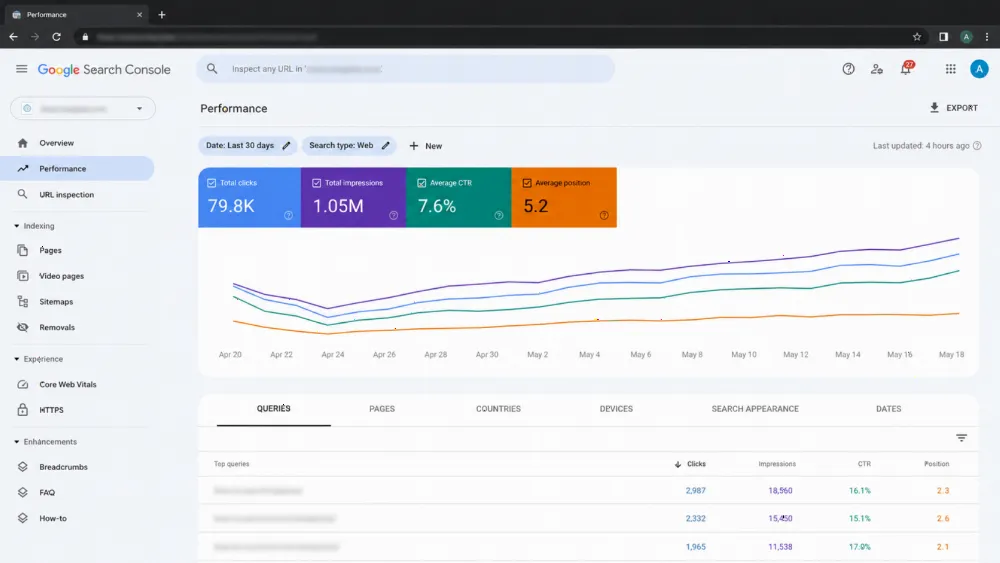
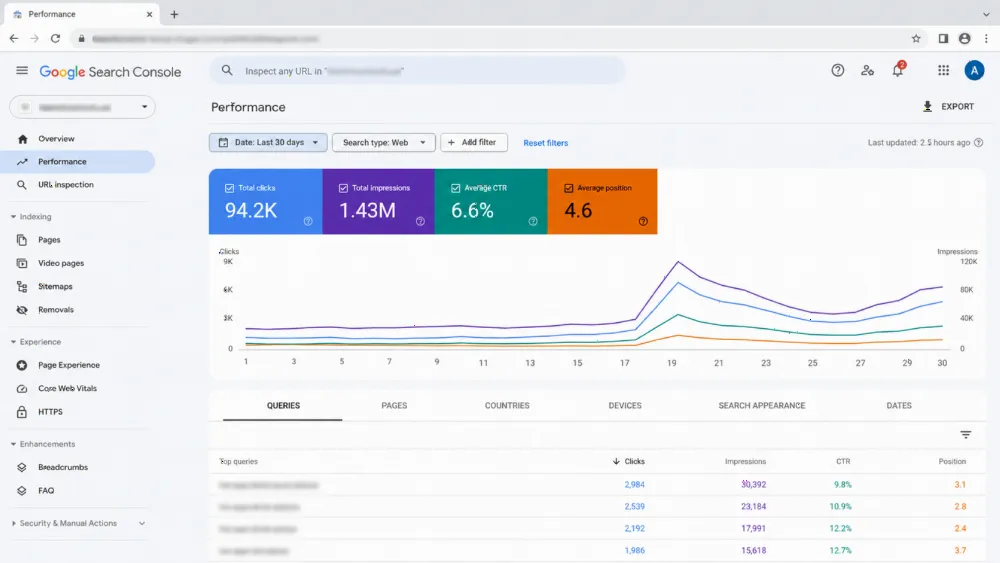
Launch-day checks run per language: work old URL lists, test forms, checkout and language switching, confirm hreflang pairs resolve, and submit the sitemap. Then monitor for 90 days with Arabic and English as separate lines, because a blended total can look stable while Arabic visibility falls.
Small movements are normal in either language; a drop traced to a missing Arabic redirect or broken hreflang pair is fixable when someone is watching. No vendor guarantees Arabic recovery by a set date — only the per-language monitoring, with review points in the quote. In Bahrain instead? See website redesign cost in Bahrain, the same method with Bahrain-local execution.
What a fair OMR redesign quote includes — and the red flags in a cheap one
A quote separates audit, design, build, content, RTL rework, migration, payments and monitoring, states scope per language, and defines extra costs. As a format reference, WebStackRank's UAE starter packages are published at fixed prices — ≈ OMR 104 for a one-page website, ≈ OMR 261 for up to five pages and ≈ OMR 522 for a basic business web app — with 50% deposit to begin, 50% at launch, and 3 months free maintenance on starter packages. Those are UAE facts, never converted to OMR; the lesson is the itemised format, not the figures.
Red flags: "Arabic included" with no RTL line; migration as "SEO handled"; hreflang never mentioned; a price copied from a new-build table; monitoring as one blended number. Each predicts an Arabic loss.
Common mistakes in Omani bilingual redesigns
The defining mistake is designing in English and mirroring at the end, rebuilding the problem inside the new site. Next is renaming Arabic URLs casually, or redirecting retired Arabic pages to the English equivalent and calling it consolidation. Owners accept "Arabic content provided by client" without agreeing who rewrites it, so launch slips.
Ecommerce owners forget checkout re-integration until testing week, and managers watch one blended analytics view, so an Arabic decline is spotted a quarter late. Each is cheaper to prevent in the brief than to repair after launch.
FAQ
How much does a website redesign cost in Oman in OMR?
There is no single honest figure: the total follows page and template counts, content rewritten per language, RTL depth, and whether ecommerce re-integration applies. Ask for an itemised OMR quote with RTL and migration shown separately.
Why does Arabic RTL rework cost extra in a redesign?
Because a mirrored Arabic side is broken in ways a refresh cannot fix: direction logic, components, typography, forms and checkout steps need rebuilding and testing in Arabic. Adding Arabic to a new build differs from re-doing an existing build properly, so honest quotes price it separately.
Will a bilingual redesign hurt my Arabic rankings?
It can, if Arabic URLs are renamed without redirects, pages are dropped carelessly, or hreflang pairs point at old URLs. A per-language inventory, redirect map and hreflang rebuild manage that risk; no vendor can guarantee rankings will not move.
Should I choose a refresh, a redesign or a rebuild for a bilingual site?
Choose a refresh when both versions are technically sound and only visuals are dated; a redesign when structure, journeys and the Arabic experience need rework; a rebuild when the platform blocks fixes. Ask the vendor to state scope, per language, in writing.
What payment re-integration should an Omani ecommerce redesign include?
Reconnecting the gateway on new templates and retesting the full flow — hosted checkout or API integration, webhooks, confirmation, refunds, 3D Secure where used — in Arabic and English, on phones, with test orders. Thawani's own pages describe sandbox testing and SDK/API routes; whichever gateway you use, retesting belongs in the quote.
Get a fixed-price bilingual redesign proposal
Send us your current website, both language versions, and which Arabic pages matter most. WebStackRank will respond with an itemised proposal within 24 business hours, RTL rework and migration shown as their own lines. Start with our fixed-price web design service, or reach us on WhatsApp at +971 52 595 3174 or hello@webstackrank.com. Full ownership transfers on final payment; no retainer is required.